
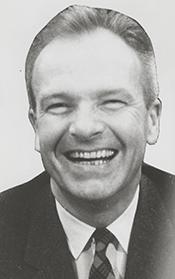
Historical · U.S. House · Oregon · District 3
Robert Duncan
Former U.S. Representative · Oregon District 3 · 1963–1981 · Democratic
Robert Duncan represented Oregon's District 3 in the United States House of Representatives (1963–1981) for the Democratic party. The page below collects sourced biographical facts, term history, committee roles, and provenance for Duncan.
Bioguide ID: D000537
Key facts
- Full name
- Robert Duncan
- State
- Oregon
- District
- District 3
- Party
- Democratic
- House service
- 1963–1981
- First House term
- 1963
- Status
- Left office
- Current term ends
- —
- Born
- 1920
- Bioguide ID
- D000537
- Committee assignments
- —
- Dataset version
- 1.20260605
Biographical narrative
927 words · sourced from the Wikipedia REST extract
Robert B. Duncan was an American politician who served as a U.S. Representative from Oregon. A member of the Democratic Party, Duncan held office for five terms in the U.S. House of Representatives, representing two different congressional districts during his tenure. His political career was marked by his involvement in both state and national politics, including multiple attempts to secure a seat in the U.S. Senate. Duncan's legislative activities and political engagements reflected the evolving political landscape of Oregon during the mid-20th century.
Early life and career
Robert B. Duncan was born on December 4, 1920, in Normal, Illinois. He was the second of four sons in his family, with his father, Eugene Duncan, having roots in Missouri and his mother, Catherine Blackford, being of Welsh descent. Duncan's early education took place in public schools in Bloomington, Illinois. At the age of 18, he traveled to Alaska with a friend, where he began his college education at the University of Alaska. He later transferred to Illinois Wesleyan University, where he earned a bachelor's degree in 1942. During his time in college, he met Marijane Beverly Dill, and they married later that year.
Duncan's early work experiences included jobs in the gold fields of Alaska and in banking and agriculture in Illinois. His life took a significant turn during World War II, when he served in the United States Merchant Marine and as a pilot in the United States Naval Air Force from 1942 to 1945. After the war, he pursued a legal education, earning his LL.B from the University of Michigan Law School in 1948. Following his graduation, he passed the bar exam and relocated to Oregon, where he joined the law practice of William M. McAllister in Medford.
Duncan's political career began in earnest in 1954 when he was nominated as a write-in candidate for the Oregon House of Representatives. Although he declined the nomination due to economic constraints, he successfully ran for office in 1956, winning a seat in the Oregon House. He served three terms in the state legislature and was elected Speaker of the Oregon House, a position he held for four years. His leadership in the state legislature laid the groundwork for his subsequent entry into national politics.
House tenure
In 1962, Duncan transitioned to federal politics by winning election to the United States House of Representatives, representing Oregon's 4th congressional district. His initial term in Congress began in 1963. During his time in the House, Duncan became known for his active participation in legislative matters and his alignment with the Democratic Party's positions during a period marked by significant political and social change in the United States.
Duncan's congressional career included a notable bid for the U.S. Senate in 1966, when he ran for the seat vacated by retiring Senator Maurine B. Neuberger. His campaign was characterized by his support for President Lyndon B. Johnson's Vietnam War policies, which contrasted sharply with the views of his Republican opponent, Governor Mark Hatfield. This divergence in opinion contributed to a significant split within the Oregon Democratic Party, as prominent figures, including the state's senior senator, Wayne Morse, endorsed Hatfield. Ultimately, Duncan lost the election, which highlighted the complexities of party dynamics during that era.
Following his Senate campaign, Duncan returned to his law practice in Portland. He made another attempt at the Senate in 1968, challenging Morse in the Democratic primary. Although Duncan initially led in the polls, Morse's anti-war stance gained traction, leading to a narrow victory for Morse. Duncan's final Senate campaign occurred in 1972, where he again faced Morse and lost by a wider margin.
In 1974, after the retirement of Edith Green, Duncan sought election to Oregon's 3rd congressional district, successfully returning to the House. He served three additional terms from 1975 until 1981. His tenure in the House concluded when he lost in the 1980 Democratic primary to Ron Wyden, marking the end of his congressional career.
Legislative focus and committees
Throughout his time in Congress, Duncan was involved in a range of legislative issues, reflecting the priorities of his constituents and the Democratic Party. His focus included various domestic policies, particularly those related to social welfare, education, and civil rights. Duncan's legislative efforts were shaped by the political climate of the 1960s and 1970s, a period characterized by significant social movements and changes in public policy.
Duncan's committee assignments during his tenure in the House allowed him to influence legislation on key issues. While specific committee details are not provided, members of Congress typically serve on committees that align with their interests and the needs of their districts. These committees play a crucial role in shaping legislation, conducting hearings, and overseeing government functions.
After leaving Congress, Duncan continued to engage in public service and community activities. He returned to Oregon in 1985, settling in Yachats, where he remained active in local affairs. He served on the Northwest Power Planning Council from 1984 to 1988, including a term as chairperson in 1987. His post-congressional years were spent focusing on personal interests, such as restoring his home and collecting vintage automobiles.
Duncan's legacy includes his contributions to Oregon's political landscape and his involvement in legislative processes at both the state and federal levels. His papers and writings are preserved in various archival collections, providing insight into his political career and the historical context of his work. Robert B. Duncan passed away on April 29, 2011, at the age of 90, leaving behind a family that includes seven children and a significant impact on Oregon's political history.
Notable legislation
Sponsored and co-sponsored legislation for Robert Duncan is pending operator curation. The biographical narrative above carries the same provenance trail until per-bill rows are written.
Sources
- [1]https://en.wikipedia.org/wiki/Robert_B._DuncanWikipedia · retrieved 2026-06-05
Notable quotes
Sourced quotes for Robert Duncan are pending operator curation. Narrative-scope provenance remains attached below.
Sources
- [1]https://en.wikipedia.org/wiki/Robert_B._DuncanWikipedia · retrieved 2026-06-05
Key positions
Curated policy positions for Robert Duncan are pending operator review. The biographical narrative above carries the same provenance trail until per-topic positions are written.
Sources
- [1]https://en.wikipedia.org/wiki/Robert_B._DuncanWikipedia · retrieved 2026-06-05
Terms served
- 1963–1965U.S. House · Term 1 · Democratic
- 1965–1967U.S. House · Term 2 · Democratic
- 1975–1977U.S. House · Term 3 · Democratic
- 1977–1979U.S. House · Term 4 · Democratic
- 1979–1981U.S. House · Term 5 · Democratic
Sources & provenance
Every attributable claim above carries a per-section [N] marker that resolves to the corresponding URL below. Each entry records the upstream provider, the canonical URL, and the timestamp at which the source was retrieved by the ingest pipeline.
Key facts
- https://bioguide.congress.gov/search/bio/D000537bioguide · retrieved 2026-06-05
- https://www.govtrack.us/congress/members/403644govtrack · retrieved 2026-06-05
Biographical narrative
- https://en.wikipedia.org/wiki/Robert_B._Duncanwikipedia · retrieved 2026-06-05
Find your representative
Every U.S. state elects representatives by district. Browse Oregon’s delegation, the full former-representative roster, or explore the role and term length.
Related on The Candidate
- Preceded by Homer AngellEarlier holder of the Oregon District 3 House seat · Republican.Open
- Succeeded by Earl BlumenauerLater holder of the Oregon District 3 House seat · Democratic.Open
- Albin Norblad Jr.Former U.S. Representative · Oregon District 1 · RepublicanOpen
- Andrew ThayerFormer U.S. Representative · Oregon District 1 · DemocraticOpen
- Binger HermannFormer U.S. Representative · Oregon District 1 · RepublicanOpen
- David WuFormer U.S. Representative · Oregon District 1 · DemocraticOpen