
Historical · U.S. House · Oregon · District 3
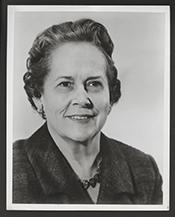
Edith Green
Former U.S. Representative · Oregon District 3 · 1955–1975 · Democratic
Edith Green represented Oregon's District 3 in the United States House of Representatives (1955–1975) for the Democratic party. The page below collects sourced biographical facts, term history, committee roles, and provenance for Green.
Bioguide ID: G000407
Key facts
- Full name
- Edith Green
- State
- Oregon
- District
- District 3
- Party
- Democratic
- House service
- 1955–1975
- First House term
- 1955
- Status
- Left office
- Current term ends
- —
- Born
- 1910
- Bioguide ID
- G000407
- Committee assignments
- —
- Dataset version
- 1.20260605
Biographical narrative
1,181 words · sourced from the Wikipedia REST extract
Edith Green was an American politician and educator who served as a U.S. Representative for Oregon's 3rd congressional district from 1955 until 1975. A member of the Democratic Party, she was notable for her advocacy on behalf of women's issues, education, and social reform. Green was the second woman from Oregon to be elected to the U.S. House of Representatives and played a significant role in the passage of key legislation, including the Equal Opportunity in Education Act, commonly known as Title IX.
Early life and career
Edith Louise Starrett Green was born on January 17, 1910, in Trent, South Dakota. In 1916, her family relocated to Oregon, where she attended local schools in Salem. She graduated from Salem High School in 1927 and subsequently enrolled at Willamette University, where she studied from 1927 to 1929. After a brief period as a schoolteacher, she married Arthur N. Green in 1930 and chose to focus on her family.
In 1939, Green returned to academia, earning a bachelor's degree from the University of Oregon. She further pursued graduate studies at Stanford University. During the 1940s, she became a radio commentator and writer, which helped to shape her public speaking and advocacy skills. Her passion for educational issues led her to become a lobbyist for the Oregon Education Association, where she worked to promote educational reforms and policies.
Green was also involved in community organizations and was an honorary member of the Delta Sigma Theta sorority, which is known for its commitment to public service and social justice. Her early experiences in education and advocacy laid the groundwork for her subsequent political career.
House tenure
Edith Green's political career began in earnest when she ran for the office of Oregon Secretary of State in 1952 as the Democratic candidate. Although she lost the election to the incumbent Earl T. Newbry, her campaign marked her entry into the political arena. In 1954, she successfully ran for the U.S. House of Representatives, winning the seat for Oregon's 3rd congressional district by defeating Republican nominee Tom McCall, who would later become the governor of Oregon.
Green's election was significant, as she became the second woman from Oregon to serve in the House, joining a small cohort of women in Congress at that time. Throughout her ten terms in office, which lasted until 1975, she focused on a variety of issues, with a particular emphasis on women's rights and education.
During her tenure, Green was an advocate for numerous pieces of legislation aimed at improving educational opportunities and addressing social inequalities. She introduced the Equal Pay Act in 1955, which sought to ensure equal pay for equal work, although the bill was not signed into law until several years later. Her commitment to education was further demonstrated through her involvement in the Alaska Mental Health Enabling Act of 1956, which aimed to reform mental health care in the Alaska Territory, and the Library Services Act, which sought to enhance library access for rural communities.
Green also played a crucial role in the development of the Higher Education Facilities Act of 1963 and the Higher Education Act of 1965 and 1967. These initiatives were designed to expand access to higher education and improve educational infrastructure across the United States. Her efforts in this area earned her recognition as a leading advocate for educational reform, and she was often referred to as "the Mother of Higher Education."
In addition to her work on educational issues, Green contributed to the National Defense Education Act of 1958, which was introduced in response to the Soviet Union's launch of Sputnik 1. This legislation aimed to bolster U.S. education in science and technology during the Cold War.
One of Green's most notable achievements was her involvement in the creation of Title IX, formally known as the Patsy T. Mink Equal Opportunity in Education Act. This landmark legislation, passed in 1972, prohibited sex discrimination in federally funded educational institutions. Green's advocacy for gender equity in education was driven by her observations of disparities between programs for boys and girls in schools. Collaborating with fellow Representative Patsy Mink and Senator Birch Bayh, she helped to shape the legislation that would become Title IX.
Despite her strong advocacy for women's rights, Green faced challenges in her political career. In 1964, she was the only woman in the House to vote against an amendment to include sex as a protected class in Title VII of the Civil Rights Act of 1964. Her decision was based on a belief that prioritizing racial discrimination was essential to ensure the passage of the broader civil rights legislation.
Throughout her time in Congress, Green was recognized for her influence and leadership. She was selected to second the nominations of Adlai Stevenson at the 1956 Democratic National Convention and John F. Kennedy at the 1960 Democratic National Convention. Additionally, she played a key role in the primary campaigns for notable Democratic figures, including Robert F. Kennedy and Henry M. "Scoop" Jackson. Although she was considered a potential candidate for the U.S. Senate on several occasions, she ultimately chose to remain in the House, valuing her seniority and influence there.
Legislative focus and committees
During her time in the House, Edith Green served on various committees that aligned with her legislative priorities. Her focus on education and women's issues was evident in her committee assignments, where she worked to advance policies that supported these areas. Green's legislative initiatives often intersected with broader social reforms, reflecting her commitment to improving the lives of her constituents and addressing systemic inequalities.
Green's work on education legislation was particularly impactful, as she championed measures that expanded access to educational resources and opportunities for all individuals, regardless of gender. Her advocacy for Title IX remains one of her most enduring legacies, as it fundamentally transformed the landscape of education in the United States by promoting gender equity in schools and universities.
In addition to her legislative accomplishments, Green's influence extended beyond her formal role in Congress. She was a prominent figure in the Democratic Party and was involved in various political campaigns and initiatives. Her ability to navigate the political landscape and build coalitions was instrumental in advancing her legislative agenda.
After deciding not to seek an eleventh term in 1974, Green resigned from Congress on December 31, 1974. Following her departure from the House, she returned to Oregon, where she continued to contribute to education as a professor of government at Warner Pacific College. Her commitment to public service persisted throughout her life, as she took on various roles, including co-chairwoman of National Democrats for Gerald Ford and an appointment to the Oregon State Board of Higher Education.
Edith Green passed away on April 21, 1987, in Tualatin, Oregon. Her contributions to education and women's rights have left a lasting impact, and she is remembered as a pioneering figure in American politics. In recognition of her service, the Edith Green – Wendell Wyatt Federal Building in downtown Portland was named in her honor, reflecting her legacy as a trailblazer for women in government and education.
Notable legislation
Sponsored and co-sponsored legislation for Edith Green is pending operator curation. The biographical narrative above carries the same provenance trail until per-bill rows are written.
Sources
- [1]https://en.wikipedia.org/wiki/Edith_GreenWikipedia · retrieved 2026-06-05
Notable quotes
Sourced quotes for Edith Green are pending operator curation. Narrative-scope provenance remains attached below.
Sources
- [1]https://en.wikipedia.org/wiki/Edith_GreenWikipedia · retrieved 2026-06-05
Key positions
Curated policy positions for Edith Green are pending operator review. The biographical narrative above carries the same provenance trail until per-topic positions are written.
Sources
- [1]https://en.wikipedia.org/wiki/Edith_GreenWikipedia · retrieved 2026-06-05
Terms served
- 1955–1957U.S. House · Term 1 · Democratic
- 1957–1959U.S. House · Term 2 · Democratic
- 1959–1961U.S. House · Term 3 · Democratic
- 1961–1963U.S. House · Term 4 · Democratic
- 1963–1965U.S. House · Term 5 · Democratic
- 1965–1967U.S. House · Term 6 · Democratic
- 1967–1969U.S. House · Term 7 · Democratic
- 1969–1971U.S. House · Term 8 · Democratic
- 1971–1973U.S. House · Term 9 · Democratic
- 1973–1975U.S. House · Term 10 · Democratic
Sources & provenance
Every attributable claim above carries a per-section [N] marker that resolves to the corresponding URL below. Each entry records the upstream provider, the canonical URL, and the timestamp at which the source was retrieved by the ingest pipeline.
Key facts
- https://bioguide.congress.gov/search/bio/G000407bioguide · retrieved 2026-06-05
- https://www.govtrack.us/congress/members/404757govtrack · retrieved 2026-06-05
Biographical narrative
- https://en.wikipedia.org/wiki/Edith_Greenwikipedia · retrieved 2026-06-05
Find your representative
Every U.S. state elects representatives by district. Browse Oregon’s delegation, the full former-representative roster, or explore the role and term length.
Related on The Candidate
- Preceded by Homer AngellEarlier holder of the Oregon District 3 House seat · Republican.Open
- Succeeded by Earl BlumenauerLater holder of the Oregon District 3 House seat · Democratic.Open
- Albin Norblad Jr.Former U.S. Representative · Oregon District 1 · RepublicanOpen
- Andrew ThayerFormer U.S. Representative · Oregon District 1 · DemocraticOpen
- Binger HermannFormer U.S. Representative · Oregon District 1 · RepublicanOpen
- David WuFormer U.S. Representative · Oregon District 1 · DemocraticOpen