
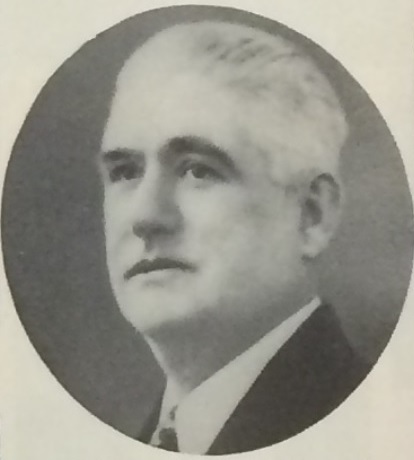
Historical · U.S. House · Pennsylvania · District 10
Harry O’Neill
Former U.S. Representative · Pennsylvania District 10 · 1949–1953 · Democratic
Harry O’Neill represented Pennsylvania's District 10 in the United States House of Representatives (1949–1953) for the Democratic party. The page below collects sourced biographical facts, term history, committee roles, and provenance for O’Neill.
Bioguide ID: O000095
Key facts
- Full name
- Harry O’Neill
- State
- Pennsylvania
- District
- District 10
- Party
- Democratic
- House service
- 1949–1953
- First House term
- 1949
- Status
- Left office
- Current term ends
- —
- Born
- 1889
- Bioguide ID
- O000095
- Committee assignments
- —
- Dataset version
- 1.20260605
Biographical narrative
989 words · sourced from the Wikipedia REST extract
Harry O’Neill was an American politician who served as a Democratic member of the United States House of Representatives, representing Pennsylvania's 10th congressional district from 1949 until 1953. His political career was marked by his commitment to public service and his work in various capacities within the state and federal government. O’Neill's life journey, from humble beginnings to a role in Congress, reflects the experiences of many American politicians of his time, particularly those who rose through the ranks of local and state governance before achieving national office.
Early life and career
Harry Patrick O’Neill was born on February 10, 1889, in Dunmore, Pennsylvania, to Irish immigrant parents. Growing up in a working-class family, O’Neill faced economic challenges from an early age. He left school at the age of ten to contribute to his family's income, taking on a job as a slate picker at the O.S. Johnson Colliery in Dunmore. This early work experience in the coal industry was not uncommon for children of his era, particularly in regions heavily reliant on mining.
In addition to his work in the coal mines, O’Neill pursued various jobs to support himself and his family. He worked evenings as an apprentice barber, a role that provided him with valuable skills and a means to earn additional income. By the age of eighteen, he had acquired his employer's barbershop, demonstrating an entrepreneurial spirit and a determination to succeed. His experience in the barbering business would later serve him well in understanding the needs and concerns of his constituents.
O’Neill's career did not remain confined to barbering. He expanded his professional pursuits by becoming an insurance broker, which allowed him to engage with the community in a different capacity. His work in insurance likely provided him with insights into the financial and social challenges faced by many families in his district. O’Neill's early career laid the groundwork for his future in politics, as he developed a deep understanding of the local economy and the needs of his community.
In 1929, O’Neill transitioned into public service by winning a seat in the Pennsylvania State House of Representatives. He served in this capacity until 1948, gaining valuable legislative experience and establishing a political network that would support his future endeavors. During his nearly two decades in the state legislature, O’Neill developed a reputation for his dedication to his constituents and his ability to navigate the complexities of state governance. His time in the Pennsylvania House provided him with the foundational skills necessary for his later role in Congress.
House tenure
Harry O’Neill was elected to the United States House of Representatives in 1948, marking the beginning of his congressional career. He served two consecutive terms, representing Pennsylvania's 10th congressional district during the Eighty-first and Eighty-second Congresses. His election to Congress was a significant achievement, reflecting his long-standing commitment to public service and his ability to connect with voters.
During his time in the House, O’Neill was involved in various legislative activities and discussions, contributing to the broader political landscape of the post-World War II era. His tenure in Congress coincided with a period of significant change in American society, including the expansion of civil rights, the onset of the Cold War, and the challenges of rebuilding the nation’s economy. O’Neill's background in local governance and his experience in the state legislature equipped him to address the pressing issues of his time.
Despite his contributions, O’Neill faced challenges in his political career. In 1952, he sought re-election but was unsuccessful. The redistricting process had placed him in direct competition with fellow incumbent Congressman Joseph L. Carrigg, which complicated his bid for a third term. This electoral defeat marked the end of his time in Congress, concluding a significant chapter in his political journey.
Legislative focus and committees
During his congressional tenure, Harry O’Neill focused on various issues that were pertinent to his constituents and the nation at large. While specific details regarding the bills he supported or the committees he served on are not provided, it is common for members of Congress to engage in legislative work that reflects the interests and needs of their districts. Given O’Neill's background in local governance and his experience in the Pennsylvania State House, it is likely that he prioritized issues related to labor, economic development, and social welfare.
O’Neill's work in Congress occurred during a transformative period in American history. The post-war era was characterized by significant social and economic changes, including the expansion of the middle class, the growth of the labor movement, and the increasing involvement of the federal government in various aspects of American life. As a representative of a working-class district, O’Neill may have been particularly attuned to the concerns of labor unions and the needs of workers in his community.
In addition to his legislative focus, O’Neill's experience as an insurance broker and small business owner likely influenced his approach to economic issues. He may have advocated for policies that supported small businesses and addressed the challenges faced by entrepreneurs in his district. His understanding of the local economy would have informed his perspective on federal policies affecting Pennsylvania and the broader region.
After his defeat in 1952, O’Neill's political career came to an end, but his contributions to public service continued to resonate within his community. He passed away on June 24, 1953, in Scranton, Pennsylvania. His legacy is marked by his commitment to the people of Pennsylvania and his efforts to represent their interests in the U.S. Congress. O’Neill was interred in Cathedral Cemetery, where he rests alongside many others who have served their communities throughout their lives.
Harry O’Neill's life and career illustrate the journey of a dedicated public servant who rose from humble beginnings to serve in the halls of Congress. His experiences reflect the broader narrative of American politics during the mid-20th century, highlighting the importance of local governance and community engagement in shaping national policy.
Notable legislation
Sponsored and co-sponsored legislation for Harry O’Neill is pending operator curation. The biographical narrative above carries the same provenance trail until per-bill rows are written.
Sources
- [1]https://en.wikipedia.org/wiki/Harry_P._O'NeillWikipedia · retrieved 2026-06-05
Notable quotes
Sourced quotes for Harry O’Neill are pending operator curation. Narrative-scope provenance remains attached below.
Sources
- [1]https://en.wikipedia.org/wiki/Harry_P._O'NeillWikipedia · retrieved 2026-06-05
Key positions
Curated policy positions for Harry O’Neill are pending operator review. The biographical narrative above carries the same provenance trail until per-topic positions are written.
Sources
- [1]https://en.wikipedia.org/wiki/Harry_P._O'NeillWikipedia · retrieved 2026-06-05
Terms served
- 1949–1951U.S. House · Term 1 · Democratic
- 1951–1953U.S. House · Term 2 · Democratic
Sources & provenance
Every attributable claim above carries a per-section [N] marker that resolves to the corresponding URL below. Each entry records the upstream provider, the canonical URL, and the timestamp at which the source was retrieved by the ingest pipeline.
Key facts
- https://bioguide.congress.gov/search/bio/O000095bioguide · retrieved 2026-06-05
- https://www.govtrack.us/congress/members/408304govtrack · retrieved 2026-06-05
Biographical narrative
- https://en.wikipedia.org/wiki/Harry_P._O'Neillwikipedia · retrieved 2026-06-05
Find your representative
Every U.S. state elects representatives by district. Browse Pennsylvania’s delegation, the full former-representative roster, or explore the role and term length.
Related on The Candidate
- Preceded by James ScoblickEarlier holder of the Pennsylvania District 10 House seat · Republican.Open
- Succeeded by Stanley ProkopLater holder of the Pennsylvania District 10 House seat · Democratic.Open
- Adam SeybertFormer U.S. Representative · Pennsylvania District 1 · RepublicanOpen
- Benjamin SayFormer U.S. Representative · Pennsylvania District 1 · RepublicanOpen
- Chapman FreemanFormer U.S. Representative · Pennsylvania District 1 · RepublicanOpen
- Harry RansleyFormer U.S. Representative · Pennsylvania District 1 · RepublicanOpen