
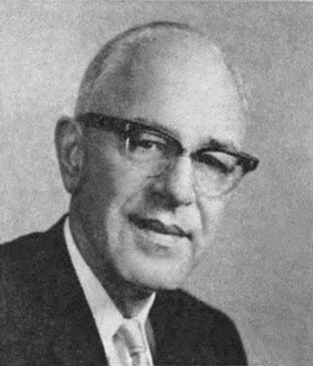
Historical · U.S. House · Pennsylvania · District 16
John Kunkel
Former U.S. Representative · Pennsylvania District 16 · 1939–1967 · Republican
John Kunkel represented Pennsylvania's District 16 in the United States House of Representatives (1939–1967) for the Republican party. The page below collects sourced biographical facts, term history, committee roles, and provenance for Kunkel.
Bioguide ID: K000341
Key facts
- Full name
- John Kunkel
- State
- Pennsylvania
- District
- District 16
- Party
- Republican
- House service
- 1939–1967
- First House term
- 1939
- Status
- Left office
- Current term ends
- —
- Born
- 1898
- Bioguide ID
- K000341
- Committee assignments
- —
- Dataset version
- 1.20260605
Biographical narrative
976 words · sourced from the Wikipedia REST extract
John Kunkel was a prominent Republican politician who served as a U.S. Representative for Pennsylvania's 16th congressional district. His political career spanned nearly three decades, during which he was elected to nine consecutive terms in the House of Representatives. Kunkel's tenure in Congress was marked by his active participation in significant legislative matters, particularly during World War II, where he was a vocal advocate for aiding allies against Nazi Germany. After his time in Congress, he continued to engage in public service at the local level, serving as a county commissioner in Dauphin County, Pennsylvania. Kunkel's legacy is commemorated in Harrisburg, Pennsylvania, where a memorial plaza is dedicated to him and his wife for their contributions to the community.
Early life and career
John Kunkel was born on July 21, 1898, in Harrisburg, Pennsylvania. He was raised in a family with a rich historical background, being the grandson of John Christian Kunkel and the great-grandson of John Sergeant. His lineage included notable figures such as Jonathan Dickinson Sergeant and Robert Whitehill, which may have influenced his eventual path into public service. Kunkel's education began at the Harrisburg Academy, where he laid the groundwork for his future academic pursuits. He later attended Phillips Academy in Andover, Massachusetts, a prestigious preparatory school known for its rigorous academic standards.
In 1916, Kunkel graduated from Yale University, an institution renowned for producing influential leaders in various fields, including politics. Following his undergraduate education, he served in the Students' Army Training Corps during World War I, contributing to the war effort in a time of national crisis. After the war, he pursued a legal education, attending Harvard University, where he graduated from the law department in 1926. This legal background would later inform his work as a legislator, as he navigated the complexities of law and governance throughout his political career.
House tenure
Kunkel's political career in the U.S. House of Representatives began when he was elected as a Republican to the 76th Congress, which convened in 1939. He successfully secured re-election to the five subsequent Congresses, demonstrating a strong support base in his district. Kunkel's legislative work was particularly notable during World War II, a period that significantly shaped American foreign policy and military strategy. He was an early critic of Nazi Germany, advocating for support to Great Britain even before the United States formally entered the conflict. His stance on foreign policy was characterized by a commitment to aiding allies, as evidenced by his support for the Lend-Lease Acts of 1941 and 1944, which facilitated military aid to nations fighting against Axis powers.
In addition to his foreign policy work, Kunkel was involved in various congressional committees. He served on the Herter Committee during the 1947-1948 period, which focused on international relations and foreign aid. His involvement in this committee reflected his ongoing interest in global affairs and the role of the United States in promoting democracy and stability abroad.
Kunkel's political aspirations extended beyond his congressional service. In 1950, he chose not to seek renomination for his House seat, instead running unsuccessfully for the nomination for United States Senator. This decision marked a transitional phase in his career, as he shifted focus to local governance. From 1952 to 1956, he served as a county commissioner in Dauphin County, Pennsylvania, where he continued to engage with community issues and local governance.
In a notable turn of events, Kunkel returned to the U.S. House of Representatives when he was elected to the 87th Congress by special election to fill the vacancy left by the death of Representative Walter M. Mumma. He was re-elected to the two succeeding Congresses, serving until his resignation on December 30, 1966. His decision not to seek re-election in 1966 marked the end of his lengthy and impactful career in the House.
Legislative focus and committees
Throughout his time in Congress, Kunkel's legislative focus was shaped by the significant events of his era, particularly the challenges posed by World War II and the subsequent Cold War. His early advocacy for aiding Great Britain and opposing Nazi Germany illustrated his commitment to international alliances and the defense of democratic values. Kunkel's support for the Lend-Lease Acts was a critical aspect of his legislative record, as these acts represented a significant shift in U.S. foreign policy, moving towards active involvement in global conflicts.
Kunkel's work on the Herter Committee further exemplified his engagement with international issues. The committee's discussions often revolved around the United States' role in post-war reconstruction and the promotion of democracy abroad. Kunkel's contributions to these discussions reflected his belief in the importance of U.S. leadership on the world stage.
In addition to his foreign policy initiatives, Kunkel's tenure also included a focus on local issues affecting his constituents in Pennsylvania. His service as a county commissioner allowed him to address community needs directly, bridging the gap between federal policies and local governance. This dual perspective enriched his understanding of the challenges faced by both local and national entities, enabling him to advocate effectively for his district's interests.
Kunkel's legacy is also commemorated through the John Crain Kunkel and Katherine Smoot Kunkel Memorial, located in Riverfront Park in Harrisburg, Pennsylvania. This memorial, known as "Kunkel Plaza," serves as a testament to his and his wife's dedication to public service and the community. Established in 1992, the plaza is a scenic amphitheater situated near the Pennsylvania State Capitol, symbolizing Kunkel's lasting impact on the region.
In summary, John Kunkel's career as a U.S. Representative was marked by significant contributions to both national and local governance. His early life and education laid a strong foundation for his political career, while his tenure in Congress reflected a commitment to addressing the pressing issues of his time. Through his legislative focus and community engagement, Kunkel left a lasting legacy that continues to be recognized in Pennsylvania.
Notable legislation
Sponsored and co-sponsored legislation for John Kunkel is pending operator curation. The biographical narrative above carries the same provenance trail until per-bill rows are written.
Sources
- [1]https://en.wikipedia.org/wiki/John_C._KunkelWikipedia · retrieved 2026-06-05
Notable quotes
Sourced quotes for John Kunkel are pending operator curation. Narrative-scope provenance remains attached below.
Sources
- [1]https://en.wikipedia.org/wiki/John_C._KunkelWikipedia · retrieved 2026-06-05
Key positions
Curated policy positions for John Kunkel are pending operator review. The biographical narrative above carries the same provenance trail until per-topic positions are written.
Sources
- [1]https://en.wikipedia.org/wiki/John_C._KunkelWikipedia · retrieved 2026-06-05
Terms served
- 1939–1941U.S. House · Term 1 · Republican
- 1941–1943U.S. House · Term 2 · Republican
- 1943–1945U.S. House · Term 3 · Republican
- 1945–1947U.S. House · Term 4 · Republican
- 1947–1949U.S. House · Term 5 · Republican
- 1949–1951U.S. House · Term 6 · Republican
- 1961–1963U.S. House · Term 7 · Republican
- 1963–1965U.S. House · Term 8 · Republican
- 1965–1967U.S. House · Term 9 · Republican
Sources & provenance
Every attributable claim above carries a per-section [N] marker that resolves to the corresponding URL below. Each entry records the upstream provider, the canonical URL, and the timestamp at which the source was retrieved by the ingest pipeline.
Key facts
- https://bioguide.congress.gov/search/bio/K000341bioguide · retrieved 2026-06-05
- https://www.govtrack.us/congress/members/406494govtrack · retrieved 2026-06-05
Biographical narrative
- https://en.wikipedia.org/wiki/John_C._Kunkelwikipedia · retrieved 2026-06-05
Find your representative
Every U.S. state elects representatives by district. Browse Pennsylvania’s delegation, the full former-representative roster, or explore the role and term length.
Related on The Candidate
- Preceded by Edgar KiessEarlier holder of the Pennsylvania District 16 House seat · Republican.Open
- Succeeded by Edwin EshlemanLater holder of the Pennsylvania District 16 House seat · Republican.Open
- Adam SeybertFormer U.S. Representative · Pennsylvania District 1 · RepublicanOpen
- Benjamin SayFormer U.S. Representative · Pennsylvania District 1 · RepublicanOpen
- Chapman FreemanFormer U.S. Representative · Pennsylvania District 1 · RepublicanOpen
- Harry RansleyFormer U.S. Representative · Pennsylvania District 1 · RepublicanOpen