
Historical · U.S. House · Pennsylvania · District 16
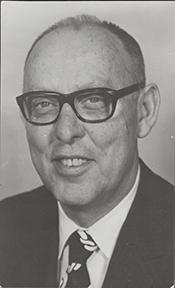
Edwin Eshleman
Former U.S. Representative · Pennsylvania District 16 · 1967–1977 · Republican
Edwin Eshleman represented Pennsylvania's District 16 in the United States House of Representatives (1967–1977) for the Republican party. The page below collects sourced biographical facts, term history, committee roles, and provenance for Eshleman.
Bioguide ID: E000214
Key facts
- Full name
- Edwin Eshleman
- State
- Pennsylvania
- District
- District 16
- Party
- Republican
- House service
- 1967–1977
- First House term
- 1967
- Status
- Left office
- Current term ends
- —
- Born
- 1920
- Bioguide ID
- E000214
- Committee assignments
- —
- Dataset version
- 1.20260605
Biographical narrative
971 words · sourced from the Wikipedia REST extract
Edwin D. Eshleman was an American politician who served as a U.S. Representative for Pennsylvania's 16th congressional district from 1967 until 1977. A member of the Republican Party, Eshleman had a notable political career that spanned over a decade in the U.S. House of Representatives. Prior to his tenure in Congress, he was active in state politics, having served in the Pennsylvania House of Representatives. His legislative career was marked by his commitment to public service and his involvement in various political roles at both the state and federal levels.
Early life and career
Edwin Duing Eshleman was born on December 4, 1920, in Quarryville, Pennsylvania. He grew up in a region that would later become significant in his political career. Eshleman pursued higher education at Franklin and Marshall College, where he earned a Bachelor of Science degree in 1942. His academic journey did not end there; he furthered his studies at Temple University, which contributed to his qualifications for a career in public service.
With the onset of World War II, Eshleman enlisted in the United States Coast Guard, where he served as a lieutenant. His military service during this critical period in American history instilled in him a sense of duty and commitment to his country, values that would later influence his political career. After the war, he transitioned into education, taking on the role of a school teacher. This experience in education provided him with insights into the needs and challenges faced by students and educators, which would inform his later legislative priorities.
Eshleman's entry into politics began at the state level when he was elected to the Pennsylvania House of Representatives. His tenure in the state legislature lasted from 1954 to 1966, during which he held various leadership positions, including serving as both Minority and Majority Whip at different times. These roles allowed him to develop significant legislative skills and a deep understanding of the political process, preparing him for his future endeavors in Congress.
House tenure
In 1966, Edwin Eshleman was elected to the 90th Congress, representing Pennsylvania's 16th congressional district. His election marked the beginning of a decade-long career in the U.S. House of Representatives, where he served a total of five terms. Eshleman took office on January 3, 1967, and continued to serve until January 3, 1977. Throughout his time in Congress, he was re-elected four additional times, demonstrating a level of support from his constituents that allowed him to maintain his position in a changing political landscape.
During his tenure, Eshleman was involved in various legislative initiatives and discussions that shaped the policies of the time. His experience in the Pennsylvania House of Representatives likely contributed to his ability to navigate the complexities of federal legislation. As a member of the Republican Party, he aligned with the party's values and priorities, which were particularly influential during the late 1960s and 1970s, a period marked by significant social and political changes in the United States.
Eshleman's legislative career in the House was characterized by his commitment to representing the interests of his constituents in Pennsylvania. He worked on issues that were pertinent to his district, which included a mix of urban and rural communities. His ability to connect with local concerns while engaging in national debates was a hallmark of his approach to governance.
After serving five terms in Congress, Eshleman chose to retire for health reasons. His departure from the House marked the end of an era for his constituents, who had come to rely on his leadership and representation. Following his retirement, he endorsed Robert Smith Walker, who had served as his administrative assistant and chief of staff, to succeed him in Congress. This transition indicated Eshleman's commitment to ensuring a smooth handover of responsibilities and continuity in representation for his district.
Legislative focus and committees
Throughout his time in the House of Representatives, Edwin Eshleman was involved in various legislative efforts that reflected his priorities and the needs of his constituents. While specific details about the bills he sponsored or supported are not provided, it is evident that his background in education and state politics influenced his legislative focus. His experience as a teacher likely shaped his views on education policy, and he may have advocated for initiatives that aimed to improve educational opportunities and resources.
Eshleman's roles in the Pennsylvania House of Representatives, where he served as both Minority and Majority Whip, equipped him with valuable skills in legislative strategy and coalition-building. These skills would have been essential as he navigated the complexities of federal legislation and worked to advance the interests of his district in Congress. His ability to work across party lines and engage with colleagues from different political backgrounds would have been crucial in achieving legislative goals.
In addition to education, Eshleman's legislative focus may have included issues relevant to his constituents, such as economic development, infrastructure, and public services. The 16th congressional district, located in southcentral Pennsylvania, encompasses a diverse range of communities, each with its own unique challenges and opportunities. Eshleman's commitment to addressing these issues would have been a central aspect of his work in the House.
Eshleman's time in Congress coincided with significant national events, including the civil rights movement, the Vietnam War, and various social reforms. While specific legislative actions taken by Eshleman during this period are not detailed, it is likely that he engaged with the pressing issues of the day, contributing to the broader national dialogue on these topics.
After concluding his congressional career, Edwin D. Eshleman returned to his home in Lancaster, Pennsylvania. He passed away on January 10, 1985, leaving behind a legacy of public service and dedication to the constituents he represented throughout his political career. His contributions to both state and federal government reflect a commitment to civic duty and the democratic process.
Notable legislation
Sponsored and co-sponsored legislation for Edwin Eshleman is pending operator curation. The biographical narrative above carries the same provenance trail until per-bill rows are written.
Sources
- [1]https://en.wikipedia.org/wiki/Edwin_D._EshlemanWikipedia · retrieved 2026-06-05
Notable quotes
Sourced quotes for Edwin Eshleman are pending operator curation. Narrative-scope provenance remains attached below.
Sources
- [1]https://en.wikipedia.org/wiki/Edwin_D._EshlemanWikipedia · retrieved 2026-06-05
Key positions
Curated policy positions for Edwin Eshleman are pending operator review. The biographical narrative above carries the same provenance trail until per-topic positions are written.
Sources
- [1]https://en.wikipedia.org/wiki/Edwin_D._EshlemanWikipedia · retrieved 2026-06-05
Terms served
- 1967–1969U.S. House · Term 1 · Republican
- 1969–1971U.S. House · Term 2 · Republican
- 1971–1973U.S. House · Term 3 · Republican
- 1973–1975U.S. House · Term 4 · Republican
- 1975–1977U.S. House · Term 5 · Republican
Sources & provenance
Every attributable claim above carries a per-section [N] marker that resolves to the corresponding URL below. Each entry records the upstream provider, the canonical URL, and the timestamp at which the source was retrieved by the ingest pipeline.
Key facts
- https://bioguide.congress.gov/search/bio/E000214bioguide · retrieved 2026-06-05
- https://www.govtrack.us/congress/members/403901govtrack · retrieved 2026-06-05
Biographical narrative
- https://en.wikipedia.org/wiki/Edwin_D._Eshlemanwikipedia · retrieved 2026-06-05
Find your representative
Every U.S. state elects representatives by district. Browse Pennsylvania’s delegation, the full former-representative roster, or explore the role and term length.
Related on The Candidate
- Preceded by John KunkelEarlier holder of the Pennsylvania District 16 House seat · Republican.Open
- Succeeded by Robert WalkerLater holder of the Pennsylvania District 16 House seat · Republican.Open
- Adam SeybertFormer U.S. Representative · Pennsylvania District 1 · RepublicanOpen
- Benjamin SayFormer U.S. Representative · Pennsylvania District 1 · RepublicanOpen
- Chapman FreemanFormer U.S. Representative · Pennsylvania District 1 · RepublicanOpen
- Harry RansleyFormer U.S. Representative · Pennsylvania District 1 · RepublicanOpen