
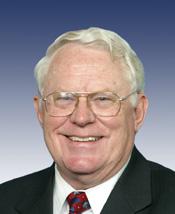
Historical · U.S. House · Pennsylvania · District 16
Joseph Pitts
Former U.S. Representative · Pennsylvania District 16 · 1997–2017 · Republican
Joseph Pitts represented Pennsylvania's District 16 in the United States House of Representatives (1997–2017) for the Republican party. The page below collects sourced biographical facts, term history, committee roles, and provenance for Pitts.
Bioguide ID: P000373
Key facts
- Full name
- Joseph Pitts
- State
- Pennsylvania
- District
- District 16
- Party
- Republican
- House service
- 1997–2017
- First House term
- 1997
- Status
- Left office
- Current term ends
- —
- Born
- 1939
- Bioguide ID
- P000373
- Committee assignments
- —
- Dataset version
- 1.20260605
Biographical narrative
918 words · sourced from the Wikipedia REST extract
Joseph R. Pitts is a former American politician who served as the U.S. Representative for Pennsylvania's 16th congressional district from 1997 until 2017. A member of the Republican Party, Pitts represented a district that included parts of Lancaster and Reading, as well as areas known for their Amish communities and the southwestern suburbs of Philadelphia in Chester County. His tenure in Congress spanned two decades, during which he was involved in various legislative efforts and maintained a conservative voting record.
Early life and career
Joseph R. Pitts was born on October 10, 1939, in Lexington, Kentucky. He pursued his higher education at Asbury College, where he completed his degree before embarking on a military career. Pitts served in the United States Air Force for five and a half years, including three tours in Vietnam. He began his service as a second lieutenant and was later promoted to captain. His military training included graduating second in his class from Navigator School, after which he became an electronic warfare officer. Pitts served on B-52 Stratofortresses stationed at Westover Air Force Base in Massachusetts, where he participated in 116 combat missions during the Vietnam War. His service earned him the Air Medal with five oak leaf clusters, recognizing his contributions to military operations.
After concluding his military service in 1969, Pitts relocated to Kennett Square, Pennsylvania, which is a suburb of Philadelphia and the hometown of his wife, Ginny. The couple built a home in Kennett Square, where they have continued to reside. Pitts entered politics in 1972 when he was elected to the Pennsylvania House of Representatives, representing Kennett Square and the surrounding areas in southeastern Chester County. His experience in state politics laid the groundwork for his future congressional career.
House tenure
Pitts's journey to the U.S. House of Representatives began in 1996 when he decided to run for the seat vacated by ten-term Republican congressman Bob Walker, who announced his retirement. Pitts entered a competitive Republican primary with five candidates and secured the nomination by winning 45% of the vote, defeating the second-place candidate by a significant margin. In the general election, he faced Democrat James G. Blaine and won decisively, garnering 59% of the vote.
Following his initial victory, Pitts successfully won re-election multiple times, demonstrating a strong hold on his district. In 1998, he received 71% of the vote, and in 2000, he won with 67%. His re-election margins continued to be substantial in subsequent elections, with 88% in 2002 and 64% in 2004. However, in 2006, Pitts faced controversy regarding his decision to run for a sixth term, as he had previously indicated a desire to serve only five terms. Despite this, he was re-elected, defeating Democratic challenger Lois Herr with 57% of the vote, marking the second smallest margin of his career.
In 2008, Pitts sought a seventh term and faced Navy veteran Bruce Slater. He won the election with 56% of the vote, which represented the smallest margin of victory in his congressional career. The following election cycle in 2010 saw him rematch with Lois Herr, whom he defeated with 65% of the vote. In 2012, Pitts faced Democrat Aryanna Strader and Independent Jim Bednarski, winning re-election for a ninth term with 55% of the vote. This election was notable for its close results in certain areas, particularly in Berks County, where he lost by a significant margin.
Pitts announced in December 2015 that he would not seek re-election in 2016, concluding his tenure in the House on January 3, 2017. Over the course of his congressional career, he served a total of ten terms, reflecting a significant period of influence in Pennsylvania politics.
Legislative focus and committees
Throughout his time in Congress, Pitts maintained a conservative voting record, consistent with the political leanings of his district, which had historically been one of the most Republican areas in the Northeast. However, redistricting efforts altered the political landscape, making the 16th district somewhat less Republican. Despite these changes, Pitts received high ratings from conservative organizations, including a perfect score from the American Conservative Union and the Christian Coalition during various years of his service.
Pitts was actively involved in several legislative initiatives and was known for his strong advocacy on issues related to family values and religious expression. He served as the chairman of the Values Action Team, a subgroup of the Republican Study Committee that coordinated legislative efforts with the Christian right. His commitment to these principles was evident in his support for legislation like The Ten Commandments Defense Act, which aimed to preserve the role of religious symbols in public life.
In addition to social issues, Pitts was a proponent of nuclear energy and introduced legislation aimed at streamlining the regulatory process for new nuclear reactors. His advocacy for energy policy included the "Streamline America's Future Energy (SAFE) Nuclear Act," which sought to facilitate the development of nuclear power in the United States.
Pitts also took a stance against online gambling, co-sponsoring multiple bills aimed at prohibiting internet gambling. His legislative efforts included the Stupak–Pitts Amendment, which became a significant point of contention in the national health care debate, reflecting his long-standing opposition to abortion.
Pitts's voting record and legislative priorities illustrate his alignment with conservative values, as well as his commitment to representing the interests of his constituents in Pennsylvania's 16th congressional district. His tenure in the U.S. House of Representatives was marked by a focus on energy policy, social issues, and a consistent conservative approach to governance.
Notable legislation
Sponsored and co-sponsored legislation for Joseph Pitts is pending operator curation. The biographical narrative above carries the same provenance trail until per-bill rows are written.
Sources
- [1]https://en.wikipedia.org/wiki/Joe_Pitts_(Pennsylvania_politician)Wikipedia · retrieved 2026-06-05
Notable quotes
Sourced quotes for Joseph Pitts are pending operator curation. Narrative-scope provenance remains attached below.
Sources
- [1]https://en.wikipedia.org/wiki/Joe_Pitts_(Pennsylvania_politician)Wikipedia · retrieved 2026-06-05
Key positions
Curated policy positions for Joseph Pitts are pending operator review. The biographical narrative above carries the same provenance trail until per-topic positions are written.
Sources
- [1]https://en.wikipedia.org/wiki/Joe_Pitts_(Pennsylvania_politician)Wikipedia · retrieved 2026-06-05
Terms served
- 1997–1999U.S. House · Term 1 · Republican
- 1999–2001U.S. House · Term 2 · Republican
- 2001–2003U.S. House · Term 3 · Republican
- 2003–2005U.S. House · Term 4 · Republican
- 2005–2007U.S. House · Term 5 · Republican
- 2007–2009U.S. House · Term 6 · Republican
- 2009–2011U.S. House · Term 7 · Republican
- 2011–2013U.S. House · Term 8 · Republican
- 2013–2015U.S. House · Term 9 · Republican
- 2015–2017U.S. House · Term 10 · Republican
Sources & provenance
Every attributable claim above carries a per-section [N] marker that resolves to the corresponding URL below. Each entry records the upstream provider, the canonical URL, and the timestamp at which the source was retrieved by the ingest pipeline.
Key facts
- https://bioguide.congress.gov/search/bio/P000373bioguide · retrieved 2026-06-05
- http://pitts.house.govhouse.gov · retrieved 2026-06-05
Biographical narrative
- https://en.wikipedia.org/wiki/Joe_Pitts_(Pennsylvania_politician)wikipedia · retrieved 2026-06-05
Find your representative
Every U.S. state elects representatives by district. Browse Pennsylvania’s delegation, the full former-representative roster, or explore the role and term length.
Related on The Candidate
- Preceded by Robert WalkerEarlier holder of the Pennsylvania District 16 House seat · Republican.Open
- Adam SeybertFormer U.S. Representative · Pennsylvania District 1 · RepublicanOpen
- Benjamin SayFormer U.S. Representative · Pennsylvania District 1 · RepublicanOpen
- Chapman FreemanFormer U.S. Representative · Pennsylvania District 1 · RepublicanOpen
- Harry RansleyFormer U.S. Representative · Pennsylvania District 1 · RepublicanOpen
- Republican PartyFederal candidates and office holders on the Republican line.Open