
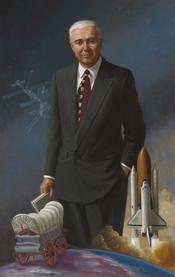
Historical · U.S. House · Pennsylvania · District 16
Robert Walker
Former U.S. Representative · Pennsylvania District 16 · 1977–1997 · Republican
Robert Walker represented Pennsylvania's District 16 in the United States House of Representatives (1977–1997) for the Republican party. The page below collects sourced biographical facts, term history, committee roles, and provenance for Walker.
Bioguide ID: W000068
Key facts
- Full name
- Robert Walker
- State
- Pennsylvania
- District
- District 16
- Party
- Republican
- House service
- 1977–1997
- First House term
- 1977
- Status
- Left office
- Current term ends
- —
- Born
- 1942
- Bioguide ID
- W000068
- Committee assignments
- —
- Dataset version
- 1.20260605
Biographical narrative
1,063 words · sourced from the Wikipedia REST extract
Robert Walker is a former U.S. Representative who served Pennsylvania's 16th congressional district as a member of the Republican Party from 1977 until his retirement in 1997. Over the course of ten terms in the House of Representatives, he became known for his strong conservative stance, particularly on issues related to government spending and drug policy. Walker's tenure was marked by his active involvement in legislative procedures and his efforts to advocate for scientific research and space exploration.
Early life and career
Robert Smith Walker was born on December 23, 1942, in Bradford, Pennsylvania. He completed his secondary education at Penn Manor High School before pursuing higher education. Walker attended the College of William and Mary for a brief period from 1960 to 1961 and later earned a Bachelor of Science degree from Millersville University of Pennsylvania in 1964.
Following his graduation, Walker began his professional career in education, teaching high school from 1964 until 1967. During this time, he also served in the Pennsylvania National Guard from 1967 to 1973. After completing his military service, he furthered his education by obtaining a Master of Arts degree from the University of Delaware in 1968.
Walker transitioned into politics by becoming an assistant to Congressman Edwin Duing Eshleman, a Republican representative from Pennsylvania. He worked in this capacity from 1967 until Eshleman's retirement in 1977, gaining valuable experience in legislative processes and constituent services. This role laid the groundwork for Walker's own political ambitions.
House tenure
In 1976, Walker successfully secured the Republican nomination to represent Pennsylvania's 16th congressional district, which encompasses parts of Lebanon, Lancaster, and Chester counties. He was elected to the U.S. House of Representatives in the following election and began his first term in January 1977. Over the next two decades, Walker was re-elected multiple times, serving a total of ten terms in Congress until he chose not to seek re-election in 1996, with his final term concluding on January 3, 1997.
Throughout his time in the House, Walker was recognized as a vocal conservative and aligned himself with other prominent conservative figures, including Newt Gingrich, Bob Dornan, and Trent Lott. He was a member of the Conservative Opportunity Society, a group focused on promoting conservative values within the Republican Party. Walker's approach to politics was characterized by his spirited rhetoric and a deep understanding of parliamentary procedure, which he utilized to advocate for his principles.
Walker gained attention for his strong stance on fiscal responsibility and government spending. He was particularly vocal about the need to reduce deficit spending while simultaneously advocating for increased funding in specific areas such as space research, weather studies, and earthquake preparedness. His dual focus on reducing overall government expenditure while promoting scientific advancement highlighted the complexity of his legislative priorities.
One notable incident during Walker's congressional career involved a confrontation with then-Speaker of the House Tip O'Neill. This event occurred during a time when C-SPAN began broadcasting House proceedings, allowing members to reach a broader audience. Walker, along with Gingrich and other conservatives, utilized this platform to deliver speeches criticizing the Democratic leadership. A significant moment arose when O'Neill had cameras pan the nearly empty chamber while Walker was speaking, leading to a heated exchange that resulted in O'Neill being reprimanded—a rare occurrence for a Speaker.
In addition to his fiscal conservatism, Walker was a strong advocate for tougher drug laws. He proposed stringent measures that would require federal contractors to implement drug-free workplace programs, with severe penalties for violations. His commitment to combating drug abuse was a prominent aspect of his legislative agenda.
Walker also played a crucial role in reforming the Congressional Record, successfully advocating for the ban of practices that allowed for its manipulation. His leadership extended to his position as chairman of the House Science Committee during his final term, where he continued to push for advancements in scientific research and technology.
Despite his sometimes contentious relationships within the House, Walker maintained a strong support base in Pennsylvania, consistently receiving significant voter support throughout his congressional career. His ability to connect with constituents contributed to his electoral success, as he rarely received less than sixty-five percent of the vote in his elections.
Legislative focus and committees
During his time in Congress, Walker's legislative focus encompassed a range of issues, with a particular emphasis on science and technology, fiscal policy, and drug enforcement. His role on the House Science Committee allowed him to influence policy related to scientific research and innovation, reflecting his commitment to advancing the United States' capabilities in these areas.
Walker was known for his advocacy of increased funding for various scientific initiatives, including space exploration and environmental research. His efforts were aimed at ensuring that the United States remained a leader in scientific advancements, particularly in the context of the space program. He supported initiatives that promoted research in hydrogen technology and weather forecasting, recognizing the importance of these fields for both national security and public welfare.
In addition to his work on the Science Committee, Walker's involvement in the Conservative Opportunity Society and his relationships with other conservative leaders positioned him as a key player in shaping the Republican agenda during the late 20th century. His alignment with figures like Newt Gingrich helped facilitate a shift in the political landscape, particularly as the Republican Party sought to consolidate power in the House.
After leaving Congress, Walker continued to engage in public service and policy advocacy. He was appointed by President George W. Bush to chair the Commission on the Future of the United States Aerospace Industry in 2001 and served on various presidential commissions related to space exploration and the U.S. Postal Service in the following years. His expertise in aerospace and science policy remained influential in his post-congressional career.
Walker also took on leadership roles in private sector organizations, including serving as executive chairman of a lobbying firm and as CEO of a consulting company focused on space policy. His ongoing involvement in these areas reflects his sustained commitment to the fields of science and technology, as well as his dedication to public service.
Overall, Robert Walker's career in the U.S. House of Representatives was marked by his strong conservative principles, advocacy for scientific advancement, and active engagement in legislative processes. His legacy includes significant contributions to both fiscal policy and the promotion of science and technology in the United States.
Notable legislation
Sponsored and co-sponsored legislation for Robert Walker is pending operator curation. The biographical narrative above carries the same provenance trail until per-bill rows are written.
Sources
- [1]https://en.wikipedia.org/wiki/Bob_Walker_(Pennsylvania_politician)Wikipedia · retrieved 2026-06-05
Notable quotes
Sourced quotes for Robert Walker are pending operator curation. Narrative-scope provenance remains attached below.
Sources
- [1]https://en.wikipedia.org/wiki/Bob_Walker_(Pennsylvania_politician)Wikipedia · retrieved 2026-06-05
Key positions
Curated policy positions for Robert Walker are pending operator review. The biographical narrative above carries the same provenance trail until per-topic positions are written.
Sources
- [1]https://en.wikipedia.org/wiki/Bob_Walker_(Pennsylvania_politician)Wikipedia · retrieved 2026-06-05
Terms served
- 1977–1979U.S. House · Term 1 · Republican
- 1979–1981U.S. House · Term 2 · Republican
- 1981–1983U.S. House · Term 3 · Republican
- 1983–1985U.S. House · Term 4 · Republican
- 1985–1987U.S. House · Term 5 · Republican
- 1987–1989U.S. House · Term 6 · Republican
- 1989–1991U.S. House · Term 7 · Republican
- 1991–1993U.S. House · Term 8 · Republican
- 1993–1995U.S. House · Term 9 · Republican
- 1995–1997U.S. House · Term 10 · Republican
Sources & provenance
Every attributable claim above carries a per-section [N] marker that resolves to the corresponding URL below. Each entry records the upstream provider, the canonical URL, and the timestamp at which the source was retrieved by the ingest pipeline.
Key facts
- https://bioguide.congress.gov/search/bio/W000068bioguide · retrieved 2026-06-05
- https://www.govtrack.us/congress/members/411247govtrack · retrieved 2026-06-05
Biographical narrative
- https://en.wikipedia.org/wiki/Bob_Walker_(Pennsylvania_politician)wikipedia · retrieved 2026-06-05
Find your representative
Every U.S. state elects representatives by district. Browse Pennsylvania’s delegation, the full former-representative roster, or explore the role and term length.
Related on The Candidate
- Preceded by Edwin EshlemanEarlier holder of the Pennsylvania District 16 House seat · Republican.Open
- Succeeded by Joseph PittsLater holder of the Pennsylvania District 16 House seat · Republican.Open
- Adam SeybertFormer U.S. Representative · Pennsylvania District 1 · RepublicanOpen
- Benjamin SayFormer U.S. Representative · Pennsylvania District 1 · RepublicanOpen
- Chapman FreemanFormer U.S. Representative · Pennsylvania District 1 · RepublicanOpen
- Harry RansleyFormer U.S. Representative · Pennsylvania District 1 · RepublicanOpen