
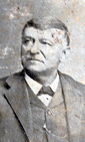
Historical · U.S. House · Pennsylvania · District 17
Alexander Billmeyer
Former U.S. Representative · Pennsylvania District 17 · 1901–1903 · Democratic
Alexander Billmeyer represented Pennsylvania's District 17 in the United States House of Representatives (1901–1903) for the Democratic party. The page below collects sourced biographical facts, term history, committee roles, and provenance for Billmeyer.
Bioguide ID: B000465
Key facts
- Full name
- Alexander Billmeyer
- State
- Pennsylvania
- District
- District 17
- Party
- Democratic
- House service
- 1901–1903
- First House term
- 1901
- Status
- Left office
- Current term ends
- —
- Born
- 1841
- Bioguide ID
- B000465
- Committee assignments
- —
- Dataset version
- 1.20260606
Biographical narrative
888 words · sourced from the Wikipedia REST extract
Alexander Billmeyer was a Democratic politician who served as a U.S. Representative for Pennsylvania's 17th congressional district. His tenure in the House of Representatives was marked by a commitment to his constituents and a focus on issues relevant to his district. Billmeyer was born in 1841 and engaged in various pursuits throughout his life, including agriculture and banking. He served a single term in Congress, filling a vacancy, and chose not to seek re-election afterward. Following his congressional career, he returned to his agricultural roots and continued to live in Pennsylvania until his death in 1924.
Early life and career
Alexander Billmeyer was born on January 7, 1841, in Liberty Township, Pennsylvania. Growing up in a rural environment, he was likely influenced by the agricultural practices and community values of the region. His early life in Pennsylvania set the stage for his future endeavors in both agriculture and public service. Billmeyer's upbringing in a farming community provided him with firsthand experience of the challenges and opportunities faced by rural constituents, which would later inform his legislative priorities.
In addition to his agricultural pursuits, Billmeyer was involved in the lumber industry, which was a significant economic activity in Pennsylvania during the 19th century. The lumber industry not only contributed to the local economy but also played a vital role in the development of infrastructure and housing in the growing nation. Billmeyer's work in this sector would have given him insights into the economic conditions and labor issues of the time.
Billmeyer's professional journey also included a notable position as the director of a national bank located in Washingtonville, Pennsylvania. This role in the banking sector would have provided him with a solid understanding of financial matters, economic policy, and the banking system, which are crucial areas of knowledge for any public servant. His experience in both agriculture and banking positioned him well for a career in politics, as he was able to relate to the economic concerns of his constituents.
House tenure
Alexander Billmeyer's political career culminated in his election to the U.S. House of Representatives, where he served as a member of the Democratic Party. He was elected to the Fifty-seventh Congress to fill a vacancy that arose following the death of Rufus K. Polk, who had previously held the seat. Billmeyer's election to Congress marked a significant milestone in his career, as it provided him with a platform to advocate for the interests of his district and engage in national legislative matters.
His term in the House began in 1901, during a period of considerable change in the United States. The early 20th century was marked by industrialization, urbanization, and significant social changes, including movements for labor rights and women's suffrage. As a representative from Pennsylvania, a state that was at the forefront of these developments, Billmeyer was positioned to address the concerns of his constituents regarding economic growth, labor conditions, and social issues.
During his time in Congress, Billmeyer participated in the legislative process, contributing to discussions and decisions that would impact his district and the nation. However, he did not seek renomination in 1902, which meant that his tenure in the House was limited to a single term. This decision could reflect a variety of factors, including personal considerations, political strategy, or a desire to return to his previous pursuits.
After concluding his term on March 3, 1903, Billmeyer returned to Pennsylvania, where he resumed his agricultural activities in Montour County. This transition back to his roots highlights his commitment to the agricultural community and his desire to remain connected to the issues that mattered most to him and his constituents.
Legislative focus and committees
While specific details regarding the legislative focus and committee assignments during Alexander Billmeyer's time in Congress are not extensively documented, it can be inferred that his background in agriculture and banking would have influenced his areas of interest. Representatives often draw upon their professional experiences when addressing legislative matters, and Billmeyer's dual background in farming and finance likely informed his perspective on economic and agricultural policies.
Given the context of his election during a time of significant economic transformation, it is reasonable to assume that Billmeyer may have been involved in discussions related to agricultural legislation, banking regulations, and economic development initiatives. The early 1900s were characterized by a growing recognition of the importance of supporting farmers and rural communities, which would have aligned with Billmeyer's interests and expertise.
As a member of the Democratic Party, Billmeyer would have also been part of broader discussions regarding social reforms and labor rights, as the party was increasingly aligned with the interests of working-class Americans during this period. His experiences in the banking sector may have provided him with insights into the financial challenges faced by farmers and small businesses, further shaping his legislative priorities.
After his congressional service, Billmeyer continued to engage with his community through his agricultural pursuits until his death on May 24, 1924. He was interred in Odd Fellows Cemetery in Danville, Pennsylvania, where he is remembered as a figure who contributed to both his local community and the national legislative landscape during a transformative era in American history. His life and career reflect the interconnectedness of local and national issues, particularly in the context of agriculture and economic policy in the early 20th century.
Notable legislation
Sponsored and co-sponsored legislation for Alexander Billmeyer is pending operator curation. The biographical narrative above carries the same provenance trail until per-bill rows are written.
Sources
- [1]https://en.wikipedia.org/wiki/Alexander_BillmeyerWikipedia · retrieved 2026-06-06
Notable quotes
Sourced quotes for Alexander Billmeyer are pending operator curation. Narrative-scope provenance remains attached below.
Sources
- [1]https://en.wikipedia.org/wiki/Alexander_BillmeyerWikipedia · retrieved 2026-06-06
Key positions
Curated policy positions for Alexander Billmeyer are pending operator review. The biographical narrative above carries the same provenance trail until per-topic positions are written.
Sources
- [1]https://en.wikipedia.org/wiki/Alexander_BillmeyerWikipedia · retrieved 2026-06-06
Terms served
- 1901–1903U.S. House · Term 1 · Democratic
Sources & provenance
Every attributable claim above carries a per-section [N] marker that resolves to the corresponding URL below. Each entry records the upstream provider, the canonical URL, and the timestamp at which the source was retrieved by the ingest pipeline.
Key facts
- https://bioguide.congress.gov/search/bio/B000465bioguide · retrieved 2026-06-06
- https://www.govtrack.us/congress/members/401448govtrack · retrieved 2026-06-06
Biographical narrative
- https://en.wikipedia.org/wiki/Alexander_Billmeyerwikipedia · retrieved 2026-06-06
Find your representative
Every U.S. state elects representatives by district. Browse Pennsylvania’s delegation, the full former-representative roster, or explore the role and term length.
Related on The Candidate
- Preceded by Monroe KulpEarlier holder of the Pennsylvania District 17 House seat · Republican.Open
- Succeeded by Franklin DershemLater holder of the Pennsylvania District 17 House seat · Democratic.Open
- Adam SeybertFormer U.S. Representative · Pennsylvania District 1 · RepublicanOpen
- Benjamin SayFormer U.S. Representative · Pennsylvania District 1 · RepublicanOpen
- Chapman FreemanFormer U.S. Representative · Pennsylvania District 1 · RepublicanOpen
- Harry RansleyFormer U.S. Representative · Pennsylvania District 1 · RepublicanOpen