
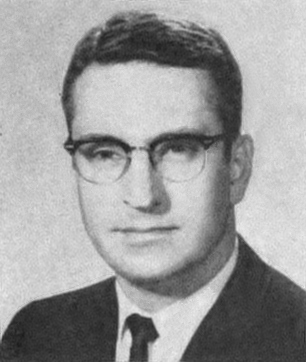
Historical · U.S. House · Pennsylvania · District 19
Nathaniel Craley Jr.
Former U.S. Representative · Pennsylvania District 19 · 1965–1967 · Democratic
Nathaniel Craley Jr. represented Pennsylvania's District 19 in the United States House of Representatives (1965–1967) for the Democratic party. The page below collects sourced biographical facts, term history, committee roles, and provenance for Jr..
Bioguide ID: C000866
Key facts
- Full name
- Nathaniel Craley Jr.
- State
- Pennsylvania
- District
- District 19
- Party
- Democratic
- House service
- 1965–1967
- First House term
- 1965
- Status
- Left office
- Current term ends
- —
- Born
- 1927
- Bioguide ID
- C000866
- Committee assignments
- —
- Dataset version
- 1.20260605
Biographical narrative
995 words · sourced from the Wikipedia REST extract
Nathaniel Craley Jr. was a Democratic politician who served as a U.S. Representative for Pennsylvania's 19th congressional district. His tenure in the U.S. House of Representatives began in 1965 and concluded in early 1967. Following his congressional career, Craley held various positions in the Pacific Islands, contributing to public affairs and administration in the region. His life spanned nearly eight decades, during which he engaged in both local governance and broader administrative roles in U.S. territories.
Early life and career
Nathaniel Neiman Craley Jr. was born on November 17, 1927, in Red Lion, Pennsylvania. His early education culminated in his graduation from the Taft School in Watertown, Connecticut, in 1946. This preparatory school experience likely provided him with a solid academic foundation that would serve him well in his later pursuits. Following his time at Taft, Craley attended Gettysburg College, where he graduated in 1950. His education at these institutions may have influenced his future interests in economics and public service.
After completing his college education, Craley entered the workforce in the furniture manufacturing industry, where he remained from 1950 until 1965. This period in the private sector likely provided him with insights into the business world and the economic challenges faced by manufacturers, which would later inform his political perspectives. Concurrently, Craley began to engage in public service and community involvement. He served as treasurer of the York County Planning Commission from 1959 to 1965, a role that involved overseeing financial matters and contributing to the planning and development of the county.
Craley's commitment to community service extended beyond financial oversight. He was actively involved in various local organizations, including serving as the director and first vice president of the York County Council of Community Services from 1960 to 1964. His leadership in this council demonstrated his dedication to addressing community needs and fostering collaboration among service organizations. Additionally, he held the position of director for the York County Council for Human Relations from 1960 to 1963, which likely involved efforts to promote social equity and community cohesion.
In the early 1960s, Craley's political aspirations began to take shape. He became the chairman of the York County Democratic Committee from 1962 to 1964, a role that would have positioned him as a key figure in local Democratic politics. His leadership in this capacity likely helped him build a network of supporters and establish a reputation within the party, paving the way for his future electoral success.
Before entering the U.S. House of Representatives, Craley also contributed to education as an instructor in economics and history at York Junior College from 1958 to 1959. This experience in academia may have further honed his understanding of economic principles and historical contexts, enriching his perspective as a public servant.
House tenure
Craley's political career reached a significant milestone when he was elected as a Democrat to the 89th United States Congress in 1964. His election marked the beginning of his term in the U.S. House of Representatives, where he represented Pennsylvania's 19th congressional district. During his time in Congress, Craley participated in various legislative activities and contributed to discussions on a range of issues pertinent to his constituents and the nation.
Craley's tenure in the House lasted until January 3, 1967. However, he faced challenges in his bid for reelection in 1966 and was ultimately unsuccessful in securing a second term. The political landscape during this period was complex, and various factors may have influenced the electoral outcomes for incumbents. Following his departure from Congress, Craley transitioned into a series of roles that took him beyond Pennsylvania.
Legislative focus and committees
While specific details regarding Craley's legislative focus and committee assignments during his time in Congress are not provided, it is reasonable to infer that his background in economics, community service, and local governance likely influenced his priorities as a legislator. Given his involvement in community organizations and his role as chairman of the York County Democratic Committee, Craley may have been particularly attuned to issues affecting local communities, economic development, and social services.
After concluding his term in the U.S. House of Representatives, Craley's career took a distinct turn as he accepted various positions in the Pacific Islands, a region that includes several U.S. territories. From 1967 to 1972, he served as the Commissioner for Public Affairs for the Trust Territory of the Pacific Islands. In this role, he was responsible for overseeing public relations and communication efforts, likely working to improve the relationship between the U.S. government and the island communities.
Craley continued his public service in the Pacific Islands as a Special Assistant to the High Commissioner from 1972 to 1976. This position would have involved advising the High Commissioner on various matters and contributing to the administration of U.S. territories in the region. His involvement in the Plebiscite Commission of the Northern Mariana Islands in 1975 indicates his engagement with significant political processes affecting the governance of these territories.
Further extending his service, Craley worked as a Special Assistant to the Resident Commissioner of the Commonwealth of Northern Mariana Islands from 1976 to 1978. He later took on the role of Director for Administration for the Trust Territory of the Pacific Islands from 1978 to 1981, where he likely managed administrative functions and supported the governance of the territories.
Craley's final position in the Pacific Islands was as a Special Assistant to the High Commissioner from 1981 to 1985, concluding a lengthy career in public service that spanned both his time in Congress and his subsequent roles in the Pacific. His contributions to governance and public affairs in these territories reflect a commitment to serving communities beyond his home state of Pennsylvania.
Nathaniel Craley Jr. passed away on June 18, 2006, in Glen Rock, Pennsylvania, at the age of 78. His life and career encompassed a range of experiences in education, local governance, and national politics, leaving a legacy of public service that extended into U.S. territories in the Pacific.
Notable legislation
Sponsored and co-sponsored legislation for Nathaniel Craley Jr. is pending operator curation. The biographical narrative above carries the same provenance trail until per-bill rows are written.
Sources
- [1]https://en.wikipedia.org/wiki/Nathaniel_N._Craley_Jr.Wikipedia · retrieved 2026-06-05
Notable quotes
Sourced quotes for Nathaniel Craley Jr. are pending operator curation. Narrative-scope provenance remains attached below.
Sources
- [1]https://en.wikipedia.org/wiki/Nathaniel_N._Craley_Jr.Wikipedia · retrieved 2026-06-05
Key positions
Curated policy positions for Nathaniel Craley Jr. are pending operator review. The biographical narrative above carries the same provenance trail until per-topic positions are written.
Sources
- [1]https://en.wikipedia.org/wiki/Nathaniel_N._Craley_Jr.Wikipedia · retrieved 2026-06-05
Terms served
- 1965–1967U.S. House · Term 1 · Democratic
Sources & provenance
Every attributable claim above carries a per-section [N] marker that resolves to the corresponding URL below. Each entry records the upstream provider, the canonical URL, and the timestamp at which the source was retrieved by the ingest pipeline.
Key facts
- https://bioguide.congress.gov/search/bio/C000866bioguide · retrieved 2026-06-05
- https://www.govtrack.us/congress/members/402981govtrack · retrieved 2026-06-05
Biographical narrative
- https://en.wikipedia.org/wiki/Nathaniel_N._Craley_Jr.wikipedia · retrieved 2026-06-05
Find your representative
Every U.S. state elects representatives by district. Browse Pennsylvania’s delegation, the full former-representative roster, or explore the role and term length.
Related on The Candidate
- Preceded by James QuigleyEarlier holder of the Pennsylvania District 19 House seat · Democratic.Open
- Succeeded by William GoodlingLater holder of the Pennsylvania District 19 House seat · Republican.Open
- Adam SeybertFormer U.S. Representative · Pennsylvania District 1 · RepublicanOpen
- Benjamin SayFormer U.S. Representative · Pennsylvania District 1 · RepublicanOpen
- Chapman FreemanFormer U.S. Representative · Pennsylvania District 1 · RepublicanOpen
- Harry RansleyFormer U.S. Representative · Pennsylvania District 1 · RepublicanOpen