
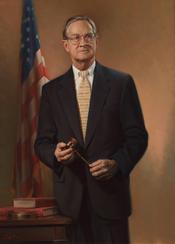
Historical · U.S. House · Pennsylvania · District 19
William Goodling
Former U.S. Representative · Pennsylvania District 19 · 1975–2001 · Republican
William Goodling represented Pennsylvania's District 19 in the United States House of Representatives (1975–2001) for the Republican party. The page below collects sourced biographical facts, term history, committee roles, and provenance for Goodling.
Bioguide ID: G000291
Key facts
- Full name
- William Goodling
- State
- Pennsylvania
- District
- District 19
- Party
- Republican
- House service
- 1975–2001
- First House term
- 1975
- Status
- Left office
- Current term ends
- —
- Born
- 1927
- Bioguide ID
- G000291
- Committee assignments
- —
- Dataset version
- 1.20260605
Biographical narrative
845 words · sourced from the Wikipedia REST extract
William F. Goodling was a prominent Republican politician who served as a U.S. Representative for Pennsylvania's 19th congressional district from 1975 until 2001. His tenure in the House of Representatives spanned 13 terms, during which he held significant leadership roles, particularly in education and labor policy. Goodling's background in education and his experience in local governance informed his legislative priorities and contributions to the U.S. Congress.
Early life and career
William Franklin Goodling was born on December 5, 1927, in Loganville, Pennsylvania. He was the son of George Atlee Goodling, a former Congressman, which may have influenced his eventual political career. Goodling grew up in York, Pennsylvania, where he was immersed in the local community and its educational system. He pursued higher education, earning a Bachelor of Science degree from the University of Maryland in 1953. Following this, he obtained a Master’s degree in Education from Western Maryland College in 1957. His academic pursuits continued as he undertook doctoral studies at Pennsylvania State University from 1958 to 1963, although he did not complete a doctorate.
Goodling's professional career began in education, where he held various teaching and administrative roles throughout Pennsylvania. His commitment to education extended to local governance; he served on the Dallastown area school board and eventually became its president. His involvement in education and community service laid a foundation for his later political career.
In addition to his educational endeavors, Goodling served in the United States Army from 1946 to 1948, contributing to his sense of civic duty and leadership. This blend of military service and educational leadership positioned him well for a future in public office.
House tenure
Goodling's political career in the U.S. House of Representatives began when he was elected as a Republican in 1974. He took office in January 1975 and represented Pennsylvania's 19th congressional district for over two decades. Throughout his 13 terms in Congress, Goodling became known for his focus on education and labor issues, reflecting his background in these areas.
During his time in office, Goodling faced various challenges, including being implicated in the House banking scandal in 1992, which raised questions about financial accountability among members of Congress. Despite this controversy, he continued to serve and maintain a significant presence in the House.
In 1995, following the Republican Party's acquisition of a majority in the House, Goodling was appointed as Chairman of the United States House Committee on Education and Labor. This role allowed him to influence key legislation related to education policy and labor relations, further solidifying his legacy in these critical areas. His leadership on the committee was marked by efforts to reform educational systems and labor laws, reflecting his longstanding commitment to these issues.
Goodling's tenure in the House concluded when he retired from public service on January 3, 2001. His long career in Congress was characterized by a focus on educational reform and labor issues, which were central to his legislative agenda.
Legislative focus and committees
Throughout his time in the House of Representatives, Goodling's legislative focus primarily revolved around education and labor. As Chairman of the House Committee on Education and Labor, he played a pivotal role in shaping policies that affected schools, educational institutions, and workforce development. His background in education provided him with unique insights into the challenges faced by educators and students, which he sought to address through legislative initiatives.
Goodling's work on the committee involved overseeing various programs and policies aimed at improving educational outcomes and ensuring that labor laws were fair and effective. He was involved in discussions surrounding federal education funding, accountability measures for schools, and initiatives designed to enhance the quality of education across the nation. His leadership in this area was instrumental in advancing educational reforms that aimed to better serve students and educators.
In addition to his work on education, Goodling was also engaged in labor-related legislation. His efforts in this domain included addressing issues such as workplace safety, employee rights, and labor relations. By focusing on these areas, he aimed to create a more equitable and effective labor market, reflecting his commitment to both workers and employers.
Goodling's influence extended beyond his committee work; he was an active participant in broader legislative discussions and initiatives. His ability to navigate complex political landscapes and build coalitions contributed to his effectiveness as a legislator. His long tenure and leadership roles allowed him to leave a lasting impact on education and labor policy in the United States.
After retiring from Congress, Goodling continued to contribute to the field of education through his involvement with the Goodling Institute for Research in Family Literacy, where he served as chairman of the board. This organization reflects his enduring commitment to education and literacy, particularly in the context of family engagement and support.
William F. Goodling passed away on September 17, 2017, leaving behind a legacy of public service and dedication to education and labor issues. His career in the U.S. House of Representatives is marked by significant contributions to the legislative landscape, particularly in the areas of education reform and labor policy.
Notable legislation
Sponsored and co-sponsored legislation for William Goodling is pending operator curation. The biographical narrative above carries the same provenance trail until per-bill rows are written.
Sources
- [1]https://en.wikipedia.org/wiki/Bill_GoodlingWikipedia · retrieved 2026-06-05
Notable quotes
Sourced quotes for William Goodling are pending operator curation. Narrative-scope provenance remains attached below.
Sources
- [1]https://en.wikipedia.org/wiki/Bill_GoodlingWikipedia · retrieved 2026-06-05
Key positions
Curated policy positions for William Goodling are pending operator review. The biographical narrative above carries the same provenance trail until per-topic positions are written.
Sources
- [1]https://en.wikipedia.org/wiki/Bill_GoodlingWikipedia · retrieved 2026-06-05
Terms served
- 1975–1977U.S. House · Term 1 · Republican
- 1977–1979U.S. House · Term 2 · Republican
- 1979–1981U.S. House · Term 3 · Republican
- 1981–1983U.S. House · Term 4 · Republican
- 1983–1985U.S. House · Term 5 · Republican
- 1985–1987U.S. House · Term 6 · Republican
- 1987–1989U.S. House · Term 7 · Republican
- 1989–1991U.S. House · Term 8 · Republican
- 1991–1993U.S. House · Term 9 · Republican
- 1993–1995U.S. House · Term 10 · Republican
- 1995–1997U.S. House · Term 11 · Republican
- 1997–1999U.S. House · Term 12 · Republican
- 1999–2001U.S. House · Term 13 · Republican
Sources & provenance
Every attributable claim above carries a per-section [N] marker that resolves to the corresponding URL below. Each entry records the upstream provider, the canonical URL, and the timestamp at which the source was retrieved by the ingest pipeline.
Key facts
- https://bioguide.congress.gov/search/bio/G000291bioguide · retrieved 2026-06-05
- https://www.govtrack.us/congress/members/400586govtrack · retrieved 2026-06-05
Biographical narrative
- https://en.wikipedia.org/wiki/Bill_Goodlingwikipedia · retrieved 2026-06-05
Find your representative
Every U.S. state elects representatives by district. Browse Pennsylvania’s delegation, the full former-representative roster, or explore the role and term length.
Related on The Candidate
- Preceded by George GoodlingEarlier holder of the Pennsylvania District 19 House seat · Republican.Open
- Succeeded by Todd PlattsLater holder of the Pennsylvania District 19 House seat · Republican.Open
- Adam SeybertFormer U.S. Representative · Pennsylvania District 1 · RepublicanOpen
- Benjamin SayFormer U.S. Representative · Pennsylvania District 1 · RepublicanOpen
- Chapman FreemanFormer U.S. Representative · Pennsylvania District 1 · RepublicanOpen
- Harry RansleyFormer U.S. Representative · Pennsylvania District 1 · RepublicanOpen