
Historical · U.S. House · Pennsylvania · District 19
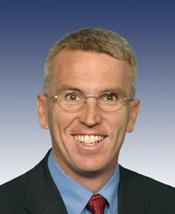
Todd Platts
Former U.S. Representative · Pennsylvania District 19 · 2001–2013 · Republican
Todd Platts represented Pennsylvania's District 19 in the United States House of Representatives (2001–2013) for the Republican party. The page below collects sourced biographical facts, term history, committee roles, and provenance for Platts.
Bioguide ID: P000585
Key facts
- Full name
- Todd Platts
- State
- Pennsylvania
- District
- District 19
- Party
- Republican
- House service
- 2001–2013
- First House term
- 2001
- Status
- Left office
- Current term ends
- —
- Born
- 1962
- Bioguide ID
- P000585
- Committee assignments
- —
- Dataset version
- 1.20260605
Biographical narrative
962 words · sourced from the Wikipedia REST extract
Todd Russell Platts is a former U.S. Representative who served Pennsylvania's 19th congressional district from 2001 until 2013. A member of the Republican Party, Platts is also an attorney and has held various political offices throughout his career, including a position in the Pennsylvania House of Representatives. After concluding his tenure in Congress, he transitioned to a judicial role, serving as a judge on the York County Court of Common Pleas.
Early life and career
Todd Platts was born on March 5, 1962, in York, Pennsylvania. He completed his secondary education at York Suburban Senior High School, graduating in 1980. Following high school, he pursued higher education at Shippensburg University of Pennsylvania, where he earned a Bachelor of Science degree in Public Administration, graduating summa cum laude in 1984. Platts continued his academic journey at Pepperdine University School of Law, obtaining his Juris Doctor degree cum laude in 1991.
Platts began his political career in 1992 when he was elected to the Pennsylvania House of Representatives, representing the 196th legislative district. This election was significant as it marked the first time the district was contested under its current boundaries, which were established following the 1990 census. He took office on January 5, 1993, and served until November 30, 2000. During his time in the Pennsylvania House, Platts gained experience in legislative processes and developed a foundation for his future political endeavors.
House tenure
In 2000, Todd Platts was elected to the U.S. House of Representatives, succeeding Congressman Bill Goodling, who opted not to seek re-election. Platts won a competitive Republican primary, securing just over half of the votes, and subsequently defeated Democratic nominee Jeff Sanders in the general election. Throughout his congressional career, Platts was known for his commitment to limiting his time in office, pledging to serve only six terms, which equated to twelve years.
During his time in Congress, Platts faced minimal opposition in several elections. He ran unopposed in the 2002 and 2004 elections, although he did encounter a challenge in the Republican primary in 2002. In 2006, he faced Democratic nominee Phil Avillo, Jr., and Green Party candidate Derf Maitland, winning the election with a significant majority. Platts continued to demonstrate electoral strength in 2008, where he faced Avillo again and secured 67% of the vote, marking him as one of the most successful Republican Congressional candidates in the Northeast. In 2010, he was re-elected for a sixth term, garnering 72% of the vote against Democratic nominee Ryan Sanders and Independent candidate Joshua Monighan.
Throughout his congressional tenure, Platts aligned himself with many of President George W. Bush's initiatives, supporting tax cuts, the Medicare Prescription Drug Plan, and military actions in Iraq. He also endorsed a ban on same-sex marriage and opposed various proposals related to school vouchers. Despite his generally conservative stance, Platts exhibited a moderate voting record, particularly on issues such as offshore oil drilling and fuel efficiency standards for automobiles. His voting patterns earned him ratings from the National Journal that reflected a mix of conservative and moderate positions.
Platts was known for his independence within the Republican Party, breaking ranks on several occasions. He supported President Obama's expansion of the State Children's Health Insurance Program (SCHIP) and the Edward M. Kennedy Serve America Act. His voting record on social issues evolved over time; he initially supported abortion rights but later adopted an anti-abortion stance, which he maintained throughout his congressional career. He consistently opposed financial industry bailouts and economic stimulus legislation, reflecting a fiscally conservative approach.
In a notable instance of bipartisanship, Platts was one of the few Republican members to vote in favor of repealing the military's "Don't Ask, Don't Tell" policy, allowing openly gay individuals to serve in the armed forces. He also supported the budget proposal known as The Path to Prosperity, although he later diverged from party lines by opposing subsequent iterations of the budget put forth by Representative Paul Ryan.
Legislative focus and committees
During his time in the U.S. House of Representatives, Todd Platts served on several key committees, which allowed him to influence a range of legislative issues. He was a member of the Committee on Armed Services, where he participated in subcommittees focused on tactical air and land forces as well as seapower and projection forces. His work on these committees positioned him to address matters related to national defense and military readiness.
In addition to his role on the Armed Services Committee, Platts served on the Committee on Education and the Workforce. Within this committee, he was involved in subcommittees that addressed early childhood, elementary, and secondary education, as well as higher education and workforce training. His involvement in education-related legislation reflected his interest in improving educational opportunities and outcomes for constituents.
Platts also contributed to the Committee on Oversight and Government Reform, where he chaired the Subcommittee on Government Organization, Efficiency and Financial Management. This role allowed him to focus on issues related to government accountability and efficiency, as well as oversight of federal programs and expenditures. He was also a member of the Subcommittee on National Security, Homeland Defense, and Foreign Operations, which dealt with matters of national security and foreign policy.
In addition to his committee assignments, Platts was a member of the Congressional Arts Caucus, indicating his interest in promoting the arts and cultural initiatives. His diverse committee involvement and caucus memberships illustrate his engagement with a wide range of issues during his congressional career.
After concluding his service in the House of Representatives in January 2013, Platts announced his candidacy for a judgeship on the York County Court of Common Pleas. His transition from legislative to judicial roles marked a new chapter in his professional life, allowing him to continue his public service in a different capacity.
Notable legislation
Sponsored and co-sponsored legislation for Todd Platts is pending operator curation. The biographical narrative above carries the same provenance trail until per-bill rows are written.
Sources
- [1]https://en.wikipedia.org/wiki/Todd_PlattsWikipedia · retrieved 2026-06-05
Notable quotes
Sourced quotes for Todd Platts are pending operator curation. Narrative-scope provenance remains attached below.
Sources
- [1]https://en.wikipedia.org/wiki/Todd_PlattsWikipedia · retrieved 2026-06-05
Key positions
Curated policy positions for Todd Platts are pending operator review. The biographical narrative above carries the same provenance trail until per-topic positions are written.
Sources
- [1]https://en.wikipedia.org/wiki/Todd_PlattsWikipedia · retrieved 2026-06-05
Terms served
- 2001–2003U.S. House · Term 1 · Republican
- 2003–2005U.S. House · Term 2 · Republican
- 2005–2007U.S. House · Term 3 · Republican
- 2007–2009U.S. House · Term 4 · Republican
- 2009–2011U.S. House · Term 5 · Republican
- 2011–2013U.S. House · Term 6 · Republican
Sources & provenance
Every attributable claim above carries a per-section [N] marker that resolves to the corresponding URL below. Each entry records the upstream provider, the canonical URL, and the timestamp at which the source was retrieved by the ingest pipeline.
Key facts
- https://bioguide.congress.gov/search/bio/P000585bioguide · retrieved 2026-06-05
- http://www.house.gov/plattshouse.gov · retrieved 2026-06-05
Biographical narrative
- https://en.wikipedia.org/wiki/Todd_Plattswikipedia · retrieved 2026-06-05
Find your representative
Every U.S. state elects representatives by district. Browse Pennsylvania’s delegation, the full former-representative roster, or explore the role and term length.
Related on The Candidate
- Preceded by William GoodlingEarlier holder of the Pennsylvania District 19 House seat · Republican.Open
- Adam SeybertFormer U.S. Representative · Pennsylvania District 1 · RepublicanOpen
- Benjamin SayFormer U.S. Representative · Pennsylvania District 1 · RepublicanOpen
- Chapman FreemanFormer U.S. Representative · Pennsylvania District 1 · RepublicanOpen
- Harry RansleyFormer U.S. Representative · Pennsylvania District 1 · RepublicanOpen
- Republican PartyFederal candidates and office holders on the Republican line.Open