
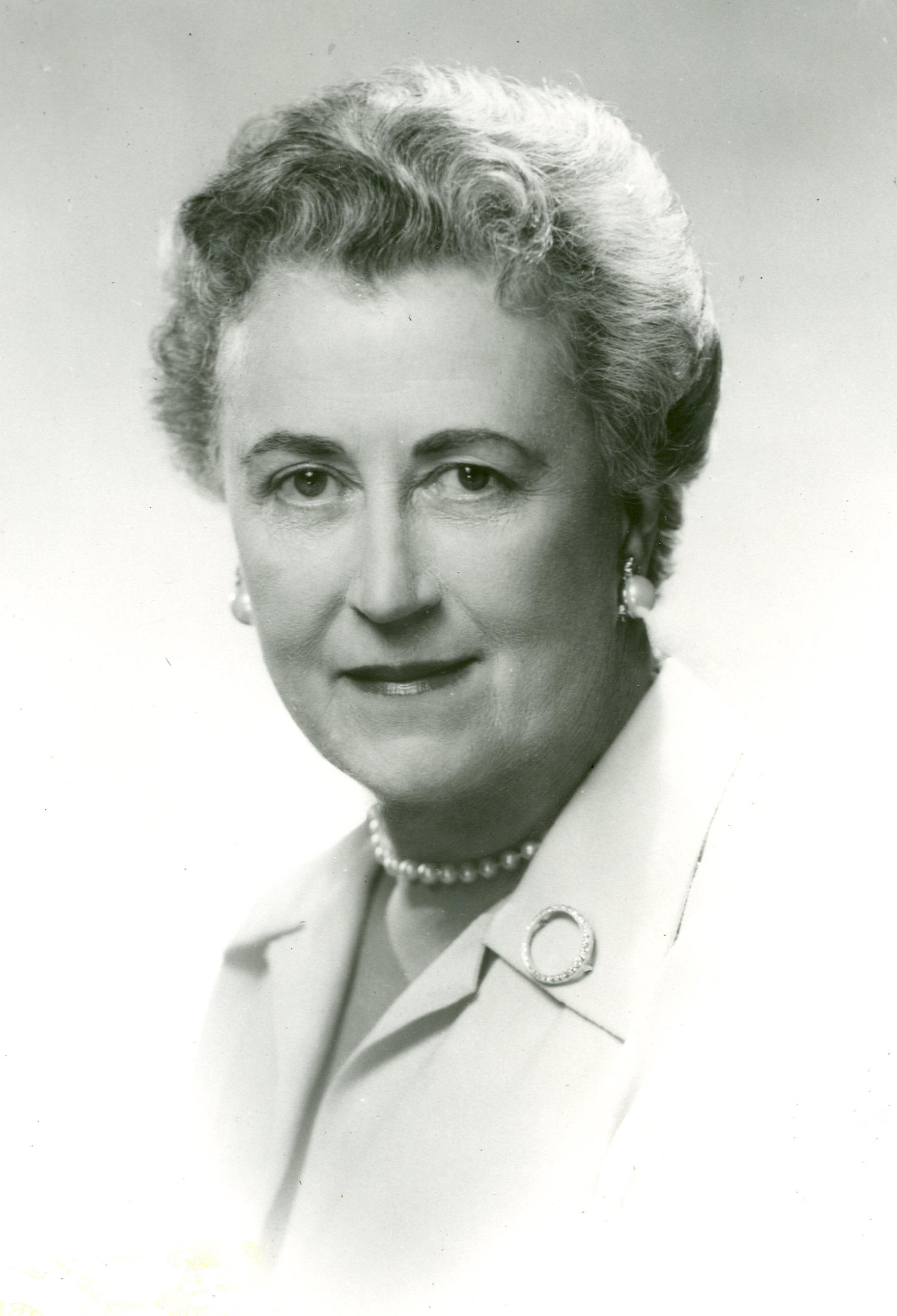
Historical · U.S. House · Pennsylvania · District 2
Kathryn Granahan
Former U.S. Representative · Pennsylvania District 2 · 1955–1963 · Democratic
Kathryn Granahan represented Pennsylvania's District 2 in the United States House of Representatives (1955–1963) for the Democratic party. The page below collects sourced biographical facts, term history, committee roles, and provenance for Granahan.
Bioguide ID: G000368
Key facts
- Full name
- Kathryn Granahan
- State
- Pennsylvania
- District
- District 2
- Party
- Democratic
- House service
- 1955–1963
- First House term
- 1955
- Status
- Left office
- Current term ends
- —
- Born
- 1894
- Bioguide ID
- G000368
- Committee assignments
- —
- Dataset version
- 1.20260605
Biographical narrative
890 words · sourced from the Wikipedia REST extract
Kathryn Granahan was an American politician who served as a U.S. Representative for Pennsylvania's 2nd congressional district. A member of the Democratic Party, she made history as the first woman elected to the United States Congress from Philadelphia. Granahan's political career included four terms in the House of Representatives, where she was involved in various legislative activities and later served as Treasurer of the United States under President John F. Kennedy.
Early life and career
Kathryn Elizabeth O'Hay was born on December 7, 1894, in Easton, Pennsylvania, located in the Lehigh Valley region of eastern Pennsylvania. She was the daughter of Irish immigrants, with all four of her grandparents having emigrated from Ireland. Granahan completed her secondary education at Easton Area High School before pursuing further studies at Mount St. Joseph Collegiate Institute in Philadelphia, which would later be renamed Chestnut Hill College.
Following her education, Granahan began her professional career in public service. From 1940 to 1943, she worked as a supervisor of public assistance within the State Auditor General's Department. In this role, she served as a liaison officer between the Auditor General's Department and the Pennsylvania Department of Public Assistance, helping to coordinate efforts to support those in need during a challenging period in American history. Granahan's commitment to public service extended beyond her official roles; she was also involved in the national board of the Woman's Medical College of Pennsylvania in Philadelphia, reflecting her dedication to women's health and education.
In addition to her professional endeavors, Granahan was politically active and participated as a delegate at the 1960 Democratic National Convention held in Los Angeles. Her early career laid the foundation for her later political achievements and established her as a prominent figure in Pennsylvania's Democratic Party.
House tenure
Granahan's entry into Congress was marked by a significant personal event. Her husband, William T. Granahan, had served in the U.S. House of Representatives from 1945 until his death in 1956. Following his passing, which occurred shortly after the 1956 primary election, the Democratic Party in Philadelphia selected Kathryn Granahan to succeed him. She was elected in both a special election and a general election, allowing her to serve out her husband's remaining term in the 84th United States Congress and to begin her own term in the 85th Congress.
Granahan's congressional career spanned from 1955 until January 3, 1963, during which she completed four terms in office. Throughout her tenure, she was known for her active participation in various legislative matters and was appointed as chair of the House Subcommittee on Postal Operations. In this capacity, she worked closely with Postmaster General Arthur Summerfield to advance legislation aimed at addressing issues related to obscenity in the mail. This included the introduction of a bill that authorized the seizure and detention of mail suspected of containing obscene materials.
Granahan's time in Congress was characterized by her efforts to represent the interests of her constituents and to address pressing social issues. Her election was a significant milestone for women in politics, as she became a trailblazer for future female representatives from Pennsylvania and beyond.
Legislative focus and committees
During her time in the House of Representatives, Granahan focused on a variety of legislative issues, particularly those related to social welfare and postal operations. As chair of the House Subcommittee on Postal Operations, she played a pivotal role in shaping policies that governed the U.S. Postal Service. Her collaboration with Postmaster General Arthur Summerfield was instrumental in advancing legislation that sought to combat the distribution of obscene materials through the mail, reflecting her commitment to addressing societal concerns.
Granahan's legislative priorities were influenced by her background in public assistance and her experiences in public service. She was dedicated to improving the welfare of her constituents and advocating for policies that supported vulnerable populations. Her work on the Subcommittee on Postal Operations exemplified her focus on regulatory matters and her desire to ensure that the postal system operated effectively and responsibly.
After the 1960 census, Pennsylvania faced the prospect of losing congressional seats due to redistricting. In light of this, Democratic Party leadership decided to eliminate Granahan's congressional seat. As a result, she was persuaded not to run for re-election in 1962. In exchange for her decision, she was appointed by President John F. Kennedy as Treasurer of the United States, a position she assumed on January 9, 1963, following the conclusion of her congressional term.
Granahan's tenure as Treasurer was marked by her continued commitment to public service, although her time in this role was affected by health issues. In 1965, she experienced a blood clot after a fall, which led her to work a reduced schedule. Despite an unsuccessful effort to declare her incompetent in 1966, she ultimately resigned from her position four months later.
Throughout her career, Kathryn Granahan made significant contributions to American politics and public service. Her legacy includes her role as a pioneering woman in Congress and her work in various capacities that aimed to improve the lives of her constituents and the broader community. She passed away on July 10, 1979, in Norristown, Pennsylvania, at the age of 84, and is interred at Gethsemane Cemetery in Easton, Pennsylvania. Granahan's life and career remain a testament to the evolving role of women in American politics and the importance of public service.
Notable legislation
Sponsored and co-sponsored legislation for Kathryn Granahan is pending operator curation. The biographical narrative above carries the same provenance trail until per-bill rows are written.
Sources
- [1]https://en.wikipedia.org/wiki/Kathryn_E._GranahanWikipedia · retrieved 2026-06-05
Notable quotes
Sourced quotes for Kathryn Granahan are pending operator curation. Narrative-scope provenance remains attached below.
Sources
- [1]https://en.wikipedia.org/wiki/Kathryn_E._GranahanWikipedia · retrieved 2026-06-05
Key positions
Curated policy positions for Kathryn Granahan are pending operator review. The biographical narrative above carries the same provenance trail until per-topic positions are written.
Sources
- [1]https://en.wikipedia.org/wiki/Kathryn_E._GranahanWikipedia · retrieved 2026-06-05
Terms served
- 1955–1957U.S. House · Term 1 · Democratic
- 1957–1959U.S. House · Term 2 · Democratic
- 1959–1961U.S. House · Term 3 · Democratic
- 1961–1963U.S. House · Term 4 · Democratic
Sources & provenance
Every attributable claim above carries a per-section [N] marker that resolves to the corresponding URL below. Each entry records the upstream provider, the canonical URL, and the timestamp at which the source was retrieved by the ingest pipeline.
Key facts
- https://bioguide.congress.gov/search/bio/G000368bioguide · retrieved 2026-06-05
- https://www.govtrack.us/congress/members/404720govtrack · retrieved 2026-06-05
Biographical narrative
- https://en.wikipedia.org/wiki/Kathryn_E._Granahanwikipedia · retrieved 2026-06-05
Find your representative
Every U.S. state elects representatives by district. Browse Pennsylvania’s delegation, the full former-representative roster, or explore the role and term length.
Related on The Candidate
- Preceded by Robert McGarveyEarlier holder of the Pennsylvania District 2 House seat · Republican.Open
- Succeeded by William Gray IIILater holder of the Pennsylvania District 2 House seat · Democratic.Open
- Adam SeybertFormer U.S. Representative · Pennsylvania District 1 · RepublicanOpen
- Benjamin SayFormer U.S. Representative · Pennsylvania District 1 · RepublicanOpen
- Chapman FreemanFormer U.S. Representative · Pennsylvania District 1 · RepublicanOpen
- Harry RansleyFormer U.S. Representative · Pennsylvania District 1 · RepublicanOpen