
Historical · U.S. House · Pennsylvania · District 2
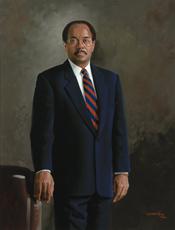
William Gray III
Former U.S. Representative · Pennsylvania District 2 · 1979–1991 · Democratic
William Gray III represented Pennsylvania's District 2 in the United States House of Representatives (1979–1991) for the Democratic party. The page below collects sourced biographical facts, term history, committee roles, and provenance for III.
Bioguide ID: G000402
Key facts
- Full name
- William Gray III
- State
- Pennsylvania
- District
- District 2
- Party
- Democratic
- House service
- 1979–1991
- First House term
- 1979
- Status
- Left office
- Current term ends
- —
- Born
- 1941
- Bioguide ID
- G000402
- Committee assignments
- —
- Dataset version
- 1.20260605
Biographical narrative
908 words · sourced from the Wikipedia REST extract
William H. Gray III was a prominent American politician and member of the Democratic Party who served as the U.S. Representative for Pennsylvania's 2nd congressional district from 1979 until 1991. Throughout his congressional tenure, Gray held significant leadership roles, including chairman of the House Committee on the Budget and House Majority Whip. After resigning from Congress, he became the president and chief executive officer of the United Negro College Fund, a position he held until 2004. Gray's contributions to American politics, particularly in the areas of budgetary policy and civil rights, have left a lasting impact.
Early life and career
William Herbert Gray III was born on August 20, 1941, in Baton Rouge, Louisiana. His early life was shaped by his family's educational background, as his father served as president of the Florida Normal and Industrial Institute in Miami Gardens and later at Florida A&M College in Tallahassee. In 1949, following the death of his grandfather, Gray's family relocated to North Philadelphia, Pennsylvania. He completed his secondary education at Simon Gratz High School before pursuing higher education.
Gray attended Franklin & Marshall College, where he earned a bachelor's degree in 1963. His academic journey continued with a master's degree in divinity from Drew University in 1966, followed by a master's in theology from Princeton Theological Seminary in 1970. In recognition of his contributions to education and community service, he received an honorary Doctor of Humane Letters (L.H.D.) from Bates College in 1994.
In 1972, Gray succeeded his father as the senior minister at Bright Hope Baptist Church in Philadelphia, where he began to establish his reputation as a community leader. His commitment to public service and social justice led him to enter politics. In 1978, he was elected as a Democrat to represent Philadelphia in the United States House of Representatives, marking the beginning of a significant political career.
House tenure
Gray's tenure in the U.S. House of Representatives began in 1979 and lasted until his resignation on September 11, 1991. During this period, he served a total of seven terms, making him a notable figure in Pennsylvania's political landscape. His election to Congress was a significant milestone, as he became one of the first African Americans to hold such a position in Pennsylvania.
Throughout his congressional career, Gray was recognized for his leadership abilities and was appointed to several key roles. He served as chairman of the House Committee on the Budget from 1985 to 1989, becoming the first African American to hold this position. In this role, he was responsible for overseeing the federal budget process and played a crucial part in shaping fiscal policy during his tenure.
In 1989, Gray was elevated to the position of House Majority Whip, where he was responsible for ensuring party discipline and mobilizing votes on key legislation. His leadership within the Democratic Party was instrumental during a time of significant political challenges and changes in the House.
One of Gray's notable legislative achievements was his introduction of H.R. 1460, an anti-Apartheid bill aimed at prohibiting loans and new investments in South Africa while enforcing sanctions on imports and exports with the country. This bill was a precursor to the Comprehensive Anti-Apartheid Act of 1986, highlighting Gray's commitment to civil rights and social justice on an international scale.
Gray's congressional career came to an unexpected end in 1991 when he resigned to take on the role of president and chief executive officer of the United Negro College Fund. His departure from Congress was met with speculation regarding potential investigations into campaign finance violations, although the exact reasons for his resignation remain a subject of discussion.
Legislative focus and committees
During his time in Congress, Gray focused on various legislative issues, particularly those related to budgetary matters and civil rights. As chairman of the House Committee on the Budget, he played a pivotal role in shaping fiscal policy and advocating for budgetary allocations that supported education, social services, and community development. His leadership in this area was marked by efforts to address the needs of underserved populations and promote equity in federal funding.
Gray's commitment to civil rights extended beyond domestic issues. His work on anti-Apartheid legislation demonstrated his dedication to promoting justice and equality on a global scale. By advocating for sanctions against South Africa, he contributed to the broader movement against apartheid and supported the fight for freedom and equality for all individuals.
In addition to his legislative work, Gray was involved in various committees during his time in the House. His positions allowed him to influence key policy decisions and advocate for the interests of his constituents in Pennsylvania's 2nd congressional district. His leadership roles and committee assignments reflected his commitment to public service and his ability to navigate the complexities of the legislative process.
After leaving Congress, Gray continued to make significant contributions to society through his leadership at the United Negro College Fund, where he worked to promote higher education opportunities for African American students. His legacy is marked by his dedication to public service, civil rights advocacy, and educational advancement.
In recognition of his contributions, Gray received various honors throughout his life, including the Four Freedoms Award for the Freedom of Worship in 1997. His impact on American politics and society continues to be acknowledged, and in 2014, President Barack Obama signed a resolution to rename Philadelphia's 30th Street Station in his honor, reflecting the lasting significance of his work and legacy.
Notable legislation
Sponsored and co-sponsored legislation for William Gray III is pending operator curation. The biographical narrative above carries the same provenance trail until per-bill rows are written.
Sources
- [1]https://en.wikipedia.org/wiki/William_H._Gray_IIIWikipedia · retrieved 2026-06-05
Notable quotes
Sourced quotes for William Gray III are pending operator curation. Narrative-scope provenance remains attached below.
Sources
- [1]https://en.wikipedia.org/wiki/William_H._Gray_IIIWikipedia · retrieved 2026-06-05
Key positions
Curated policy positions for William Gray III are pending operator review. The biographical narrative above carries the same provenance trail until per-topic positions are written.
Sources
- [1]https://en.wikipedia.org/wiki/William_H._Gray_IIIWikipedia · retrieved 2026-06-05
Terms served
- 1979–1981U.S. House · Term 1 · Democratic
- 1981–1983U.S. House · Term 2 · Democratic
- 1983–1985U.S. House · Term 3 · Democratic
- 1985–1987U.S. House · Term 4 · Democratic
- 1987–1989U.S. House · Term 5 · Democratic
- 1989–1991U.S. House · Term 6 · Democratic
- 1991–1991U.S. House · Term 7 · Democratic
Sources & provenance
Every attributable claim above carries a per-section [N] marker that resolves to the corresponding URL below. Each entry records the upstream provider, the canonical URL, and the timestamp at which the source was retrieved by the ingest pipeline.
Key facts
- https://bioguide.congress.gov/search/bio/G000402bioguide · retrieved 2026-06-05
- https://www.govtrack.us/congress/members/404752govtrack · retrieved 2026-06-05
Biographical narrative
- https://en.wikipedia.org/wiki/William_H._Gray_IIIwikipedia · retrieved 2026-06-05
Find your representative
Every U.S. state elects representatives by district. Browse Pennsylvania’s delegation, the full former-representative roster, or explore the role and term length.
Related on The Candidate
- Preceded by Robert Nix Sr.Earlier holder of the Pennsylvania District 2 House seat · Democratic.Open
- Succeeded by Lucien BlackwellLater holder of the Pennsylvania District 2 House seat · Democratic.Open
- Adam SeybertFormer U.S. Representative · Pennsylvania District 1 · RepublicanOpen
- Benjamin SayFormer U.S. Representative · Pennsylvania District 1 · RepublicanOpen
- Chapman FreemanFormer U.S. Representative · Pennsylvania District 1 · RepublicanOpen
- Harry RansleyFormer U.S. Representative · Pennsylvania District 1 · RepublicanOpen