
Historical · U.S. House · Pennsylvania · District 2
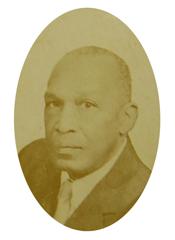
Robert Nix Sr.
Former U.S. Representative · Pennsylvania District 2 · 1957–1979 · Democratic
Robert Nix Sr. represented Pennsylvania's District 2 in the United States House of Representatives (1957–1979) for the Democratic party. The page below collects sourced biographical facts, term history, committee roles, and provenance for Sr..
Bioguide ID: N000113
Key facts
- Full name
- Robert Nix Sr.
- State
- Pennsylvania
- District
- District 2
- Party
- Democratic
- House service
- 1957–1979
- First House term
- 1957
- Status
- Left office
- Current term ends
- —
- Born
- 1898
- Bioguide ID
- N000113
- Committee assignments
- —
- Dataset version
- 1.20260605
Biographical narrative
916 words · sourced from the Wikipedia REST extract
Robert N. C. Nix was an influential American politician who served as a U.S. Representative for Pennsylvania's 2nd congressional district from 1958 until 1979. He holds the distinction of being the first African American to represent Pennsylvania in the House of Representatives. Throughout his eleven terms in office, Nix was known for his commitment to civil rights and his involvement in various legislative initiatives. His legacy is honored through the naming of the Robert N. C. Nix Federal Building in Philadelphia, Pennsylvania.
Early life and career
Robert N. C. Nix was born on August 9, 1898, in Orangeburg, South Carolina. His early education took place at Townsend Harris High School in New York City, which laid the groundwork for his future academic pursuits. He graduated from Lincoln University in Pennsylvania in 1921, where he began to cultivate his interests in law and public service. Following his undergraduate education, Nix attended the University of Pennsylvania, where he earned his law degree. After completing his studies, he began practicing law in Philadelphia, establishing a career that would eventually lead him into politics.
Nix's political involvement began in earnest in 1932 when he became a committeeman for the Democratic Party in the fourth ward of Philadelphia. His early engagement in local politics demonstrated his commitment to public service and community engagement. In 1934, he took on the role of special assistant deputy attorney general of Pennsylvania, further solidifying his legal and political credentials. His dedication to the Democratic Party was evident when he served as a delegate to the 1956 Democratic National Convention, where he participated in shaping the party's platform and direction.
In addition to his political activities, Nix was also a member of the Mu Omega chapter of the Omega Psi Phi fraternity at the University of Pennsylvania, which reflects his commitment to community and brotherhood. His early career laid a strong foundation for his future as a public servant and set the stage for his entry into the U.S. House of Representatives.
House tenure
Nix's congressional career began in 1958 when he won a special election to fill a vacancy left by Earl Chudoff. His election marked a significant milestone in Pennsylvania's political history, as he became the first African American to serve in the state's congressional delegation. Over the course of his eleven terms in office, Nix was reelected ten times, demonstrating his ability to connect with constituents and maintain their support.
Throughout his tenure, Nix was known for his low-profile approach to politics, often avoiding the spotlight while focusing on substantive legislative work. He was a supporter of liberal legislation, particularly in the context of civil rights. His commitment to civil rights was evident in his efforts to promote legislation that advanced the American Civil Rights Movement. Notably, he played a role in the 1967 controversy surrounding Rep. Adam Clayton Powell, where he sought to prevent the House from denying Powell his seat.
In 1962, Nix made history by becoming the first member of Congress to meet with gay activists, inviting Frank Kameny to his office. This meeting was significant as it marked a rare acknowledgment of LGBTQ+ rights within the legislative framework at a time when such discussions were largely taboo.
Nix's legislative contributions extended beyond civil rights. In 1975, he introduced an amendment to the Foreign Military Sales Act that required the Department of Defense to provide Congress with information regarding the identities of agents involved in negotiating arms sales for American firms. This amendment aimed to enhance transparency and accountability in military transactions.
Nix's congressional career came to an end in 1979 when he lost a primary election to William H. Gray III. His departure from the House marked the conclusion of a significant chapter in Pennsylvania's political history, characterized by his advocacy for civil rights and his commitment to public service.
Legislative focus and committees
During his time in the House of Representatives, Nix served on several important committees that shaped national policy. He was a member of the Veterans' Affairs Committee, where he worked on issues affecting veterans and their families. His involvement in this committee underscored his commitment to supporting those who had served in the military.
Nix also served on the Foreign Affairs Committee, where he engaged in discussions and decisions related to international relations and foreign policy. His role on this committee allowed him to influence legislation that had far-reaching implications for the United States and its interactions with other nations.
In addition to these committees, Nix held leadership positions that further amplified his legislative influence. He served as the chairman of the Committee on the Post Office and Civil Service, where he oversaw matters related to postal services and civil service regulations. His leadership in this role demonstrated his ability to guide significant legislative initiatives.
Furthermore, Nix chaired the Subcommittee on International Economic Policy, where he focused on issues related to global economic relations and trade. His work in this capacity contributed to shaping U.S. economic policy in a rapidly changing global landscape.
Nix's tenure in Congress was marked by a dedication to public service and a commitment to addressing the needs of his constituents. His legislative focus reflected a broader commitment to social justice, civil rights, and transparency in government. His legacy continues to be recognized in Pennsylvania, particularly through the naming of the Robert N. C. Nix Federal Building and Post Office in Philadelphia, which honors his contributions to public service and his role as a trailblazer in American politics.
Notable legislation
Sponsored and co-sponsored legislation for Robert Nix Sr. is pending operator curation. The biographical narrative above carries the same provenance trail until per-bill rows are written.
Sources
- [1]https://en.wikipedia.org/wiki/Robert_N._C._Nix_Sr.Wikipedia · retrieved 2026-06-05
Notable quotes
Sourced quotes for Robert Nix Sr. are pending operator curation. Narrative-scope provenance remains attached below.
Sources
- [1]https://en.wikipedia.org/wiki/Robert_N._C._Nix_Sr.Wikipedia · retrieved 2026-06-05
Key positions
Curated policy positions for Robert Nix Sr. are pending operator review. The biographical narrative above carries the same provenance trail until per-topic positions are written.
Sources
- [1]https://en.wikipedia.org/wiki/Robert_N._C._Nix_Sr.Wikipedia · retrieved 2026-06-05
Terms served
- 1957–1959U.S. House · Term 1 · Democratic
- 1959–1961U.S. House · Term 2 · Democratic
- 1961–1963U.S. House · Term 3 · Democratic
- 1963–1965U.S. House · Term 4 · Democratic
- 1965–1967U.S. House · Term 5 · Democratic
- 1967–1969U.S. House · Term 6 · Democratic
- 1969–1971U.S. House · Term 7 · Democratic
- 1971–1973U.S. House · Term 8 · Democratic
- 1973–1975U.S. House · Term 9 · Democratic
- 1975–1977U.S. House · Term 10 · Democratic
- 1977–1979U.S. House · Term 11 · Democratic
Sources & provenance
Every attributable claim above carries a per-section [N] marker that resolves to the corresponding URL below. Each entry records the upstream provider, the canonical URL, and the timestamp at which the source was retrieved by the ingest pipeline.
Key facts
- https://bioguide.congress.gov/search/bio/N000113bioguide · retrieved 2026-06-05
- https://www.govtrack.us/congress/members/408197govtrack · retrieved 2026-06-05
Biographical narrative
- https://en.wikipedia.org/wiki/Robert_N._C._Nix_Sr.wikipedia · retrieved 2026-06-05
Find your representative
Every U.S. state elects representatives by district. Browse Pennsylvania’s delegation, the full former-representative roster, or explore the role and term length.
Related on The Candidate
- Preceded by William GranahanEarlier holder of the Pennsylvania District 2 House seat · Democratic.Open
- Succeeded by William Gray IIILater holder of the Pennsylvania District 2 House seat · Democratic.Open
- Adam SeybertFormer U.S. Representative · Pennsylvania District 1 · RepublicanOpen
- Benjamin SayFormer U.S. Representative · Pennsylvania District 1 · RepublicanOpen
- Chapman FreemanFormer U.S. Representative · Pennsylvania District 1 · RepublicanOpen
- Harry RansleyFormer U.S. Representative · Pennsylvania District 1 · RepublicanOpen