
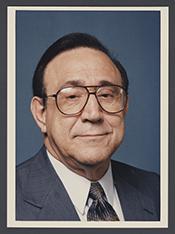
Historical · U.S. House · Pennsylvania · District 20
Frank Mascara
Former U.S. Representative · Pennsylvania District 20 · 1995–2003 · Democratic
Frank Mascara represented Pennsylvania's District 20 in the United States House of Representatives (1995–2003) for the Democratic party. The page below collects sourced biographical facts, term history, committee roles, and provenance for Mascara.
Bioguide ID: M000212
Key facts
- Full name
- Frank Mascara
- State
- Pennsylvania
- District
- District 20
- Party
- Democratic
- House service
- 1995–2003
- First House term
- 1995
- Status
- Left office
- Current term ends
- —
- Born
- 1930
- Bioguide ID
- M000212
- Committee assignments
- —
- Dataset version
- 1.20260605
Biographical narrative
840 words · sourced from the Wikipedia REST extract
Frank Mascara was a Democratic politician from Pennsylvania who served as a U.S. Representative for the 20th Congressional District from 1995 until 2003. Over the course of his political career, he was known for his moderate stances on various issues and his ability to secure federal funding for local projects. Mascara's tenure in Congress was marked by his working-class image and his engagement with the constituents of his district.
Early life and career
Frank Mascara was born on January 19, 1930. His early life was shaped by his experiences following World War II, during which he briefly served in the United States Army. After his military service, he pursued a career in accounting, which provided him with a foundation in financial matters that would later inform his political career. Mascara furthered his education by obtaining a Bachelor of Arts degree from California University of Pennsylvania in 1972.
Before entering the national political arena, Mascara built a significant local political career in Washington County, Pennsylvania, located near Pittsburgh. He began his public service in 1973 when he was elected as the county controller. His role as controller allowed him to gain valuable experience in governance and public finance. In 1979, he transitioned to a position as County Commissioner, where he served for 15 years, often in the capacity of chairman. During this time, Mascara developed a reputation as a dedicated public servant, focusing on local issues and community needs.
House tenure
Mascara's journey to the U.S. House of Representatives began with a primary challenge in 1992 against incumbent Congressman Austin Murphy, who had held the seat for 16 years. Although Mascara lost that initial race by a narrow margin, he remained a prominent figure in local politics. When Murphy announced his retirement two years later, Mascara successfully won the Democratic primary to replace him. In the general election, he faced Republican businessman Mike McCormick and secured a narrow victory, marking the beginning of his four terms in Congress.
During his first term, Mascara's district was known for being one of the most Democratic areas in Pennsylvania outside of Philadelphia and Pittsburgh. In subsequent elections, he continued to face challenges from McCormick, winning re-election in 1996 by another slim margin. However, in 1998, he ran unopposed, and in 2000, he won a fourth term with relative ease.
The 2000 Census brought significant changes to Mascara's congressional district. The Republican-controlled state legislature redrew the district boundaries, renumbering it as the 18th District, which became more affluent and somewhat more favorable to Republican candidates. Despite the district still having a Democratic majority, the changes were controversial, as they split several neighborhoods between different congressional districts. Mascara opted to run for the Democratic nomination in the newly drawn 12th District, which included more of his previous territory. However, he faced a tough primary against long-serving Democrat John Murtha and ultimately lost.
Throughout his time in Congress, Mascara was characterized as a moderate Democrat. He held conservative views on certain social issues, notably opposing abortion and gun control, while maintaining a voting record that aligned with the broader Democratic Party on many other matters. His political style was marked by a blue-collar, working-class persona, which resonated with many constituents. Mascara was known for his straightforward approach and often emphasized his connection to the everyday lives of his constituents, frequently highlighting his lack of interest in nightlife or gambling.
Legislative focus and committees
During his tenure in the U.S. House of Representatives, Frank Mascara focused on a variety of issues pertinent to his constituents and the broader community. He was particularly noted for his effectiveness in securing federal funding for local projects, which helped to enhance infrastructure and services in his district. His ability to navigate the complexities of federal funding and advocate for local needs made him a significant figure among Democrats in Pennsylvania.
Mascara served on several committees during his time in Congress, which allowed him to influence legislation and address issues affecting his district. His work on these committees reflected his commitment to the interests of his constituents, as he sought to bring resources and attention to the needs of the communities he represented. His moderate stance on various issues enabled him to work across party lines, fostering relationships that were beneficial for securing funding and support for local initiatives.
Mascara's legislative focus included economic development, education, and healthcare, among other areas. He aimed to improve the quality of life for residents in his district through various initiatives and programs. His efforts were often characterized by a pragmatic approach, seeking solutions that would deliver tangible benefits to his constituents.
After serving four terms in the House, Mascara's congressional career came to an end when he lost the primary election in 2002. Following his departure from Congress, he continued to be involved in local politics and community issues until his passing on July 10, 2011, due to lung cancer. His legacy as a public servant is remembered in the context of his contributions to his district and the Democratic Party in Pennsylvania.
Notable legislation
Sponsored and co-sponsored legislation for Frank Mascara is pending operator curation. The biographical narrative above carries the same provenance trail until per-bill rows are written.
Sources
- [1]https://en.wikipedia.org/wiki/Frank_MascaraWikipedia · retrieved 2026-06-05
Notable quotes
Sourced quotes for Frank Mascara are pending operator curation. Narrative-scope provenance remains attached below.
Sources
- [1]https://en.wikipedia.org/wiki/Frank_MascaraWikipedia · retrieved 2026-06-05
Key positions
Curated policy positions for Frank Mascara are pending operator review. The biographical narrative above carries the same provenance trail until per-topic positions are written.
Sources
- [1]https://en.wikipedia.org/wiki/Frank_MascaraWikipedia · retrieved 2026-06-05
Terms served
- 1995–1997U.S. House · Term 1 · Democratic
- 1997–1999U.S. House · Term 2 · Democratic
- 1999–2001U.S. House · Term 3 · Democratic
- 2001–2003U.S. House · Term 4 · Democratic
Sources & provenance
Every attributable claim above carries a per-section [N] marker that resolves to the corresponding URL below. Each entry records the upstream provider, the canonical URL, and the timestamp at which the source was retrieved by the ingest pipeline.
Key facts
- https://bioguide.congress.gov/search/bio/M000212bioguide · retrieved 2026-06-05
- https://www.govtrack.us/congress/members/400545govtrack · retrieved 2026-06-05
Biographical narrative
- https://en.wikipedia.org/wiki/Frank_Mascarawikipedia · retrieved 2026-06-05
Find your representative
Every U.S. state elects representatives by district. Browse Pennsylvania’s delegation, the full former-representative roster, or explore the role and term length.
Related on The Candidate
- Preceded by Austin MurphyEarlier holder of the Pennsylvania District 20 House seat · Democratic.Open
- Adam SeybertFormer U.S. Representative · Pennsylvania District 1 · RepublicanOpen
- Benjamin SayFormer U.S. Representative · Pennsylvania District 1 · RepublicanOpen
- Chapman FreemanFormer U.S. Representative · Pennsylvania District 1 · RepublicanOpen
- Harry RansleyFormer U.S. Representative · Pennsylvania District 1 · RepublicanOpen
- Democratic PartyFederal candidates and office holders on the Democratic line.Open