
Historical · U.S. House · Pennsylvania · District 20
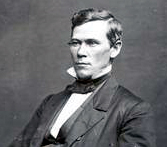
John Patton
Former U.S. Representative · Pennsylvania District 20 · 1861–1889 · Republican
John Patton represented Pennsylvania's District 20 in the United States House of Representatives (1861–1889) for the Republican party. The page below collects sourced biographical facts, term history, committee roles, and provenance for Patton.
Bioguide ID: P000138
Key facts
- Full name
- John Patton
- State
- Pennsylvania
- District
- District 20
- Party
- Republican
- House service
- 1861–1889
- First House term
- 1861
- Status
- Left office
- Current term ends
- —
- Born
- 1823
- Bioguide ID
- P000138
- Committee assignments
- —
- Dataset version
- 1.20260606
Biographical narrative
887 words · sourced from the Wikipedia REST extract
John Patton was a prominent U.S. Representative from Pennsylvania, serving in the House of Representatives during two distinct periods in the 19th century. A member of the Republican Party, Patton's political career spanned significant events in American history, including the Civil War and the post-war reconstruction era. His contributions to both banking and politics were notable, and his legacy continued through his family, with several of his descendants also serving in public office.
Early life and career
John Patton was born on January 6, 1823, in Covington Township, located in Tioga County, Pennsylvania. His early life was marked by a move to Curwensville, Pennsylvania, in 1828, where he would spend much of his formative years. Patton received his education in the local public schools, which laid the groundwork for his future endeavors in business and politics.
From 1844 to 1860, Patton engaged in mercantile pursuits and lumbering, industries that were significant in the region during that time. His involvement in these sectors likely provided him with valuable experience in commerce and finance, which would later influence his banking career. In 1864, he took a significant step in his professional life by organizing the First National Bank of Curwensville, where he was elected president. This role not only highlighted his leadership abilities but also established him as a key figure in the local economy. Following the success of the First National Bank, he organized the Curwensville Bank and again assumed the presidency, further solidifying his reputation in the banking community.
Patton's political engagement began earlier in his career when he participated as a delegate to the Whig National Convention in 1852. This involvement in national politics was a precursor to his later alignment with the Republican Party, which he joined in its early years. He was a delegate to the Republican National Convention in 1860, a critical time for the party as it positioned itself in opposition to the expansion of slavery and sought to unify various factions under its banner.
House tenure
John Patton's congressional career began when he was elected as a Republican to the Thirty-seventh Congress, serving from March 4, 1861, to March 3, 1863. His election came at a tumultuous time in American history, as the nation was on the brink of the Civil War. During his first term, Patton was involved in legislative discussions and decisions that would shape the course of the war and its aftermath. However, he chose not to seek renomination in 1862, concluding his first term after just one session in office.
After a significant gap, Patton returned to Congress when he was elected to the Fiftieth Congress, serving from March 4, 1887, to March 3, 1889. His return to the House came during a period of economic growth and industrialization in the United States, as the nation was recovering from the effects of the Civil War and entering a new era of expansion. Patton's decision not to seek renomination in 1888 marked the end of his congressional career, after which he resumed his banking activities.
Throughout his time in the House, Patton was part of a legislative body that faced numerous challenges, including issues related to civil rights, economic policy, and the integration of the Southern states back into the Union. While specific details of his legislative contributions are not extensively documented, his dual terms in Congress reflect a commitment to public service during pivotal moments in American history.
Legislative focus and committees
While specific details about John Patton's committee assignments and legislative focus during his time in Congress are not provided, it can be inferred that his background in banking and commerce likely influenced his interests in economic and financial legislation. As a businessman and bank president, Patton would have had a keen understanding of the financial challenges facing both individuals and businesses during the periods he served.
Given the context of his service, it is likely that Patton was involved in discussions surrounding economic recovery, infrastructure development, and financial regulation, all of which were critical issues during the late 19th century. The post-Civil War era was characterized by a need for rebuilding and modernization, and representatives like Patton would have played a role in shaping policies to address these needs.
Patton's legacy extended beyond his own political career, as he was the father of several notable figures in Pennsylvania politics. His son, Charles Emory Patton, served as a U.S. Representative from Pennsylvania from 1911 to 1915, while another son, John Patton Jr., became a U.S. Senator from Michigan for a brief period. Additionally, Alexander Ennis Patton served as a Pennsylvania state senator, and William Irvin Swoope, his nephew, was also a U.S. Representative from Pennsylvania. This familial connection to public service underscores the influence that John Patton had on future generations in politics.
John Patton passed away on December 23, 1897, in Philadelphia, Pennsylvania, where he had gone for medical treatment. He was interred in Oak Hill Cemetery in Curwensville, Pennsylvania, marking the end of a life dedicated to both business and public service. His contributions to banking and politics, along with the legacy of his family members, continue to be recognized in Pennsylvania and beyond. The town of Patton, Pennsylvania, is named in his honor, serving as a lasting tribute to his impact on the region and his role in American history.
Notable legislation
Sponsored and co-sponsored legislation for John Patton is pending operator curation. The biographical narrative above carries the same provenance trail until per-bill rows are written.
Sources
- [1]https://en.wikipedia.org/wiki/John_Patton_(Pennsylvania_politician)Wikipedia · retrieved 2026-06-06
Notable quotes
Sourced quotes for John Patton are pending operator curation. Narrative-scope provenance remains attached below.
Sources
- [1]https://en.wikipedia.org/wiki/John_Patton_(Pennsylvania_politician)Wikipedia · retrieved 2026-06-06
Key positions
Curated policy positions for John Patton are pending operator review. The biographical narrative above carries the same provenance trail until per-topic positions are written.
Sources
- [1]https://en.wikipedia.org/wiki/John_Patton_(Pennsylvania_politician)Wikipedia · retrieved 2026-06-06
Terms served
- 1861–1863U.S. House · Term 1 · Republican
- 1887–1889U.S. House · Term 2 · Republican
Sources & provenance
Every attributable claim above carries a per-section [N] marker that resolves to the corresponding URL below. Each entry records the upstream provider, the canonical URL, and the timestamp at which the source was retrieved by the ingest pipeline.
Key facts
- https://bioguide.congress.gov/search/bio/P000138bioguide · retrieved 2026-06-06
- https://www.govtrack.us/congress/members/408544govtrack · retrieved 2026-06-06
Biographical narrative
- https://en.wikipedia.org/wiki/John_Patton_(Pennsylvania_politician)wikipedia · retrieved 2026-06-06
Find your representative
Every U.S. state elects representatives by district. Browse Pennsylvania’s delegation, the full former-representative roster, or explore the role and term length.
Related on The Candidate
- Preceded by William MontgomeryEarlier holder of the Pennsylvania District 20 House seat · Democratic.Open
- Succeeded by Josiah HicksLater holder of the Pennsylvania District 20 House seat · Republican.Open
- Adam SeybertFormer U.S. Representative · Pennsylvania District 1 · RepublicanOpen
- Benjamin SayFormer U.S. Representative · Pennsylvania District 1 · RepublicanOpen
- Chapman FreemanFormer U.S. Representative · Pennsylvania District 1 · RepublicanOpen
- Harry RansleyFormer U.S. Representative · Pennsylvania District 1 · RepublicanOpen