
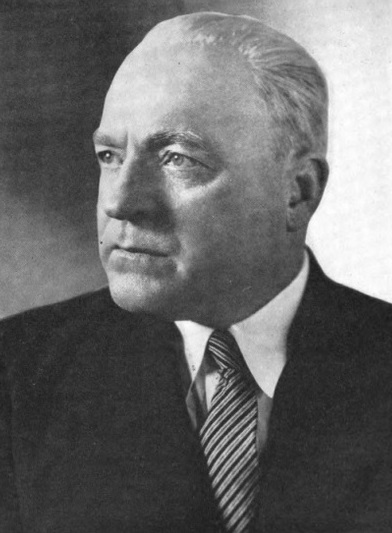
Historical · U.S. House · Pennsylvania · District 21
Augustine Kelley
Former U.S. Representative · Pennsylvania District 21 · 1941–1959 · Democratic
Augustine Kelley represented Pennsylvania's District 21 in the United States House of Representatives (1941–1959) for the Democratic party. The page below collects sourced biographical facts, term history, committee roles, and provenance for Kelley.
Bioguide ID: K000058
Key facts
- Full name
- Augustine Kelley
- State
- Pennsylvania
- District
- District 21
- Party
- Democratic
- House service
- 1941–1959
- First House term
- 1941
- Status
- Left office
- Current term ends
- —
- Born
- 1883
- Bioguide ID
- K000058
- Committee assignments
- —
- Dataset version
- 1.20260605
Biographical narrative
879 words · sourced from the Wikipedia REST extract
Augustine Kelley was an American politician who served as a Democratic member of the U.S. House of Representatives from Pennsylvania's 21st congressional district. His tenure in Congress spanned from 1941 until his passing in 1957, during which he was involved in various legislative activities and held significant committee positions. Kelley was known for his contributions to the legislative process and his dedication to public service.
Early life and career
Augustine Bernard Kelley was born on July 9, 1883, in New Baltimore, Pennsylvania. His early education included an ambitious attempt to attend the United States Military Academy at West Point, New York, in 1904. However, due to health issues related to a heart condition, he was unable to continue his studies there and withdrew after two years. Following this setback, Kelley pursued a different path by studying mining engineering through the International Correspondence School from 1907 to 1912.
Kelley's professional career began in 1905 when he took a position as a clerk with the Pennsylvania Railroad. This role marked the start of his long-standing involvement in the coal and coke industries. He later advanced to become the superintendent of the H.C. Frick Coke Company, a significant player in the coal industry during that era. His career also included associations with various other coke and coal companies, reflecting his deep engagement with the energy sector.
In addition to his business pursuits, Kelley was active in local governance. He served on the Board of Education for Greensburg, Pennsylvania, during the years 1935 and 1936. This experience in local education governance likely provided him with insights into community needs and the importance of public service, which would later influence his political career.
House tenure
Kelley entered the political arena when he was elected to the U.S. House of Representatives as a Democrat, representing Pennsylvania's 21st congressional district. His first term commenced in 1941, and he was subsequently re-elected for a total of nine terms, serving continuously until his death in 1957. Throughout his congressional career, Kelley was a member of the Democratic Party and participated in various legislative initiatives that shaped the policies of his time.
During his tenure, Kelley was known for his leadership role as the Chairman of the United States House Committee on Invalid Pensions during the 79th Congress. This position allowed him to influence legislation related to veterans and individuals with disabilities, reflecting his commitment to addressing the needs of vulnerable populations. His involvement in this committee underscored his focus on social welfare issues, particularly those affecting veterans who had served in the military.
Kelley's service in Congress coincided with a period of significant national and international events, including World War II and the post-war era. His legislative activities were likely influenced by the challenges and changes occurring during these tumultuous times. As a member of Congress, he participated in discussions and decisions that would have lasting impacts on both his constituents and the nation as a whole.
Legislative focus and committees
Throughout his time in the House of Representatives, Augustine Kelley focused on various legislative issues, particularly those related to social welfare and veterans' affairs. His role as Chairman of the House Committee on Invalid Pensions positioned him at the forefront of discussions regarding benefits and support for individuals with disabilities, particularly veterans returning from service. This committee work was crucial in shaping policies that aimed to improve the quality of life for those who had sacrificed for their country.
Kelley’s legislative focus extended beyond veterans' affairs. His long tenure in Congress allowed him to engage with a wide range of issues affecting his constituents in Pennsylvania. While specific details of all the legislation he supported or opposed are not documented, it is clear that his work was influenced by the needs and concerns of the people he represented. His background in business and local governance likely informed his approach to policymaking, emphasizing practical solutions to the challenges faced by his district.
In addition to his committee leadership, Kelley participated in various other legislative activities throughout his congressional career. His engagement with different issues reflected the evolving priorities of the nation during the mid-20th century, including economic recovery, social justice, and the expansion of social programs. His contributions to these discussions were part of a broader effort by the Democratic Party to address the needs of a diverse and changing population.
Kelley's commitment to public service extended beyond his legislative duties. He was known for his dedication to his constituents and his willingness to address their concerns. His long-standing presence in Congress allowed him to build relationships with fellow lawmakers and engage in bipartisan efforts when necessary. This collaborative spirit was essential in navigating the complexities of legislative processes and achieving meaningful outcomes for his district.
Augustine Kelley passed away on November 20, 1957, in Bethesda, Maryland. His legacy includes not only his contributions to the U.S. House of Representatives but also his commitment to the welfare of his constituents and the broader community. He is interred at Arlington National Cemetery, a testament to his service and dedication to the nation. Kelley's life and career reflect the experiences of many public servants of his time, navigating the challenges of a rapidly changing world while striving to make a positive impact on the lives of others.
Notable legislation
Sponsored and co-sponsored legislation for Augustine Kelley is pending operator curation. The biographical narrative above carries the same provenance trail until per-bill rows are written.
Sources
- [1]https://en.wikipedia.org/wiki/Augustine_B._KelleyWikipedia · retrieved 2026-06-05
Notable quotes
Sourced quotes for Augustine Kelley are pending operator curation. Narrative-scope provenance remains attached below.
Sources
- [1]https://en.wikipedia.org/wiki/Augustine_B._KelleyWikipedia · retrieved 2026-06-05
Key positions
Curated policy positions for Augustine Kelley are pending operator review. The biographical narrative above carries the same provenance trail until per-topic positions are written.
Sources
- [1]https://en.wikipedia.org/wiki/Augustine_B._KelleyWikipedia · retrieved 2026-06-05
Terms served
- 1941–1943U.S. House · Term 1 · Democratic
- 1943–1945U.S. House · Term 2 · Democratic
- 1945–1947U.S. House · Term 3 · Democratic
- 1947–1949U.S. House · Term 4 · Democratic
- 1949–1951U.S. House · Term 5 · Democratic
- 1951–1953U.S. House · Term 6 · Democratic
- 1953–1955U.S. House · Term 7 · Democratic
- 1955–1957U.S. House · Term 8 · Democratic
- 1957–1959U.S. House · Term 9 · Democratic
Sources & provenance
Every attributable claim above carries a per-section [N] marker that resolves to the corresponding URL below. Each entry records the upstream provider, the canonical URL, and the timestamp at which the source was retrieved by the ingest pipeline.
Key facts
- https://bioguide.congress.gov/search/bio/K000058bioguide · retrieved 2026-06-05
- https://www.govtrack.us/congress/members/406228govtrack · retrieved 2026-06-05
Biographical narrative
- https://en.wikipedia.org/wiki/Augustine_B._Kelleywikipedia · retrieved 2026-06-05
Find your representative
Every U.S. state elects representatives by district. Browse Pennsylvania’s delegation, the full former-representative roster, or explore the role and term length.
Related on The Candidate
- Preceded by Evan JonesEarlier holder of the Pennsylvania District 21 House seat · Republican.Open
- Succeeded by Donald BaileyLater holder of the Pennsylvania District 21 House seat · Democratic.Open
- Adam SeybertFormer U.S. Representative · Pennsylvania District 1 · RepublicanOpen
- Benjamin SayFormer U.S. Representative · Pennsylvania District 1 · RepublicanOpen
- Chapman FreemanFormer U.S. Representative · Pennsylvania District 1 · RepublicanOpen
- Harry RansleyFormer U.S. Representative · Pennsylvania District 1 · RepublicanOpen