
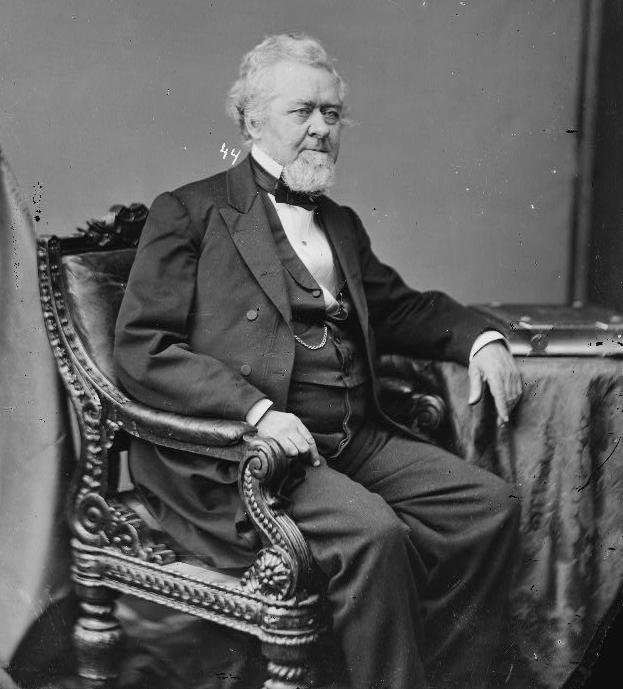
Historical · U.S. House · Pennsylvania · District 23
Thomas Williams
Former U.S. Representative · Pennsylvania District 23 · 1863–1869 · Republican
Thomas Williams represented Pennsylvania's District 23 in the United States House of Representatives (1863–1869) for the Republican party. The page below collects sourced biographical facts, term history, committee roles, and provenance for Williams.
Bioguide ID: W000538
Key facts
- Full name
- Thomas Williams
- State
- Pennsylvania
- District
- District 23
- Party
- Republican
- House service
- 1863–1869
- First House term
- 1863
- Status
- Left office
- Current term ends
- —
- Born
- 1806
- Bioguide ID
- W000538
- Committee assignments
- —
- Dataset version
- 1.20260606
Biographical narrative
971 words · sourced from the Wikipedia REST extract
Thomas Williams was a Republican politician who served as a United States Representative from Pennsylvania's 23rd congressional district during a tumultuous period in American history. His tenure in the House of Representatives spanned from 1863 to 1869, during which he was known for his alignment with the Radical Republican faction and his involvement in significant legislative matters, including the impeachment proceedings against President Andrew Johnson. Williams's legal background and political career were shaped by his experiences in Pennsylvania, where he was active in both state and national politics.
Early life and career
Thomas Williams was born on August 28, 1806, in Greensburg, Pennsylvania. He received his early education in the common schools of his hometown, demonstrating an early commitment to learning. In 1825, he graduated from Dickinson College located in Carlisle, Pennsylvania, which was a significant institution of higher education at the time. Following his graduation, Williams pursued a career in law, gaining admission to the Pennsylvania bar in 1828. He began practicing law in Greensburg, where he established himself within the legal community.
In 1832, Williams relocated to Pittsburgh, Pennsylvania, where he continued his legal practice and expanded his professional influence. During this period, he also took on the role of editor for the Advocate, a newspaper aligned with the Whig Party. His involvement in journalism allowed him to engage with the political discourse of the day and advocate for the principles of the Whig Party, which was known for its opposition to the Democratic Party and its support for a strong legislative role in economic development.
Williams's political career took a significant turn when he was elected to the Pennsylvania State Senate, serving from 1838 to 1841. This experience in state government provided him with valuable insights into legislative processes and the workings of political institutions. After his term in the state senate, he returned to private legal practice, but his political ambitions were not yet fulfilled.
The outbreak of the American Civil War in 1861 marked a pivotal moment in Williams's career. The war brought about a renewed sense of urgency for political leaders, particularly those aligned with the Republican Party, which was committed to preserving the Union and addressing the issues of slavery and civil rights. In 1863, Williams was elected to the U.S. House of Representatives, marking the beginning of his congressional career.
House tenure
Williams's first term in the House began on March 4, 1863, and he was subsequently re-elected for two additional terms, serving until March 4, 1869. Throughout his time in Congress, Williams was recognized as a member of the Radical Republican faction, which advocated for stringent measures against the Southern states during the Reconstruction era. This group sought to ensure civil rights for freed slaves and to reshape Southern society following the Civil War.
During his tenure, Williams was involved in various legislative initiatives that aimed to address the challenges of Reconstruction. He played a notable role in the impeachment proceedings against President Andrew Johnson, who faced criticism for his lenient policies toward the South and his opposition to the Radical Republicans' agenda. In late 1867, Williams authored the majority report of the House Committee on Judiciary, which supported the impeachment of Johnson. Although the House ultimately voted against the recommendation for impeachment at that time, Williams's involvement in the proceedings underscored his commitment to the principles of the Radical Republican movement.
Following the initial impeachment inquiry, Williams continued to be an influential figure in the House. He served as one of the House impeachment managers during the trial of President Johnson, a role that can be likened to that of a prosecutor. This position required him to present the case for impeachment before the Senate, further solidifying his reputation as a key player in one of the most significant political events of the era.
Williams's congressional career concluded in 1869, after which he returned to private life. His time in the House was marked by his dedication to the Republican Party's platform and his efforts to advance the cause of civil rights during a period of significant social upheaval in the United States.
Legislative focus and committees
Throughout his time in the House of Representatives, Thomas Williams's legislative focus was heavily influenced by the political climate of the Reconstruction era. As a member of the Radical Republicans, he was deeply invested in issues related to civil rights, the integration of freed slaves into society, and the restructuring of Southern states following the Civil War. His commitment to these issues was reflected in his active participation in legislative debates and committee work.
Williams's role on the House Committee on Judiciary was particularly significant during the impeachment proceedings against President Andrew Johnson. His leadership in drafting the majority report for the committee demonstrated his legal acumen and his alignment with the Radical Republican agenda. The report outlined the rationale for impeachment, emphasizing the need for accountability in the executive branch and the importance of adhering to the principles of the Constitution.
In addition to his involvement in impeachment matters, Williams's legislative activities likely encompassed a range of issues pertinent to his constituents and the broader national landscape. He was part of a Congress that faced the monumental task of rebuilding the nation after the Civil War, which included addressing economic challenges, implementing policies for civil rights, and ensuring the stability of the Union.
After leaving Congress, Williams lived in retirement until his death on June 16, 1872, in Allegheny, Pennsylvania. His contributions to American politics during a critical period in the nation's history remain a part of the legacy of the Radical Republican movement and the ongoing struggle for civil rights in the United States. Williams was interred in the Allegheny Cemetery in Pittsburgh, Pennsylvania, marking the end of a life dedicated to public service and the pursuit of justice.
Notable legislation
Sponsored and co-sponsored legislation for Thomas Williams is pending operator curation. The biographical narrative above carries the same provenance trail until per-bill rows are written.
Sources
- [1]https://en.wikipedia.org/wiki/Thomas_Williams_(Pennsylvania_politician)Wikipedia · retrieved 2026-06-06
Notable quotes
Sourced quotes for Thomas Williams are pending operator curation. Narrative-scope provenance remains attached below.
Sources
- [1]https://en.wikipedia.org/wiki/Thomas_Williams_(Pennsylvania_politician)Wikipedia · retrieved 2026-06-06
Key positions
Curated policy positions for Thomas Williams are pending operator review. The biographical narrative above carries the same provenance trail until per-topic positions are written.
Sources
- [1]https://en.wikipedia.org/wiki/Thomas_Williams_(Pennsylvania_politician)Wikipedia · retrieved 2026-06-06
Terms served
- 1863–1865U.S. House · Term 1 · Republican
- 1865–1867U.S. House · Term 2 · Republican
- 1867–1869U.S. House · Term 3 · Republican
Sources & provenance
Every attributable claim above carries a per-section [N] marker that resolves to the corresponding URL below. Each entry records the upstream provider, the canonical URL, and the timestamp at which the source was retrieved by the ingest pipeline.
Key facts
- https://bioguide.congress.gov/search/bio/W000538bioguide · retrieved 2026-06-06
- https://www.govtrack.us/congress/members/411693govtrack · retrieved 2026-06-06
Biographical narrative
- https://en.wikipedia.org/wiki/Thomas_Williams_(Pennsylvania_politician)wikipedia · retrieved 2026-06-06
Find your representative
Every U.S. state elects representatives by district. Browse Pennsylvania’s delegation, the full former-representative roster, or explore the role and term length.
Related on The Candidate
- Preceded by William StewartEarlier holder of the Pennsylvania District 23 House seat · Republican.Open
- Succeeded by Darwin PhelpsLater holder of the Pennsylvania District 23 House seat · Republican.Open
- Adam SeybertFormer U.S. Representative · Pennsylvania District 1 · RepublicanOpen
- Benjamin SayFormer U.S. Representative · Pennsylvania District 1 · RepublicanOpen
- Chapman FreemanFormer U.S. Representative · Pennsylvania District 1 · RepublicanOpen
- Harry RansleyFormer U.S. Representative · Pennsylvania District 1 · RepublicanOpen