
Historical · U.S. House · Pennsylvania · District 25
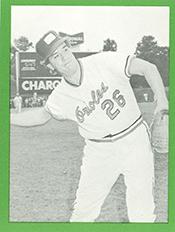
Frank Clark
Former U.S. Representative · Pennsylvania District 25 · 1955–1975 · Democratic
Frank Clark represented Pennsylvania's District 25 in the United States House of Representatives (1955–1975) for the Democratic party. The page below collects sourced biographical facts, term history, committee roles, and provenance for Clark.
Bioguide ID: C000431
Key facts
- Full name
- Frank Clark
- State
- Pennsylvania
- District
- District 25
- Party
- Democratic
- House service
- 1955–1975
- First House term
- 1955
- Status
- Left office
- Current term ends
- —
- Born
- 1915
- Bioguide ID
- C000431
- Committee assignments
- —
- Dataset version
- 1.20260605
Biographical narrative
920 words · sourced from the Wikipedia REST extract
Frank M. Clark was a prominent Democratic politician who served as a U.S. Representative for Pennsylvania's 25th congressional district. His tenure in the House of Representatives spanned from 1955 until 1975, during which he was elected to ten consecutive terms. Clark's political career was marked by his involvement in various legislative initiatives and his participation in international conferences. His post-political life, however, was marred by legal troubles, including convictions for mail fraud and tax evasion. Born on December 24, 1915, in Bessemer, Pennsylvania, Clark's early life and military service laid the foundation for his later political career.
Early life and career
Frank Monroe Clark was born in the small town of Bessemer, located in Pennsylvania. His formative years were spent in a community that would later become the heart of his political base. Clark pursued education at the Pittsburgh Institute of Aeronautics, where he developed skills that would serve him well in his later endeavors. His education was interrupted by the onset of World War II, prompting him to enlist in the United States Army Air Corps in 1942. During his military service, Clark served as a flight officer in Europe, where he gained valuable experience and leadership skills until his discharge in 1945. Following his active duty, he continued his service in the Air Force Reserve, eventually attaining the rank of major.
In addition to his military service, Clark engaged in public service at the local level. He was appointed as the chief of police in Bessemer, a role he held until November 1954. This position allowed him to gain insights into law enforcement and community issues, further shaping his understanding of public service. Clark's initial foray into politics came in 1952 when he ran for a seat in Congress but was unsuccessful. However, he persisted in his political ambitions and, in 1954, he successfully ran for the U.S. House of Representatives. His victory in this election was significant as he defeated the incumbent Republican Congressman Louis E. Graham, marking the beginning of a long and influential career in the House.
House tenure
Clark's congressional career began with his election to the 84th United States Congress in 1955. Over the next two decades, he was re-elected to nine additional terms, serving a total of ten consecutive terms in the House. His tenure was characterized by a commitment to his constituents and an active engagement in legislative matters. Clark's ability to secure re-election repeatedly demonstrated his popularity and the trust placed in him by the voters of Pennsylvania's 25th district.
Throughout his time in office, Clark was involved in various legislative initiatives and discussions that shaped the political landscape of his era. His role as a member of the House allowed him to participate in significant debates and decisions that impacted both his district and the nation. However, his political career came to an end when he resigned on December 31, 1974, following a defeat in the 1974 election to Republican Gary A. Myers. This loss marked a significant turning point in Clark's life, as he had been a fixture in the House for two decades.
After leaving office, Clark's actions raised eyebrows. He continued to communicate with his former constituents, sending out large volumes of mail that were labeled as coming from "your Congressman Frank M. Clark," despite being out of office for several months. This behavior led to scrutiny and ultimately contributed to legal challenges he faced later in life. In 1979, Clark pleaded guilty to charges of mail fraud and tax evasion, which further complicated his post-congressional life.
Legislative focus and committees
During his time in the House of Representatives, Frank M. Clark was involved in a variety of legislative issues, reflecting the diverse needs and interests of his constituents. His work encompassed a range of topics, including local economic development, education, and infrastructure. Clark's long tenure allowed him to build relationships with fellow lawmakers and gain influence within the Democratic Party, which he utilized to advocate for policies that benefitted his district.
In addition to his legislative responsibilities, Clark represented the United States at several international conferences. His participation in these events underscored his commitment to global issues and diplomacy. Notably, he was a delegate to the North Atlantic Treaty Organization (NATO) Conference from 1956 to 1974, where he engaged in discussions on international security and cooperation. His involvement in the Inter-Parliamentary Union Conference in Germany in 1957 and the Christian Leadership for Peace Conference at The Hague in 1958 further highlighted his interest in fostering international dialogue and understanding.
Clark also attended the International Roads Conference in 1959 and again in 1962 through 1968, which focused on transportation and infrastructure development. These experiences not only broadened his perspective on global issues but also allowed him to bring valuable insights back to his work in Congress.
Despite his extensive service and involvement in various legislative matters, Clark's later years were overshadowed by his legal issues. After his resignation, he made several unsuccessful attempts to regain a congressional seat in subsequent elections, including in 1976, 1978, 1986, and 1990. His legal troubles and the public scrutiny that followed marked a stark contrast to his earlier political career.
Frank M. Clark passed away on June 17, 2003, in New Castle, Pennsylvania. His life and career reflect a complex narrative of public service, political ambition, and the challenges that can arise in the realm of politics. His legacy is one of both significant contributions to his community and the controversies that ultimately defined his later years.
Notable legislation
Sponsored and co-sponsored legislation for Frank Clark is pending operator curation. The biographical narrative above carries the same provenance trail until per-bill rows are written.
Sources
- [1]https://en.wikipedia.org/wiki/Frank_M._ClarkWikipedia · retrieved 2026-06-05
Notable quotes
Sourced quotes for Frank Clark are pending operator curation. Narrative-scope provenance remains attached below.
Sources
- [1]https://en.wikipedia.org/wiki/Frank_M._ClarkWikipedia · retrieved 2026-06-05
Key positions
Curated policy positions for Frank Clark are pending operator review. The biographical narrative above carries the same provenance trail until per-topic positions are written.
Sources
- [1]https://en.wikipedia.org/wiki/Frank_M._ClarkWikipedia · retrieved 2026-06-05
Terms served
- 1955–1957U.S. House · Term 1 · Democratic
- 1957–1959U.S. House · Term 2 · Democratic
- 1959–1961U.S. House · Term 3 · Democratic
- 1961–1963U.S. House · Term 4 · Democratic
- 1963–1965U.S. House · Term 5 · Democratic
- 1965–1967U.S. House · Term 6 · Democratic
- 1967–1969U.S. House · Term 7 · Democratic
- 1969–1971U.S. House · Term 8 · Democratic
- 1971–1973U.S. House · Term 9 · Democratic
- 1973–1975U.S. House · Term 10 · Democratic
Sources & provenance
Every attributable claim above carries a per-section [N] marker that resolves to the corresponding URL below. Each entry records the upstream provider, the canonical URL, and the timestamp at which the source was retrieved by the ingest pipeline.
Key facts
- https://bioguide.congress.gov/search/bio/C000431bioguide · retrieved 2026-06-05
- https://www.govtrack.us/congress/members/402569govtrack · retrieved 2026-06-05
Biographical narrative
- https://en.wikipedia.org/wiki/Frank_M._Clarkwikipedia · retrieved 2026-06-05
Find your representative
Every U.S. state elects representatives by district. Browse Pennsylvania’s delegation, the full former-representative roster, or explore the role and term length.
Related on The Candidate
- Preceded by Louis GrahamEarlier holder of the Pennsylvania District 25 House seat · Republican.Open
- Succeeded by Gary MyersLater holder of the Pennsylvania District 25 House seat · Republican.Open
- Adam SeybertFormer U.S. Representative · Pennsylvania District 1 · RepublicanOpen
- Benjamin SayFormer U.S. Representative · Pennsylvania District 1 · RepublicanOpen
- Chapman FreemanFormer U.S. Representative · Pennsylvania District 1 · RepublicanOpen
- Harry RansleyFormer U.S. Representative · Pennsylvania District 1 · RepublicanOpen