
Historical · U.S. House · Pennsylvania · District 25
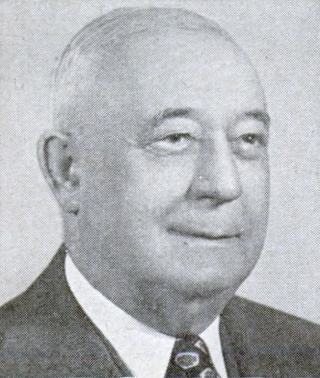
Louis Graham
Former U.S. Representative · Pennsylvania District 25 · 1939–1955 · Republican
Louis Graham represented Pennsylvania's District 25 in the United States House of Representatives (1939–1955) for the Republican party. The page below collects sourced biographical facts, term history, committee roles, and provenance for Graham.
Bioguide ID: G000360
Key facts
- Full name
- Louis Graham
- State
- Pennsylvania
- District
- District 25
- Party
- Republican
- House service
- 1939–1955
- First House term
- 1939
- Status
- Left office
- Current term ends
- —
- Born
- 1880
- Bioguide ID
- G000360
- Committee assignments
- —
- Dataset version
- 1.20260605
Biographical narrative
816 words · sourced from the Wikipedia REST extract
Louis Graham was an American politician who served as a Republican member of the U.S. House of Representatives for Pennsylvania's 25th congressional district. His congressional career spanned nearly two decades, during which he was elected to eight consecutive terms. Graham's legislative work and public service were informed by a background in law and local government, reflecting his commitment to the legal and political landscape of Pennsylvania.
Early life and career
Louis Edward Graham was born on August 4, 1880, in New Castle, Pennsylvania. In 1893, he relocated with his family to Beaver, Pennsylvania, where he would later establish his political career. He pursued higher education at Washington and Jefferson College, graduating in 1901. Following his graduation, Graham began his professional life in public service, initially serving as the deputy sheriff of Beaver County from 1903 to 1906. This early experience in law enforcement likely provided him with insights into the legal system and community needs, which would shape his future endeavors.
Graham's legal career progressed as he took on the role of district attorney for Beaver County from 1912 to 1924. In this position, he was responsible for prosecuting criminal cases and overseeing legal matters within the county, further solidifying his reputation as a dedicated public servant. His legal expertise led to his appointment as deputy attorney general of Pennsylvania from 1924 to 1927, where he worked on broader legal issues affecting the state.
In 1927, Graham became the chief legal adviser for the sixth Federal prohibition district, a role that involved navigating the complexities of federal law during the Prohibition era. His career continued to advance when he was appointed as the U.S. Attorney for the Western District of Pennsylvania, serving from November 7, 1929, until September 1, 1933. In this capacity, he was responsible for federal prosecutions and legal representation in the region. Additionally, he was involved in significant legal cases, including serving as a special assistant to the United States Attorney General during the Pittsburgh vote-fraud cases from 1934 to 1936, highlighting his engagement with issues of electoral integrity.
House tenure
Louis Graham's political career in the U.S. House of Representatives began when he was elected as a Republican to the Seventy-sixth Congress in 1938. He was successful in securing re-election to seven subsequent Congresses, demonstrating a sustained level of support from his constituents in Pennsylvania's 25th congressional district. His tenure in the House lasted until January 3, 1955, marking a significant period of influence in federal legislation.
During his time in Congress, Graham participated in various legislative activities and contributed to discussions on numerous issues pertinent to his district and the nation. His long-standing service in the House is indicative of his ability to connect with voters and address their concerns effectively. Throughout his eight terms, he likely engaged with a wide range of topics, reflecting the changing political landscape of the United States during the mid-20th century.
In 1954, Graham sought re-election but faced defeat at the hands of Democrat Frank M. Clark. This loss marked the end of his congressional career, concluding a notable period of public service that spanned nearly two decades. His electoral defeat underscored the competitive nature of political races and the evolving dynamics within Pennsylvania's political landscape.
Legislative focus and committees
During his time in the U.S. House of Representatives, Louis Graham was involved in various legislative initiatives and served on several committees that shaped national policy. Notably, he was appointed as Chairman of the United States Joint Committee on Immigration and Nationality Policy during the Eighty-third Congress. This role placed him at the forefront of discussions regarding immigration policy, a topic of significant importance in American politics.
Graham's involvement in immigration and nationality issues reflects a broader concern for the demographic and cultural composition of the United States during a time of considerable change. The post-World War II era saw increased attention to immigration policies, and as chairman, Graham would have played a crucial role in shaping legislation that addressed these challenges.
Throughout his congressional career, Graham likely participated in debates and discussions on various issues beyond immigration, contributing to the legislative process in ways that aligned with his party's priorities and the needs of his constituents. His legal background may have informed his approach to policy-making, allowing him to navigate complex legal frameworks and advocate for effective solutions to the challenges facing his district and the nation.
Graham's tenure in the House was marked by a commitment to public service and a focus on legal and policy issues that impacted the lives of his constituents. His experience in law and local government provided him with a unique perspective that he brought to his work in Congress. Despite his eventual electoral defeat, Graham's legacy as a long-serving member of the House of Representatives remains a testament to his dedication to public service and the political landscape of Pennsylvania during the mid-20th century.
Notable legislation
Sponsored and co-sponsored legislation for Louis Graham is pending operator curation. The biographical narrative above carries the same provenance trail until per-bill rows are written.
Sources
- [1]https://en.wikipedia.org/wiki/Louis_E._GrahamWikipedia · retrieved 2026-06-05
Notable quotes
Sourced quotes for Louis Graham are pending operator curation. Narrative-scope provenance remains attached below.
Sources
- [1]https://en.wikipedia.org/wiki/Louis_E._GrahamWikipedia · retrieved 2026-06-05
Key positions
Curated policy positions for Louis Graham are pending operator review. The biographical narrative above carries the same provenance trail until per-topic positions are written.
Sources
- [1]https://en.wikipedia.org/wiki/Louis_E._GrahamWikipedia · retrieved 2026-06-05
Terms served
- 1939–1941U.S. House · Term 1 · Republican
- 1941–1943U.S. House · Term 2 · Republican
- 1943–1945U.S. House · Term 3 · Republican
- 1945–1947U.S. House · Term 4 · Republican
- 1947–1949U.S. House · Term 5 · Republican
- 1949–1951U.S. House · Term 6 · Republican
- 1951–1953U.S. House · Term 7 · Republican
- 1953–1955U.S. House · Term 8 · Republican
Sources & provenance
Every attributable claim above carries a per-section [N] marker that resolves to the corresponding URL below. Each entry records the upstream provider, the canonical URL, and the timestamp at which the source was retrieved by the ingest pipeline.
Key facts
- https://bioguide.congress.gov/search/bio/G000360bioguide · retrieved 2026-06-05
- https://www.govtrack.us/congress/members/404714govtrack · retrieved 2026-06-05
Biographical narrative
- https://en.wikipedia.org/wiki/Louis_E._Grahamwikipedia · retrieved 2026-06-05
Find your representative
Every U.S. state elects representatives by district. Browse Pennsylvania’s delegation, the full former-representative roster, or explore the role and term length.
Related on The Candidate
- Preceded by Henry TempleEarlier holder of the Pennsylvania District 25 House seat · Republican.Open
- Succeeded by Frank ClarkLater holder of the Pennsylvania District 25 House seat · Democratic.Open
- Adam SeybertFormer U.S. Representative · Pennsylvania District 1 · RepublicanOpen
- Benjamin SayFormer U.S. Representative · Pennsylvania District 1 · RepublicanOpen
- Chapman FreemanFormer U.S. Representative · Pennsylvania District 1 · RepublicanOpen
- Harry RansleyFormer U.S. Representative · Pennsylvania District 1 · RepublicanOpen