
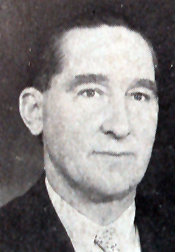
Historical · U.S. House · Pennsylvania · District 27
Joseph Gray
Former U.S. Representative · Pennsylvania District 27 · 1935–1939 · Democratic
Joseph Gray represented Pennsylvania's District 27 in the United States House of Representatives (1935–1939) for the Democratic party. The page below collects sourced biographical facts, term history, committee roles, and provenance for Gray.
Bioguide ID: G000399
Key facts
- Full name
- Joseph Gray
- State
- Pennsylvania
- District
- District 27
- Party
- Democratic
- House service
- 1935–1939
- First House term
- 1935
- Status
- Left office
- Current term ends
- —
- Born
- 1884
- Bioguide ID
- G000399
- Committee assignments
- —
- Dataset version
- 1.20260605
Biographical narrative
938 words · sourced from the Wikipedia REST extract
Joseph Gray was a Democratic politician who served as a member of the United States House of Representatives from Pennsylvania's 27th congressional district. His tenure in Congress spanned two terms, beginning in 1935 and concluding in 1939. A veteran of the United States Army, Gray transitioned from military service to a career in law and politics, contributing to both local governance and national legislation during his time in office. His life and career reflect a commitment to public service and community engagement, which he maintained until his passing in 1966.
Early life and career
Joseph Anthony Gray was born on February 25, 1884, in Susquehanna Township, located in Cambria County, Pennsylvania. His early education culminated in his graduation from Eastman College in Poughkeepsie, New York, in 1905. This academic background laid the foundation for his future pursuits in law and public service. Following his graduation, Gray enlisted in the United States Army, where he served as a private in Company H of the Fifth Infantry from 1900 to 1902. His military service continued in the United States Army Signal Corps from 1902 to 1903, during which he gained valuable experience that would later inform his leadership skills in public office.
After completing his military service, Gray returned to academia to study law. He successfully passed the bar examination in 1910 and began practicing law in Ebensburg, Pennsylvania. His legal career provided him with insights into the workings of the judicial system and the importance of legislative frameworks, which would prove beneficial in his later political endeavors. Gray's initial foray into politics began at the state level when he was elected to the Pennsylvania State House of Representatives, serving in 1913 and 1914. This experience marked the beginning of his long-standing involvement in public service.
In addition to his legislative work, Gray was active in various community roles. He served as president of the board of health from 1916 to 1920, a position that underscored his commitment to public health and welfare. His engagement with the community continued as he became a motion-picture exhibitor in Spangler, Pennsylvania, starting in 1920. This role not only reflected his entrepreneurial spirit but also his understanding of the cultural landscape of his time. Furthermore, Gray was involved in local governance as a school director in Spangler from 1930 to 1934, and he later served as a councilman from 1939 to 1943. These positions allowed him to address educational and municipal issues directly, further solidifying his reputation as a dedicated public servant.
House tenure
Joseph Gray's congressional career began when he was elected as a Democrat to the 74th Congress, which convened in 1935. He successfully secured a second term in the 75th Congress, which lasted until January 3, 1939. During his time in the House of Representatives, Gray participated in various legislative discussions and decisions that were crucial to the nation during the mid-1930s, a period marked by the Great Depression and significant social and economic challenges.
As a member of Congress, Gray faced the complexities of representing his constituents while navigating the broader political landscape of the time. His tenure coincided with the New Deal era, a series of programs and reforms introduced by President Franklin D. Roosevelt aimed at addressing the economic crisis. While specific details of Gray's legislative actions during this time are not extensively documented, it can be inferred that he was involved in discussions and initiatives that sought to alleviate the hardships faced by many Americans.
Despite his efforts and contributions, Gray's political career in the House was relatively brief. He was unsuccessful in his bid for re-election in both 1938 and 1940, which marked the end of his time in Congress. Following his departure from the House, Gray returned to his legal practice, where he continued to engage with the community and contribute to local governance.
Legislative focus and committees
While specific details regarding Gray's committee assignments and legislative focus during his time in Congress are not provided, it is reasonable to assume that, as a member of the Democratic Party during the New Deal era, he would have been aligned with initiatives aimed at economic recovery and social reform. The political climate of the time emphasized the need for government intervention in the economy, and many Democratic representatives were involved in crafting legislation that sought to provide relief to struggling citizens, stimulate job creation, and reform financial systems.
Gray's background in law and his experience in local governance likely informed his approach to legislative issues. His previous roles in public health and education may have influenced his perspectives on related policies, although specific legislative achievements or positions he championed are not detailed in the available records. His involvement in the Pennsylvania State House of Representatives prior to his congressional career would have also provided him with insights into state-level issues that could translate to his work in the federal legislature.
After leaving Congress, Gray continued to engage with the community through his legal practice and his work as a publisher of The Conservative, a weekly newspaper. This role allowed him to remain active in public discourse and contribute to the political landscape beyond his time in office. His commitment to public service persisted throughout his life, as evidenced by his continued involvement in local governance and community affairs.
Joseph Gray passed away on May 8, 1966, in Spangler, Pennsylvania. His contributions to his community, both as a legal practitioner and a public servant, left a lasting impact on the local landscape. He is interred at Holy Cross Cemetery, where he is remembered for his dedication to the people he served throughout his life.
Notable legislation
Sponsored and co-sponsored legislation for Joseph Gray is pending operator curation. The biographical narrative above carries the same provenance trail until per-bill rows are written.
Sources
- [1]https://en.wikipedia.org/wiki/Joseph_Anthony_GrayWikipedia · retrieved 2026-06-05
Notable quotes
Sourced quotes for Joseph Gray are pending operator curation. Narrative-scope provenance remains attached below.
Sources
- [1]https://en.wikipedia.org/wiki/Joseph_Anthony_GrayWikipedia · retrieved 2026-06-05
Key positions
Curated policy positions for Joseph Gray are pending operator review. The biographical narrative above carries the same provenance trail until per-topic positions are written.
Sources
- [1]https://en.wikipedia.org/wiki/Joseph_Anthony_GrayWikipedia · retrieved 2026-06-05
Terms served
- 1935–1937U.S. House · Term 1 · Democratic
- 1937–1939U.S. House · Term 2 · Democratic
Sources & provenance
Every attributable claim above carries a per-section [N] marker that resolves to the corresponding URL below. Each entry records the upstream provider, the canonical URL, and the timestamp at which the source was retrieved by the ingest pipeline.
Key facts
- https://bioguide.congress.gov/search/bio/G000399bioguide · retrieved 2026-06-05
- https://www.govtrack.us/congress/members/404749govtrack · retrieved 2026-06-05
Biographical narrative
- https://en.wikipedia.org/wiki/Joseph_Anthony_Graywikipedia · retrieved 2026-06-05
Find your representative
Every U.S. state elects representatives by district. Browse Pennsylvania’s delegation, the full former-representative roster, or explore the role and term length.
Related on The Candidate
- Preceded by Nathan StrongEarlier holder of the Pennsylvania District 27 House seat · Republican.Open
- Succeeded by James FultonLater holder of the Pennsylvania District 27 House seat · Republican.Open
- Adam SeybertFormer U.S. Representative · Pennsylvania District 1 · RepublicanOpen
- Benjamin SayFormer U.S. Representative · Pennsylvania District 1 · RepublicanOpen
- Chapman FreemanFormer U.S. Representative · Pennsylvania District 1 · RepublicanOpen
- Harry RansleyFormer U.S. Representative · Pennsylvania District 1 · RepublicanOpen