
Historical · U.S. House · Pennsylvania · District 4
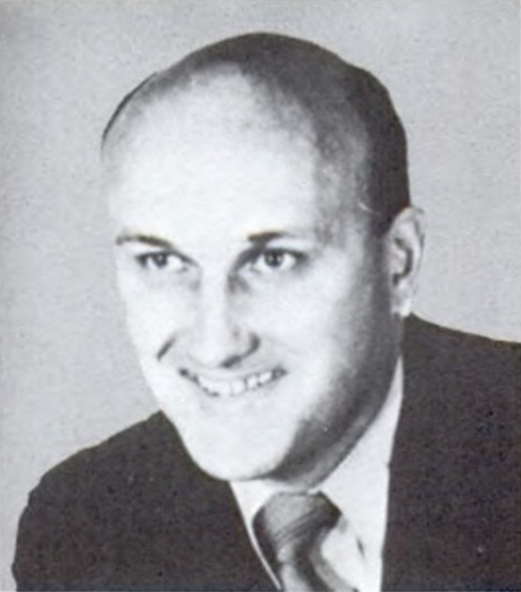
Charles Dougherty
Former U.S. Representative · Pennsylvania District 4 · 1979–1983 · Republican
Charles Dougherty represented Pennsylvania's District 4 in the United States House of Representatives (1979–1983) for the Republican party. The page below collects sourced biographical facts, term history, committee roles, and provenance for Dougherty.
Bioguide ID: D000446
Key facts
- Full name
- Charles Dougherty
- State
- Pennsylvania
- District
- District 4
- Party
- Republican
- House service
- 1979–1983
- First House term
- 1979
- Status
- Left office
- Current term ends
- —
- Born
- 1937
- Bioguide ID
- D000446
- Committee assignments
- —
- Dataset version
- 1.20260605
Biographical narrative
891 words · sourced from the Wikipedia REST extract
Charles F. Dougherty is a former American politician who served as a Republican member of the U.S. House of Representatives for Pennsylvania's 4th congressional district from 1979 to 1983. His political career spanned various levels of government, including service in the Pennsylvania State Senate prior to his tenure in Congress. Dougherty's legislative activities and political aspirations reflect a commitment to public service that began in his early life and continued through his various roles in education and government.
Early life and career
Charles F. Dougherty was born on June 26, 1937, in Philadelphia, Pennsylvania. He received his early education at St. Helena's School before graduating from St. Joseph's Preparatory School in 1955. Following his high school education, Dougherty joined the United States Marine Corps Reserve, serving from 1957 until 1977, with active duty from 1959 to 1962. His military service provided him with a foundation of discipline and leadership that would later influence his political career.
Dougherty pursued higher education at St. Joseph's College, where he earned a Bachelor of Science degree in 1959. He continued his academic journey with graduate studies at the University of Pennsylvania from 1962 to 1964, focusing on furthering his knowledge and skills. His early career included a position as a high school teacher from 1962 to 1965, where he contributed to the education of young people in his community.
In 1965, Dougherty transitioned to a role as a special agent for the Office of Naval Intelligence within the Department of the Navy, a position he held until 1966. This experience provided him with insights into national security and intelligence matters. Following this role, he served as the assistant dean of the Community College of Philadelphia from 1966 to 1970, where he was involved in higher education administration. Dougherty later became a high school principal from 1970 to 1972, further establishing his credentials in educational leadership.
Dougherty's political career began in earnest when he was elected to the Pennsylvania State Senate, representing the 5th district from 1972 until 1979. His tenure in the state legislature allowed him to gain valuable experience in governance and public policy, setting the stage for his subsequent election to the U.S. Congress.
House tenure
In 1978, Dougherty was elected to the U.S. House of Representatives, marking the beginning of his congressional career. He served in the 96th and 97th United States Congresses, having been reelected in 1980. His election in 1978 was notable as he defeated incumbent Joshua Eilberg, who faced legal challenges related to allegations of misconduct involving a federal grant. This victory was significant in Dougherty's political trajectory, as it demonstrated his ability to connect with voters and navigate the complexities of electoral politics.
During his time in Congress, Dougherty participated in various legislative activities and contributed to discussions on issues pertinent to his constituents and the nation. His service in the House provided him with a platform to advocate for policies that aligned with his party's values and the interests of his district.
However, Dougherty's congressional career came to an end when he was defeated in the 1982 election by State Representative Robert Borski. This election was particularly challenging due to the redistricting that occurred, which renumbered Dougherty's district as the 3rd District. Despite his loss, Dougherty remained active in politics, running for various offices in subsequent years. He sought to reclaim his former House seat in 1992, 1998, and 2000, but was unsuccessful in each attempt. Additionally, he pursued Republican primaries for Mayor of Philadelphia in 1983 and for his former congressional seat in 1986, as well as a bid for Philadelphia City Council in 1995.
Dougherty's tenure in Congress is historically significant, as he is recognized as the last Republican to represent a Philadelphia-based district in the U.S. House. His departure from Congress marked a shift in the political landscape of the region, as it would be many years before another Republican would represent any portion of Philadelphia in Congress.
Legislative focus and committees
During his time in the U.S. House of Representatives, Dougherty's legislative focus encompassed a range of issues that were relevant to his constituents and aligned with the priorities of the Republican Party. While specific details regarding the bills he sponsored or supported are not provided, it is typical for members of Congress to engage in discussions and initiatives related to economic development, education, public safety, and community services, among other areas.
Dougherty's background in education and administration likely influenced his perspectives on educational policy and funding, as well as his approach to issues affecting local communities. His experience in the Pennsylvania State Senate would have also equipped him with insights into state-level concerns that could be addressed at the federal level.
Although the specific committees on which Dougherty served during his congressional tenure are not detailed, members of Congress typically participate in committees that align with their interests and the needs of their constituents. These committees play a crucial role in shaping legislation, conducting oversight, and addressing various policy areas.
In summary, Charles F. Dougherty's career reflects a dedication to public service that began in his early life and extended through his time in the Pennsylvania State Senate and the U.S. House of Representatives. His contributions to the political landscape of Pennsylvania, particularly in Philadelphia, are part of a broader narrative of Republican representation in a historically Democratic stronghold.
Notable legislation
Sponsored and co-sponsored legislation for Charles Dougherty is pending operator curation. The biographical narrative above carries the same provenance trail until per-bill rows are written.
Sources
- [1]https://en.wikipedia.org/wiki/Charles_F._DoughertyWikipedia · retrieved 2026-06-05
Notable quotes
Sourced quotes for Charles Dougherty are pending operator curation. Narrative-scope provenance remains attached below.
Sources
- [1]https://en.wikipedia.org/wiki/Charles_F._DoughertyWikipedia · retrieved 2026-06-05
Key positions
Curated policy positions for Charles Dougherty are pending operator review. The biographical narrative above carries the same provenance trail until per-topic positions are written.
Sources
- [1]https://en.wikipedia.org/wiki/Charles_F._DoughertyWikipedia · retrieved 2026-06-05
Terms served
- 1979–1981U.S. House · Term 1 · Republican
- 1981–1983U.S. House · Term 2 · Republican
Sources & provenance
Every attributable claim above carries a per-section [N] marker that resolves to the corresponding URL below. Each entry records the upstream provider, the canonical URL, and the timestamp at which the source was retrieved by the ingest pipeline.
Key facts
- https://bioguide.congress.gov/search/bio/D000446bioguide · retrieved 2026-06-05
- https://www.govtrack.us/congress/members/403556govtrack · retrieved 2026-06-05
Biographical narrative
- https://en.wikipedia.org/wiki/Charles_F._Doughertywikipedia · retrieved 2026-06-05
Find your representative
Every U.S. state elects representatives by district. Browse Pennsylvania’s delegation, the full former-representative roster, or explore the role and term length.
Related on The Candidate
- Preceded by Joshua EilbergEarlier holder of the Pennsylvania District 4 House seat · Democratic.Open
- Succeeded by Joseph KolterLater holder of the Pennsylvania District 4 House seat · Democratic.Open
- Adam SeybertFormer U.S. Representative · Pennsylvania District 1 · RepublicanOpen
- Benjamin SayFormer U.S. Representative · Pennsylvania District 1 · RepublicanOpen
- Chapman FreemanFormer U.S. Representative · Pennsylvania District 1 · RepublicanOpen
- Harry RansleyFormer U.S. Representative · Pennsylvania District 1 · RepublicanOpen