
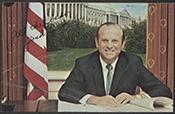
Historical · U.S. House · Pennsylvania · District 4
Joshua Eilberg
Former U.S. Representative · Pennsylvania District 4 · 1967–1979 · Democratic
Joshua Eilberg represented Pennsylvania's District 4 in the United States House of Representatives (1967–1979) for the Democratic party. The page below collects sourced biographical facts, term history, committee roles, and provenance for Eilberg.
Bioguide ID: E000096
Key facts
- Full name
- Joshua Eilberg
- State
- Pennsylvania
- District
- District 4
- Party
- Democratic
- House service
- 1967–1979
- First House term
- 1967
- Status
- Left office
- Current term ends
- —
- Born
- 1921
- Bioguide ID
- E000096
- Committee assignments
- —
- Dataset version
- 1.20260605
Biographical narrative
913 words · sourced from the Wikipedia REST extract
Joshua Eilberg was a Democratic politician who served as a U.S. Representative for Pennsylvania's 4th congressional district from 1967 until 1979. He was a member of the House of Representatives for six consecutive terms, during which he held various leadership roles and was involved in significant legislative actions. Eilberg's political career was marked by both achievements and controversies, culminating in legal challenges that affected his later years.
Early life and career
Joshua Eilberg was born on February 12, 1921, in Philadelphia, Pennsylvania. He received his early education at Central High School in Philadelphia, a well-regarded institution known for its rigorous academic standards. Eilberg furthered his education at the Wharton School of the University of Pennsylvania, where he gained a strong foundation in business and finance. He later attended Temple University School of Law, earning his law degree and preparing for a career in legal practice.
Following his education, Eilberg entered the United States Naval Reserve, serving during a time of national conflict. After his military service, he began his career as a private practice lawyer, which provided him with valuable experience in the legal field. His legal career transitioned into public service when he was appointed as an assistant district attorney for the city of Philadelphia from 1952 to 1954. This role allowed him to engage with the legal system from a prosecutorial perspective, further shaping his understanding of law and governance.
Eilberg's political career began in earnest when he was elected to the Pennsylvania State House of Representatives in 1954. He served in this capacity until 1966, during which time he rose to the position of majority leader from 1965 to 1966. His leadership role in the state legislature provided him with insights into legislative processes and the workings of government at both state and federal levels. Additionally, Eilberg was active in the Democratic Party, serving as a delegate to the Democratic National Conventions in 1960, 1964, and 1968. He also held the position of Democratic ward leader for the fifty-fourth ward of Philadelphia, further solidifying his influence within local politics.
House tenure
Eilberg was elected to the U.S. House of Representatives in 1966 as a Democrat, representing Pennsylvania's 4th congressional district. He served in this role for six consecutive terms, with his first term beginning in January 1967. Throughout his tenure, he was involved in various legislative initiatives and served on several important committees. Eilberg's re-election campaigns were marked by competitive primaries, including a notable victory in 1974 against Chris Matthews, who would later become a prominent television host.
During his time in Congress, Eilberg was recognized for his leadership as the Chairman of the Judiciary Subcommittee on Immigration, Citizenship, and International Law. In this capacity, he played a pivotal role in legislative discussions surrounding immigration policy. One of the significant actions he led was a legislative veto aimed at overriding the Attorney General's suspension of deportation for several individuals, including Jagdish Rai Chadha. This case ultimately reached the Supreme Court, which ruled the legislative veto unconstitutional in a landmark decision.
Eilberg's congressional career, however, faced challenges. In 1978, he was defeated in the Democratic primary by Charles F. Dougherty after a contentious campaign. This loss marked the end of his tenure in the House of Representatives, concluding a significant period of public service.
Legislative focus and committees
Throughout his time in Congress, Joshua Eilberg focused on various legislative issues, particularly those related to immigration and civil rights. As Chairman of the Judiciary Subcommittee on Immigration, Citizenship, and International Law, he was deeply involved in shaping policies that affected immigrants and their rights within the United States. His leadership in this area was characterized by efforts to navigate complex legal frameworks and advocate for legislative changes that would impact the lives of many individuals.
Eilberg's legislative actions were not without controversy. His involvement in a significant case regarding the deportation of Jagdish Rai Chadha highlighted the complexities of immigration law and the balance of power between the legislative and executive branches. The Supreme Court's ruling against the legislative veto he championed underscored the challenges faced by lawmakers in addressing immigration issues within the bounds of constitutional authority.
In addition to his work on immigration, Eilberg's broader legislative agenda included a commitment to civil rights and social justice. His participation in various committees allowed him to engage with a range of issues affecting his constituents and the nation as a whole. However, his later years in Congress were overshadowed by legal troubles that arose from an investigation into his financial dealings related to a federal grant for Hahnemann University Hospital in Philadelphia.
In 1978, Eilberg faced scrutiny from U.S. Attorney David W. Marston, leading to an investigation into potential conflicts of interest. Following his defeat in the Democratic primary, Eilberg pleaded guilty to charges related to these conflicts, resulting in a sentence of probation and a monetary fine. This legal outcome marked a significant turning point in his career and personal life.
Eilberg's contributions to American politics were shaped by his experiences as a lawyer, legislator, and public servant. His legacy includes both his legislative achievements and the challenges he faced during his career. After leaving Congress, Eilberg remained a figure of interest in discussions about political ethics and accountability.
Joshua Eilberg passed away on March 24, 2004, in Philadelphia, Pennsylvania, due to complications from Parkinson's Disease. His life and career reflect the complexities of public service and the impact of legal and ethical considerations in the political arena.
Notable legislation
Sponsored and co-sponsored legislation for Joshua Eilberg is pending operator curation. The biographical narrative above carries the same provenance trail until per-bill rows are written.
Sources
- [1]https://en.wikipedia.org/wiki/Joshua_EilbergWikipedia · retrieved 2026-06-05
Notable quotes
Sourced quotes for Joshua Eilberg are pending operator curation. Narrative-scope provenance remains attached below.
Sources
- [1]https://en.wikipedia.org/wiki/Joshua_EilbergWikipedia · retrieved 2026-06-05
Key positions
Curated policy positions for Joshua Eilberg are pending operator review. The biographical narrative above carries the same provenance trail until per-topic positions are written.
Sources
- [1]https://en.wikipedia.org/wiki/Joshua_EilbergWikipedia · retrieved 2026-06-05
Terms served
- 1967–1969U.S. House · Term 1 · Democratic
- 1969–1971U.S. House · Term 2 · Democratic
- 1971–1973U.S. House · Term 3 · Democratic
- 1973–1975U.S. House · Term 4 · Democratic
- 1975–1977U.S. House · Term 5 · Democratic
- 1977–1979U.S. House · Term 6 · Democratic
Sources & provenance
Every attributable claim above carries a per-section [N] marker that resolves to the corresponding URL below. Each entry records the upstream provider, the canonical URL, and the timestamp at which the source was retrieved by the ingest pipeline.
Key facts
- https://bioguide.congress.gov/search/bio/E000096bioguide · retrieved 2026-06-05
- https://www.govtrack.us/congress/members/403787govtrack · retrieved 2026-06-05
Biographical narrative
- https://en.wikipedia.org/wiki/Joshua_Eilbergwikipedia · retrieved 2026-06-05
Find your representative
Every U.S. state elects representatives by district. Browse Pennsylvania’s delegation, the full former-representative roster, or explore the role and term length.
Related on The Candidate
- Preceded by Herman TollEarlier holder of the Pennsylvania District 4 House seat · Democratic.Open
- Succeeded by Charles DoughertyLater holder of the Pennsylvania District 4 House seat · Republican.Open
- Adam SeybertFormer U.S. Representative · Pennsylvania District 1 · RepublicanOpen
- Benjamin SayFormer U.S. Representative · Pennsylvania District 1 · RepublicanOpen
- Chapman FreemanFormer U.S. Representative · Pennsylvania District 1 · RepublicanOpen
- Harry RansleyFormer U.S. Representative · Pennsylvania District 1 · RepublicanOpen