
Historical · U.S. House · Pennsylvania · District 4
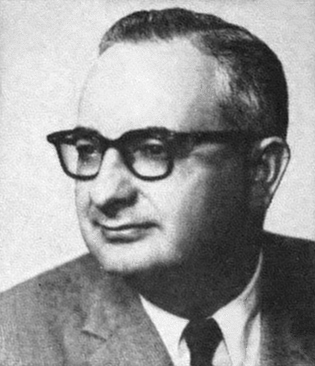
Herman Toll
Former U.S. Representative · Pennsylvania District 4 · 1959–1967 · Democratic
Herman Toll represented Pennsylvania's District 4 in the United States House of Representatives (1959–1967) for the Democratic party. The page below collects sourced biographical facts, term history, committee roles, and provenance for Toll.
Bioguide ID: T000297
Key facts
- Full name
- Herman Toll
- State
- Pennsylvania
- District
- District 4
- Party
- Democratic
- House service
- 1959–1967
- First House term
- 1959
- Status
- Left office
- Current term ends
- —
- Born
- 1907
- Bioguide ID
- T000297
- Committee assignments
- —
- Dataset version
- 1.20260605
Biographical narrative
851 words · sourced from the Wikipedia REST extract
Herman Toll was an American politician who served as a U.S. Representative for Pennsylvania's 4th congressional district from 1959 until his death in 1967. A member of the Democratic Party, Toll was notable for his support of civil rights and his sponsorship of significant legislation aimed at establishing various federal agencies, including the U.S. Department of Urban Affairs and Housing. His political career was marked by a commitment to social issues and a dedication to public service, which he pursued until his health declined due to a serious illness.
Early life and career
Herman Toll was born on March 15, 1907, in Bohuslav, a city located approximately 60 miles southeast of Kyiv in what was then the Russian Empire, now Ukraine. His family immigrated to the United States around 1910, settling in Philadelphia, Pennsylvania. Toll's educational journey led him to the Temple University School of Law, where he graduated without a traditional college degree, as such a requirement was not in place at that time. He began his legal career in 1930, establishing himself as a practicing attorney.
Toll was actively involved in various civic and social organizations throughout his early career. He became a member of the Pennsylvania Prison Society and the Philadelphia Housing Association, reflecting his interest in social justice and community welfare. Additionally, he was affiliated with B'nai B'rith, a Jewish service organization, and served on the board of directors for the Crusader Savings & Loan Association. His commitment to public service was further demonstrated when he was elected to the Pennsylvania State House of Representatives in 1950. During his tenure there, he served as vice chairman of the Judiciary Committee and played a crucial role in the passage of Pennsylvania's first Fair Employment Practices law. He was re-elected multiple times, securing his position in the state legislature through the 1950s.
House tenure
In 1958, Herman Toll was elected to the United States Congress as a Democrat, representing Pennsylvania's 6th congressional district. His election was historically significant as he became the first Jewish representative from that district. Toll was re-elected three times during his congressional career, with his final two terms representing the 4th congressional district following a redistricting. He served in the House until shortly before his death in 1967.
During his first term, Toll was appointed to the House Judiciary Committee and its Subcommittee on Immigration and Nationality, where he was involved in legislative matters concerning immigration policy. His dedication to civil rights was evident throughout his tenure, and he maintained correspondence with prominent civil rights leaders, including Dr. Martin Luther King Jr. In a notable exchange, he expressed his commitment to advancing civil rights legislation.
As his congressional career progressed, Toll faced significant personal challenges. Toward the end of his third term, he was diagnosed with amyotrophic lateral sclerosis (ALS), commonly known as Lou Gehrig's Disease. Despite his illness, he successfully won re-election for a fourth term; however, his health prevented him from actively campaigning or participating in House sessions. He served in absentia during this period, marking a poignant chapter in his political life. He chose not to seek re-election in 1966, and he passed away on July 26, 1967, at the age of 60.
Legislative focus and committees
Throughout his time in Congress, Herman Toll was known for his legislative initiatives aimed at addressing social issues and promoting federal programs that would benefit the public. He sponsored legislation that led to the establishment of several federal agencies, including the Federal Recreation Services, the Youth Conservation Corps, the Department of Urban Affairs and Housing, and the U.S. Disarmament Agency for World Peace. These initiatives reflected his commitment to urban development, youth engagement, and international peace efforts.
Toll's legislative focus was characterized by a progressive approach to governance, emphasizing the importance of civil rights and social welfare. His work in Congress contributed to the broader civil rights movement of the 1960s, as he advocated for legislation that sought to eliminate discrimination and promote equality. His involvement in the Judiciary Committee allowed him to influence key legal reforms during a transformative period in American history.
In addition to his legislative accomplishments, Toll was recognized by his peers for his intelligence, articulate nature, and dedication to public service. While he was not known for an outgoing personality, he was described as passionate about politics and deeply committed to his constituents. His family life was marked by a strong dedication to his work, often at the expense of personal time, as noted by his son in later reflections on his father's life.
Toll's legacy is also intertwined with his family, as he was survived by his wife, Rose Ornstein, who later served in the Pennsylvania State Legislature, and their two sons, both of whom pursued careers in law. His brother, Albert Toll, and his family continued the legacy of public service and entrepreneurship in the real estate sector.
Herman Toll's contributions to American politics, particularly in the realm of civil rights and social welfare, remain a significant part of his legacy, reflecting the values he championed during his time in the U.S. House of Representatives.
Notable legislation
Sponsored and co-sponsored legislation for Herman Toll is pending operator curation. The biographical narrative above carries the same provenance trail until per-bill rows are written.
Sources
- [1]https://en.wikipedia.org/wiki/Herman_TollWikipedia · retrieved 2026-06-05
Notable quotes
Sourced quotes for Herman Toll are pending operator curation. Narrative-scope provenance remains attached below.
Sources
- [1]https://en.wikipedia.org/wiki/Herman_TollWikipedia · retrieved 2026-06-05
Key positions
Curated policy positions for Herman Toll are pending operator review. The biographical narrative above carries the same provenance trail until per-topic positions are written.
Sources
- [1]https://en.wikipedia.org/wiki/Herman_TollWikipedia · retrieved 2026-06-05
Terms served
- 1959–1961U.S. House · Term 1 · Democratic
- 1961–1963U.S. House · Term 2 · Democratic
- 1963–1965U.S. House · Term 3 · Democratic
- 1965–1967U.S. House · Term 4 · Democratic
Sources & provenance
Every attributable claim above carries a per-section [N] marker that resolves to the corresponding URL below. Each entry records the upstream provider, the canonical URL, and the timestamp at which the source was retrieved by the ingest pipeline.
Key facts
- https://bioguide.congress.gov/search/bio/T000297bioguide · retrieved 2026-06-05
- https://www.govtrack.us/congress/members/410870govtrack · retrieved 2026-06-05
Biographical narrative
- https://en.wikipedia.org/wiki/Herman_Tollwikipedia · retrieved 2026-06-05
Find your representative
Every U.S. state elects representatives by district. Browse Pennsylvania’s delegation, the full former-representative roster, or explore the role and term length.
Related on The Candidate
- Preceded by Earl ChudoffEarlier holder of the Pennsylvania District 4 House seat · Democratic.Open
- Succeeded by Joshua EilbergLater holder of the Pennsylvania District 4 House seat · Democratic.Open
- Adam SeybertFormer U.S. Representative · Pennsylvania District 1 · RepublicanOpen
- Benjamin SayFormer U.S. Representative · Pennsylvania District 1 · RepublicanOpen
- Chapman FreemanFormer U.S. Representative · Pennsylvania District 1 · RepublicanOpen
- Harry RansleyFormer U.S. Representative · Pennsylvania District 1 · RepublicanOpen