
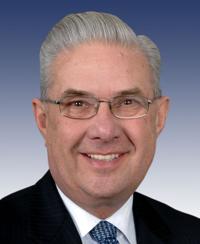
Historical · U.S. House · Pennsylvania · District 5
John Peterson
Former U.S. Representative · Pennsylvania District 5 · 1997–2009 · Republican
John Peterson represented Pennsylvania's District 5 in the United States House of Representatives (1997–2009) for the Republican party. The page below collects sourced biographical facts, term history, committee roles, and provenance for Peterson.
Bioguide ID: P000263
Key facts
- Full name
- John Peterson
- State
- Pennsylvania
- District
- District 5
- Party
- Republican
- House service
- 1997–2009
- First House term
- 1997
- Status
- Left office
- Current term ends
- —
- Born
- 1938
- Bioguide ID
- P000263
- Committee assignments
- —
- Dataset version
- 1.20260605
Biographical narrative
985 words · sourced from the Wikipedia REST extract
John E. Peterson is a former American politician who served as a Republican member of the U.S. House of Representatives, representing Pennsylvania's 5th congressional district from 1997 until 2009. Known for his focus on rural issues and economic development, Peterson's legislative career spanned over three decades, during which he held various positions in state and federal government. His tenure in Congress was marked by his involvement in education, health care, and energy policy, reflecting the needs and interests of his predominantly rural constituency.
Early life and career
John E. Peterson was born on December 25, 1938, in Titusville, Pennsylvania. He grew up in a region characterized by its rural landscape and tight-knit communities. Following his high school education, Peterson served in the United States Army from 1957 to 1963, fulfilling both active and reserve duties. He was honorably discharged as a Specialist, after which he transitioned into the private sector. For 26 years, Peterson owned and operated a retail food market in Pleasantville, Pennsylvania, which provided him with firsthand experience in business operations and community engagement.
In addition to his entrepreneurial endeavors, Peterson pursued further education, completing a three-year Rural Leadership Program at Penn State University. This program equipped him with valuable insights into the challenges and opportunities facing rural communities, which would later inform his political career.
Peterson's initial foray into politics began at the local level, where he served on the borough council for eight years. His commitment to public service led him to seek higher office, and he was first elected to the Pennsylvania House of Representatives on November 8, 1977. During his time in the state legislature, Peterson focused on a variety of issues, including health care and education. In 1984, he was elected to the Pennsylvania Senate, where he served for 12 years. In this role, he chaired both the Public Health and Welfare Committee and the Republican Policy Committee. Peterson was instrumental in authoring significant legislation, including reforms related to welfare, living wills, and AIDS confidentiality. He also established five Higher Education Councils in his district, aimed at facilitating access to university degrees for students in rural areas.
House tenure
In 1996, John Peterson successfully ran for the U.S. House of Representatives, representing Pennsylvania's 5th congressional district. His election marked the beginning of a six-term tenure in Congress, during which he focused on issues pertinent to his rural constituency. Peterson's first term in the House commenced in 1997, and he quickly became an active member of the Education and Workforce Committee. His involvement in this committee allowed him to participate in discussions and decisions aimed at enhancing access to higher education and improving technical education delivery systems across the nation.
In 1998, Peterson was appointed to the House Appropriations Committee, a position that further expanded his influence on federal funding decisions. Within this committee, he served on several subcommittees, including those focused on Labor, Health and Human Services, and Education, as well as the Interior and Environment, and Homeland Security. His role on the Appropriations Committee enabled him to advocate for funding that would benefit rural communities, particularly in areas such as health care and education.
Throughout his congressional career, Peterson was recognized for his commitment to rural issues. He served as co-chair of the Congressional Rural Caucus, a bipartisan group dedicated to addressing the unique challenges faced by rural communities. His efforts in this capacity included advocating for job creation, economic development, and improved access to quality health care services. Peterson's work earned him accolades from various organizations, including the National Association of Development Organizations, which presented him with the Congressional Partnership Award for his contributions to rural economic development.
Legislative focus and committees
During his time in Congress, John Peterson's legislative focus encompassed several key areas, including education, health care, and energy policy. His commitment to education was evident through his work on the Education and Workforce Committee, where he sought to make higher education more accessible for all Americans. He participated in conference committees that aimed to improve technical education and vocational training, recognizing the importance of these programs for the workforce in rural areas.
In health care, Peterson was particularly concerned with ensuring that rural hospitals and health care providers received adequate funding. His efforts in this area were recognized when he was named Legislator of the Year by the National Rural Health Association in 2002. This recognition highlighted his work to enhance Medicare funding for rural health care facilities, which are often critical lifelines for communities with limited access to medical services.
Peterson was also a prominent advocate for energy production, particularly in relation to natural gas. He was known for his efforts to lift the moratorium on offshore oil and gas drilling, which he argued would contribute to energy independence and economic growth. His work on the Interior appropriations subcommittee allowed him to push for policies that favored increased domestic energy production. Peterson introduced several energy-related bills during his tenure, including the National Environment and Energy Development (NEED) Act, which focused on natural gas production.
Throughout his congressional career, Peterson received recognition from various organizations for his legislative efforts. He was honored by the Association for Career and Technical Education as Policymaker of the Year and received accolades from groups such as the National Association of Community Health Centers and the Pennsylvania Association of Home Health Agencies for his contributions to health care policy.
John Peterson's tenure in the U.S. House of Representatives concluded on January 3, 2009. His legislative career, spanning over three decades in both state and federal government, was characterized by a focus on rural issues, education, health care, and energy policy, reflecting the needs of his constituents in Pennsylvania's 5th congressional district. Following his retirement from Congress, Peterson has remained engaged in various community and civic activities. He has been married to his wife, Saundra, for over 30 years and has one son and two granddaughters.
Notable legislation
Sponsored and co-sponsored legislation for John Peterson is pending operator curation. The biographical narrative above carries the same provenance trail until per-bill rows are written.
Sources
- [1]https://en.wikipedia.org/wiki/John_Peterson_(Pennsylvania_politician)Wikipedia · retrieved 2026-06-05
Notable quotes
Sourced quotes for John Peterson are pending operator curation. Narrative-scope provenance remains attached below.
Sources
- [1]https://en.wikipedia.org/wiki/John_Peterson_(Pennsylvania_politician)Wikipedia · retrieved 2026-06-05
Key positions
Curated policy positions for John Peterson are pending operator review. The biographical narrative above carries the same provenance trail until per-topic positions are written.
Sources
- [1]https://en.wikipedia.org/wiki/John_Peterson_(Pennsylvania_politician)Wikipedia · retrieved 2026-06-05
Terms served
- 1997–1999U.S. House · Term 1 · Republican
- 1999–2001U.S. House · Term 2 · Republican
- 2001–2003U.S. House · Term 3 · Republican
- 2003–2005U.S. House · Term 4 · Republican
- 2005–2007U.S. House · Term 5 · Republican
- 2007–2009U.S. House · Term 6 · Republican
Sources & provenance
Every attributable claim above carries a per-section [N] marker that resolves to the corresponding URL below. Each entry records the upstream provider, the canonical URL, and the timestamp at which the source was retrieved by the ingest pipeline.
Key facts
- https://bioguide.congress.gov/search/bio/P000263bioguide · retrieved 2026-06-05
- http://www.house.gov/johnpetersonhouse.gov · retrieved 2026-06-05
Biographical narrative
- https://en.wikipedia.org/wiki/John_Peterson_(Pennsylvania_politician)wikipedia · retrieved 2026-06-05
Find your representative
Every U.S. state elects representatives by district. Browse Pennsylvania’s delegation, the full former-representative roster, or explore the role and term length.
Related on The Candidate
- Preceded by William Clinger Jr.Earlier holder of the Pennsylvania District 5 House seat · Republican.Open
- Adam SeybertFormer U.S. Representative · Pennsylvania District 1 · RepublicanOpen
- Benjamin SayFormer U.S. Representative · Pennsylvania District 1 · RepublicanOpen
- Chapman FreemanFormer U.S. Representative · Pennsylvania District 1 · RepublicanOpen
- Harry RansleyFormer U.S. Representative · Pennsylvania District 1 · RepublicanOpen
- Republican PartyFederal candidates and office holders on the Republican line.Open