
Historical · U.S. House · Pennsylvania · District 5
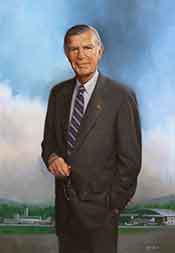
William Clinger Jr.
Former U.S. Representative · Pennsylvania District 5 · 1979–1997 · Republican
William Clinger Jr. represented Pennsylvania's District 5 in the United States House of Representatives (1979–1997) for the Republican party. The page below collects sourced biographical facts, term history, committee roles, and provenance for Jr..
Bioguide ID: C000523
Key facts
- Full name
- William Clinger Jr.
- State
- Pennsylvania
- District
- District 5
- Party
- Republican
- House service
- 1979–1997
- First House term
- 1979
- Status
- Left office
- Current term ends
- —
- Born
- 1929
- Bioguide ID
- C000523
- Committee assignments
- —
- Dataset version
- 1.20260605
Biographical narrative
912 words · sourced from the Wikipedia REST extract
William F. Clinger Jr. was an American attorney and Republican politician who served as a U.S. Representative for Pennsylvania's 5th congressional district from 1979 until 1997. Throughout his nine terms in office, Clinger was known for his involvement in various legislative efforts and his leadership roles within key congressional committees. His tenure was marked by a focus on government reform and oversight, as well as transportation and infrastructure issues.
Early life and career
William Floyd Clinger Jr. was born on April 4, 1929, in Warren, Pennsylvania. He was the son of Lella May Hunter and William F. Clinger. Clinger completed his early education in the public school system of Warren and graduated from The Hill School in 1947. He then pursued higher education, earning a Bachelor of Arts degree from Johns Hopkins University in 1951. Later, he obtained a Bachelor of Laws from the University of Virginia in 1965, which paved the way for his career in law.
Clinger's professional journey began with his service as an officer in the United States Navy from 1951 to 1955. Following his military service, he became associated with the New Process Company in Warren, Pennsylvania, where he worked from 1955 until 1962. His legal career commenced after he was admitted to the Pennsylvania bar in 1965, and he subsequently practiced law in the private sector.
In addition to his legal and business pursuits, Clinger was actively involved in public service. He served as a delegate to the Pennsylvania state constitutional convention from 1967 to 1968. His political engagement continued as he participated in the Republican National Convention in 1972, which further solidified his standing within the party and set the stage for his future political career.
House tenure
Clinger's political career in the U.S. House of Representatives began when he successfully defeated the incumbent Representative Joseph S. Ammerman in the 1978 election. He was sworn into office on January 3, 1979, as a member of the 96th Congress. Over the course of his nine terms, Clinger was re-elected multiple times, serving until January 3, 1997. His tenure in Congress was characterized by a commitment to representing the interests of his constituents in northwest and north-central Pennsylvania.
During his time in the House, Clinger held several significant leadership positions. He served as the chairman of the United States House Committee on Government Reform and Oversight during the 104th Congress. In this role, he oversaw various investigations, including notable inquiries into the Travelgate and Filegate controversies, which involved the White House's handling of personnel matters. His leadership in these investigations underscored his focus on accountability and transparency in government.
In addition to his role as chairman, Clinger was also the vice chairman of the United States House Committee on Transportation and Infrastructure. This committee was responsible for a wide range of issues related to the nation’s transportation systems and infrastructure development. Clinger's involvement in this committee allowed him to advocate for policies that aimed to improve transportation networks and infrastructure in his district and across the country.
Clinger's legislative contributions included co-authoring the Information Technology Management Reform Act, commonly known as the Clinger-Cohen Act, alongside then-Senator William Cohen. This legislation aimed to improve the management of information technology within the federal government, reflecting Clinger's interest in modernizing government operations and enhancing efficiency.
Despite his long tenure and active participation in legislative matters, Clinger chose not to seek re-election for the 105th Congress in 1996, marking the end of his congressional career.
Legislative focus and committees
Throughout his time in the House of Representatives, Clinger's legislative focus encompassed a variety of issues, with a particular emphasis on government reform, transportation, and technology management. His leadership roles on key committees allowed him to shape policies that aligned with his priorities and the needs of his constituents.
As chairman of the House Committee on Government Reform and Oversight, Clinger played a pivotal role in promoting accountability within the federal government. His involvement in high-profile investigations demonstrated his commitment to ensuring that government operations were conducted with integrity and transparency. The committee's work during his tenure was significant in addressing various controversies and fostering a culture of oversight.
In addition to his work on government reform, Clinger's position as vice chairman of the House Committee on Transportation and Infrastructure enabled him to influence legislation related to transportation systems, infrastructure projects, and related funding. His advocacy for infrastructure improvements was particularly relevant to his constituents, as it directly impacted the economy and quality of life in his district.
Clinger's co-authorship of the Clinger-Cohen Act highlighted his interest in technology management within the federal government. This legislation aimed to streamline the management of information technology resources, reflecting a broader trend toward modernization and efficiency in government operations. By focusing on technology, Clinger sought to enhance the government's ability to serve the public effectively.
After retiring from Congress, Clinger continued to engage in public service and leadership roles. He served as the chairman of the Chautauqua Institution's board of trustees and held a senior fellowship at Johns Hopkins University's Center for Advanced Governmental Studies. His involvement in various organizations, including the Institute for Representative Government and the ReFormers Caucus of Issue One, demonstrated his ongoing commitment to civic engagement and governmental reform.
William F. Clinger Jr. passed away on May 28, 2021, at the age of 92. His legacy as a public servant and legislator remains significant in the context of Pennsylvania's political history and the broader landscape of American governance.
Notable legislation
Sponsored and co-sponsored legislation for William Clinger Jr. is pending operator curation. The biographical narrative above carries the same provenance trail until per-bill rows are written.
Sources
- [1]https://en.wikipedia.org/wiki/William_ClingerWikipedia · retrieved 2026-06-05
Notable quotes
Sourced quotes for William Clinger Jr. are pending operator curation. Narrative-scope provenance remains attached below.
Sources
- [1]https://en.wikipedia.org/wiki/William_ClingerWikipedia · retrieved 2026-06-05
Key positions
Curated policy positions for William Clinger Jr. are pending operator review. The biographical narrative above carries the same provenance trail until per-topic positions are written.
Sources
- [1]https://en.wikipedia.org/wiki/William_ClingerWikipedia · retrieved 2026-06-05
Terms served
- 1979–1981U.S. House · Term 1 · Republican
- 1981–1983U.S. House · Term 2 · Republican
- 1983–1985U.S. House · Term 3 · Republican
- 1985–1987U.S. House · Term 4 · Republican
- 1987–1989U.S. House · Term 5 · Republican
- 1989–1991U.S. House · Term 6 · Republican
- 1991–1993U.S. House · Term 7 · Republican
- 1993–1995U.S. House · Term 8 · Republican
- 1995–1997U.S. House · Term 9 · Republican
Sources & provenance
Every attributable claim above carries a per-section [N] marker that resolves to the corresponding URL below. Each entry records the upstream provider, the canonical URL, and the timestamp at which the source was retrieved by the ingest pipeline.
Key facts
- https://bioguide.congress.gov/search/bio/C000523bioguide · retrieved 2026-06-05
- https://www.govtrack.us/congress/members/402657govtrack · retrieved 2026-06-05
Biographical narrative
- https://en.wikipedia.org/wiki/William_Clingerwikipedia · retrieved 2026-06-05
Find your representative
Every U.S. state elects representatives by district. Browse Pennsylvania’s delegation, the full former-representative roster, or explore the role and term length.
Related on The Candidate
- Preceded by John Ware IIIEarlier holder of the Pennsylvania District 5 House seat · Republican.Open
- Succeeded by John PetersonLater holder of the Pennsylvania District 5 House seat · Republican.Open
- Adam SeybertFormer U.S. Representative · Pennsylvania District 1 · RepublicanOpen
- Benjamin SayFormer U.S. Representative · Pennsylvania District 1 · RepublicanOpen
- Chapman FreemanFormer U.S. Representative · Pennsylvania District 1 · RepublicanOpen
- Harry RansleyFormer U.S. Representative · Pennsylvania District 1 · RepublicanOpen