
Historical · U.S. House · Pennsylvania · District 6
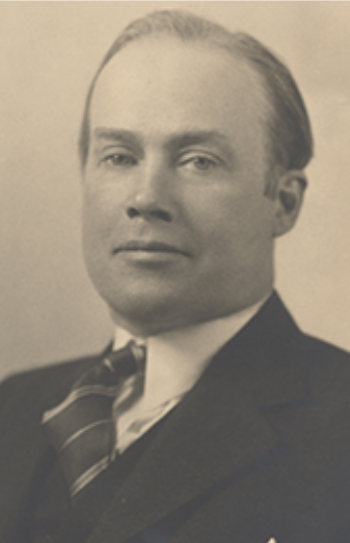
Edward Stokes
Former U.S. Representative · Pennsylvania District 6 · 1931–1935 · Republican
Edward Stokes represented Pennsylvania's District 6 in the United States House of Representatives (1931–1935) for the Republican party. The page below collects sourced biographical facts, term history, committee roles, and provenance for Stokes.
Bioguide ID: S000946
Key facts
- Full name
- Edward Stokes
- State
- Pennsylvania
- District
- District 6
- Party
- Republican
- House service
- 1931–1935
- First House term
- 1931
- Status
- Left office
- Current term ends
- —
- Born
- 1880
- Bioguide ID
- S000946
- Committee assignments
- —
- Dataset version
- 1.20260606
Biographical narrative
887 words · sourced from the Wikipedia REST extract
Edward Stokes was an American politician and businessman who served as a Republican member of the U.S. House of Representatives, representing Pennsylvania's 2nd congressional district from 1931 to 1933 and Pennsylvania's 6th congressional district from 1933 to 1935. His career in public service was marked by a brief tenure in Congress during a period of significant economic and social change in the United States.
Early life and career
Edward Stokes was born on September 29, 1880, in Philadelphia, Pennsylvania. He received his early education at St. Paul's School in Concord, New Hampshire, which is known for its rigorous academic standards and emphasis on character development. Following his education, Stokes engaged in various professional pursuits, initially working as a clerk for a trust company. This early experience in finance laid the groundwork for his later career as an investment dealer.
In addition to his professional endeavors, Stokes was also known for his involvement in sports, particularly polo. He was an accomplished international polo player and served as the captain of the Philadelphia Country Club polo team, reflecting his active engagement in the sporting community. His dedication to community service was evident in his role as a vestryman at Christ Church in Philadelphia, a position he held from 1913 until 1940, indicating his commitment to both his faith and local community.
Stokes ventured into the business world by founding his own investment firm, Edward Stokes & Co., which allowed him to further establish his reputation in the financial sector. Despite his business acumen, he faced challenges in his political aspirations. In 1930, he ran for a seat in the Pennsylvania House of Representatives but was unsuccessful in that bid. However, his political ambitions did not deter him from seeking public office.
House tenure
Stokes's political career gained traction when he was elected as a Republican to the 72nd Congress in 1931. He filled the vacancy left by the death of George S. Graham, marking the beginning of his congressional service. Stokes represented Pennsylvania's 2nd congressional district during his first term, which lasted until 1933. His tenure in this district was characterized by the broader national context of the Great Depression, a time when economic challenges were at the forefront of American politics.
Following his initial term, Stokes transitioned to represent Pennsylvania's 6th congressional district, serving from 1933 until 1935. His time in Congress coincided with significant legislative efforts aimed at addressing the economic hardships faced by many Americans. Stokes's involvement in the House during this period placed him at the center of discussions and decisions that would shape the future of the nation.
Despite his active participation in Congress, Stokes chose not to seek renomination after his second term. Instead, he pursued a gubernatorial candidacy in 1934, indicating his continued interest in public service and leadership roles within the state of Pennsylvania. His decision to step away from congressional politics was a pivotal moment in his career, as it opened the door for new opportunities and challenges.
In the years following his congressional service, Stokes remained engaged in political activities. He sought election to Congress again in 1950 and also ran for mayor and councilman at large in 1952. These candidacies reflected his enduring commitment to public service and his desire to contribute to the governance of Pennsylvania, even after his official tenure in Congress had concluded.
Legislative focus and committees
During his time in the U.S. House of Representatives, Edward Stokes was involved in various legislative matters that were pertinent to his constituents and the nation as a whole. Although specific details of the bills he supported or the committees on which he served are not documented, it can be inferred that his legislative focus would have aligned with the priorities of the Republican Party during the early 1930s, particularly in the context of economic recovery and social welfare.
The Great Depression significantly influenced the legislative agenda of Congress during Stokes's tenure. As a member of the House, he would have participated in discussions surrounding economic policies, public works programs, and social safety nets aimed at alleviating the hardships faced by many Americans. The political landscape was marked by a push for reform and recovery, and Stokes's role as a congressman placed him in a position to contribute to these critical national conversations.
Stokes's background in finance and investment likely informed his perspectives on economic legislation. His professional experience may have provided him with insights into the financial challenges facing both individuals and businesses during this tumultuous period. While specific legislative achievements are not detailed, his participation in the House would have involved collaboration with fellow lawmakers to address the pressing issues of the day.
After leaving Congress, Stokes continued to engage in the investment banking sector until his retirement in 1955. His lengthy career in finance, combined with his political experience, positioned him as a knowledgeable figure in both realms. Stokes's contributions to public service and the financial community reflect a life dedicated to both civic engagement and professional excellence.
Edward Stokes passed away on November 8, 1964, in Willistown Township, Pennsylvania. He was interred at St. David's Episcopal Church in Radnor, Pennsylvania, marking the end of a life that spanned significant changes in American society and politics. His legacy as a public servant and businessman remains a part of Pennsylvania's rich political history.
Notable legislation
Sponsored and co-sponsored legislation for Edward Stokes is pending operator curation. The biographical narrative above carries the same provenance trail until per-bill rows are written.
Sources
- [1]https://en.wikipedia.org/wiki/Edward_L._StokesWikipedia · retrieved 2026-06-06
Notable quotes
Sourced quotes for Edward Stokes are pending operator curation. Narrative-scope provenance remains attached below.
Sources
- [1]https://en.wikipedia.org/wiki/Edward_L._StokesWikipedia · retrieved 2026-06-06
Key positions
Curated policy positions for Edward Stokes are pending operator review. The biographical narrative above carries the same provenance trail until per-topic positions are written.
Sources
- [1]https://en.wikipedia.org/wiki/Edward_L._StokesWikipedia · retrieved 2026-06-06
Terms served
- 1931–1933U.S. House · Term 1 · Republican
- 1933–1935U.S. House · Term 2 · Republican
Sources & provenance
Every attributable claim above carries a per-section [N] marker that resolves to the corresponding URL below. Each entry records the upstream provider, the canonical URL, and the timestamp at which the source was retrieved by the ingest pipeline.
Key facts
- https://bioguide.congress.gov/search/bio/S000946bioguide · retrieved 2026-06-06
- https://www.govtrack.us/congress/members/410405govtrack · retrieved 2026-06-06
Biographical narrative
- https://en.wikipedia.org/wiki/Edward_L._Stokeswikipedia · retrieved 2026-06-06
Find your representative
Every U.S. state elects representatives by district. Browse Pennsylvania’s delegation, the full former-representative roster, or explore the role and term length.
Related on The Candidate
- Preceded by James LogueEarlier holder of the Pennsylvania District 6 House seat · Democratic.Open
- Succeeded by Michael StackLater holder of the Pennsylvania District 6 House seat · Democratic.Open
- Adam SeybertFormer U.S. Representative · Pennsylvania District 1 · RepublicanOpen
- Benjamin SayFormer U.S. Representative · Pennsylvania District 1 · RepublicanOpen
- Chapman FreemanFormer U.S. Representative · Pennsylvania District 1 · RepublicanOpen
- Harry RansleyFormer U.S. Representative · Pennsylvania District 1 · RepublicanOpen