
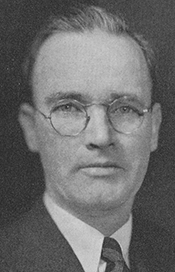
Historical · U.S. House · Pennsylvania · District 6
Michael Stack
Former U.S. Representative · Pennsylvania District 6 · 1935–1939 · Democratic
Michael Stack represented Pennsylvania's District 6 in the United States House of Representatives (1935–1939) for the Democratic party. The page below collects sourced biographical facts, term history, committee roles, and provenance for Stack.
Bioguide ID: S000773
Key facts
- Full name
- Michael Stack
- State
- Pennsylvania
- District
- District 6
- Party
- Democratic
- House service
- 1935–1939
- First House term
- 1935
- Status
- Left office
- Current term ends
- —
- Born
- 1888
- Bioguide ID
- S000773
- Committee assignments
- —
- Dataset version
- 1.20260605
Biographical narrative
910 words · sourced from the Wikipedia REST extract
Michael Stack was a Democratic U.S. Representative from Pennsylvania, serving in the House of Representatives from 1935 until 1939. His political career was marked by two terms in Congress, during which he represented Pennsylvania's 6th congressional district. Born in Ireland and later immigrating to the United States, Stack's life journey included military service during World War I and a career in real estate following his time in Congress. He passed away in 1960, leaving behind a legacy that includes his grandson, who served as the Lieutenant Governor of Pennsylvania.
Early life and career
Michael Joseph Stack was born on September 29, 1888, in Listowel, County Kerry, Ireland, which was then part of the United Kingdom. His early life in Ireland was shaped by the cultural and social dynamics of the time, which influenced many Irish citizens to seek opportunities abroad. In 1903, at the age of 15, Stack immigrated to the United States, where he settled in Philadelphia, Pennsylvania. This move marked the beginning of his journey in a new country, where he would eventually pursue education and a career.
Stack's educational pursuits began in Philadelphia, where he attended St. Joseph's College. He later graduated from St. Mary's University in Baltimore, Maryland, in 1910. His academic background provided him with a foundation that would serve him well in his future endeavors. After completing his education, Stack entered the workforce, initially finding employment with a railroad company in Detroit, Michigan. He worked in this capacity from 1910 until 1917, gaining valuable experience in a burgeoning industry.
With the onset of World War I, Stack's life took a significant turn. He enlisted in the U.S. Army on July 17, 1917, serving as a private in the Medical Detachment of the 360th Infantry Regiment. His military service during the war reflected a commitment to his new country and contributed to his understanding of the challenges faced by veterans and their families. After the war concluded, Stack returned to civilian life and transitioned into the real estate business in Philadelphia, where he would build a career that would later support his political aspirations.
House tenure
Michael Stack's political career began in earnest when he was elected as a Democrat to the United States House of Representatives. He served in the 74th and 75th Congresses, representing Pennsylvania's 6th congressional district. His first term began in 1935, a period marked by significant political and economic challenges in the United States, including the Great Depression. Stack's election to Congress came at a time when the nation was seeking solutions to widespread unemployment and economic instability.
During his tenure in the House, Stack participated in the legislative process during a critical era in American history. The New Deal, a series of programs and reforms initiated by President Franklin D. Roosevelt, was a focal point of congressional activity during this time. While specific details regarding Stack's legislative contributions are not documented, as a member of the Democratic Party, he would have aligned with many of the initiatives aimed at economic recovery and social reform.
Stack's congressional career was relatively brief, as he faced challenges in seeking renomination. In 1938, he was an unsuccessful candidate for reelection, which marked the end of his time in the House. Following his departure from Congress, Stack returned to the real estate business, where he continued to apply his skills and experience in the private sector. His political career, though limited to two terms, reflected the complexities of American politics during the 1930s and the impact of the Great Depression on elected officials.
Legislative focus and committees
While specific details regarding Michael Stack's legislative focus and committee assignments during his time in Congress are not extensively documented, it is important to contextualize his role within the broader framework of the House of Representatives during the 1930s. As a member of the Democratic Party, Stack would have been involved in discussions and initiatives that were central to the party's platform at the time, particularly those related to economic recovery and social welfare.
The 74th and 75th Congresses were characterized by significant legislative activity aimed at addressing the economic challenges facing the nation. Key issues included unemployment relief, infrastructure development, and social security measures. Stack's participation in these discussions would have aligned with the Democratic agenda, which sought to provide support for struggling Americans and stimulate economic growth.
In addition to his legislative responsibilities, Stack's background in real estate may have influenced his perspectives on housing and urban development issues. The 1930s saw a growing recognition of the importance of affordable housing and urban planning, particularly in the context of economic recovery. While specific legislative initiatives attributed to Stack are not detailed, his professional experience would have informed his understanding of these critical issues.
After his congressional career, Stack continued to engage with his community through his work in real estate. His contributions to the field and his involvement in local affairs reflected a commitment to public service that extended beyond his time in Washington, D.C. Stack's life journey, from his immigration to the United States to his military service and political career, illustrates the diverse experiences that shape individuals in public office.
Michael Stack passed away on December 14, 1960, in Philadelphia, Pennsylvania. He is interred at St. Denis Cemetery in Havertown, Pennsylvania. His legacy continues through his family, including his grandson, who served as the Lieutenant Governor of Pennsylvania, highlighting the enduring impact of his life and career on subsequent generations.
Notable legislation
Sponsored and co-sponsored legislation for Michael Stack is pending operator curation. The biographical narrative above carries the same provenance trail until per-bill rows are written.
Sources
- [1]https://en.wikipedia.org/wiki/Michael_J._StackWikipedia · retrieved 2026-06-05
Notable quotes
Sourced quotes for Michael Stack are pending operator curation. Narrative-scope provenance remains attached below.
Sources
- [1]https://en.wikipedia.org/wiki/Michael_J._StackWikipedia · retrieved 2026-06-05
Key positions
Curated policy positions for Michael Stack are pending operator review. The biographical narrative above carries the same provenance trail until per-topic positions are written.
Sources
- [1]https://en.wikipedia.org/wiki/Michael_J._StackWikipedia · retrieved 2026-06-05
Terms served
- 1935–1937U.S. House · Term 1 · Democratic
- 1937–1939U.S. House · Term 2 · Democratic
Sources & provenance
Every attributable claim above carries a per-section [N] marker that resolves to the corresponding URL below. Each entry records the upstream provider, the canonical URL, and the timestamp at which the source was retrieved by the ingest pipeline.
Key facts
- https://bioguide.congress.gov/search/bio/S000773bioguide · retrieved 2026-06-05
- https://www.govtrack.us/congress/members/410239govtrack · retrieved 2026-06-05
Biographical narrative
- https://en.wikipedia.org/wiki/Michael_J._Stackwikipedia · retrieved 2026-06-05
Find your representative
Every U.S. state elects representatives by district. Browse Pennsylvania’s delegation, the full former-representative roster, or explore the role and term length.
Related on The Candidate
- Preceded by Edward StokesEarlier holder of the Pennsylvania District 6 House seat · Republican.Open
- Succeeded by Herbert McGlincheyLater holder of the Pennsylvania District 6 House seat · Democratic.Open
- Adam SeybertFormer U.S. Representative · Pennsylvania District 1 · RepublicanOpen
- Benjamin SayFormer U.S. Representative · Pennsylvania District 1 · RepublicanOpen
- Chapman FreemanFormer U.S. Representative · Pennsylvania District 1 · RepublicanOpen
- Harry RansleyFormer U.S. Representative · Pennsylvania District 1 · RepublicanOpen