
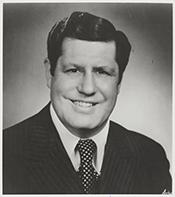
Historical · U.S. House · Pennsylvania · District 6
Gus Yatron
Former U.S. Representative · Pennsylvania District 6 · 1969–1993 · Democratic
Gus Yatron represented Pennsylvania's District 6 in the United States House of Representatives (1969–1993) for the Democratic party. The page below collects sourced biographical facts, term history, committee roles, and provenance for Yatron.
Bioguide ID: Y000014
Key facts
- Full name
- Gus Yatron
- State
- Pennsylvania
- District
- District 6
- Party
- Democratic
- House service
- 1969–1993
- First House term
- 1969
- Status
- Left office
- Current term ends
- —
- Born
- 1927
- Bioguide ID
- Y000014
- Committee assignments
- —
- Dataset version
- 1.20260605
Biographical narrative
990 words · sourced from the Wikipedia REST extract
Constantine George "Gus" Yatron was an American politician and businessman who served as a Democratic member of the United States House of Representatives for Pennsylvania's 6th congressional district from 1969 until 1993. His tenure in Congress spanned twelve consecutive terms, during which he became known for his advocacy on various issues, including labor rights and human rights in foreign policy. Yatron's background as a Greek-American immigrant and his experiences in local business and education shaped his political perspectives and legislative priorities.
Early life and career
Gus Yatron was born on October 16, 1927, in Reading, Pennsylvania. He was the son of George H. and Theano Lazo Yatron, who were Greek immigrants from Mytilene on the island of Lesbos. His father worked as a carpenter, while his mother held a position as a maid. Growing up in a working-class family, Yatron's early life was marked by the values of hard work and community service. He attended Reading High School, where he demonstrated leadership skills by serving as class president during his senior year.
After completing high school, Yatron pursued higher education at Kutztown University of Pennsylvania, graduating with a bachelor's degree in 1950. During his time at Kutztown, he was an active participant in athletics, playing football for the university's Golden Bears. His contributions to the university's sports programs were later recognized when he was inducted into the Kutztown University Athletic Hall of Fame. In addition to football, Yatron also took up boxing and became a professional heavyweight boxer in 1947, achieving a record of 13 wins, 2 losses, and 1 draw, with nine of those victories coming by way of technical knockout.
Following his graduation, Yatron entered the business world by founding "Yatron Ice Cream" in partnership with his father. The business flourished, leading to the establishment of a hardware store as well. In 1968, he sold the ice cream business to a local competitor, which allowed him to pivot towards a career in public service.
Yatron's political career began with his election to the Reading School Board, where he served from 1955 to 1961. He then represented Berks County in the Pennsylvania House of Representatives from 1956 to 1960. His political journey continued as he was elected to the Pennsylvania State Senate for the 11th district, serving from 1961 until 1968. His experience in state politics set the stage for his subsequent campaign for the U.S. Congress.
House tenure
In 1968, Yatron was elected to the 91st United States Congress, representing Pennsylvania's 6th congressional district. He campaigned as a moderate, emphasizing fiscal responsibility and expressing opposition to further military involvement in the Vietnam War. Upon taking office in 1969, Yatron quickly established himself as a diligent advocate for his constituents, focusing on issues that were important to the people of his district.
Throughout his twelve terms in the House, Yatron was involved in significant legislative efforts. One of his early accomplishments was the introduction of legislation in 1971 that expanded black lung benefits for miners, as well as their widows and children. This initiative aimed to address the health challenges faced by coal miners and their families, reflecting Yatron's commitment to labor rights.
In 1975, he sponsored legislation that led to the establishment of a committee tasked with reviewing the volume of paperwork generated by the federal government. The resulting recommendations from the Paperwork Commission ultimately yielded substantial savings, estimated at $3.5 billion. This initiative underscored Yatron's focus on efficiency and accountability within government operations.
Yatron's personal background as a Greek-American influenced his approach to foreign policy. He faced challenges during the 1974 Turkish invasion of Cyprus, which prompted him to take a leadership role in advocating for U.S. assistance in the region. His efforts contributed to a cease-fire, highlighting his commitment to international peace and stability.
In 1973, Yatron traveled to Europe, where he addressed the European Parliament in France. He urged NATO countries to take a more active role in sharing the financial responsibilities of defending Europe, reflecting his belief in collaborative international security efforts.
As a member of the House Foreign Affairs Committee, Yatron became a strong proponent of human rights as a fundamental aspect of U.S. foreign policy. He chaired the House Foreign Affairs Subcommittee on Inter-American Affairs starting in 1979, where he initiated investigations into the Iran-Contra affair. His leadership in this area demonstrated his dedication to transparency and accountability in foreign policy matters. In 1983, he transitioned to chairing the House Foreign Affairs Subcommittee on International Organizations, Human Rights, and Oversight, further solidifying his commitment to human rights advocacy.
Legislative focus and committees
During his time in Congress, Yatron's legislative focus spanned a variety of issues, with a particular emphasis on labor rights, government efficiency, and human rights. His early work on expanding black lung benefits illustrated his dedication to supporting workers and their families, particularly in industries that faced significant health risks.
Yatron's role in the Paperwork Commission showcased his interest in reducing bureaucratic inefficiencies within the federal government. By advocating for measures that streamlined processes and reduced waste, he aimed to enhance the effectiveness of government operations and better serve the needs of constituents.
In the realm of foreign policy, Yatron's advocacy for human rights was a defining aspect of his congressional career. His leadership in the House Foreign Affairs Committee and its subcommittees allowed him to influence U.S. engagement with other nations, emphasizing the importance of human rights in diplomatic relations. His investigations into the Iran-Contra affair reflected his commitment to oversight and accountability in government actions, particularly in matters of international significance.
Yatron's tenure in Congress concluded in 1993 after serving for 24 years. Following his retirement, he remained engaged in public life until his passing on March 13, 2003, in Fairfax Station, Virginia. He was laid to rest in Charles Evans Cemetery in Reading, Pennsylvania, leaving behind a legacy of public service and advocacy for the rights of workers and individuals both domestically and internationally.
Notable legislation
Sponsored and co-sponsored legislation for Gus Yatron is pending operator curation. The biographical narrative above carries the same provenance trail until per-bill rows are written.
Sources
- [1]https://en.wikipedia.org/wiki/Gus_YatronWikipedia · retrieved 2026-06-05
Notable quotes
Sourced quotes for Gus Yatron are pending operator curation. Narrative-scope provenance remains attached below.
Sources
- [1]https://en.wikipedia.org/wiki/Gus_YatronWikipedia · retrieved 2026-06-05
Key positions
Curated policy positions for Gus Yatron are pending operator review. The biographical narrative above carries the same provenance trail until per-topic positions are written.
Sources
- [1]https://en.wikipedia.org/wiki/Gus_YatronWikipedia · retrieved 2026-06-05
Terms served
- 1969–1971U.S. House · Term 1 · Democratic
- 1971–1973U.S. House · Term 2 · Democratic
- 1973–1975U.S. House · Term 3 · Democratic
- 1975–1977U.S. House · Term 4 · Democratic
- 1977–1979U.S. House · Term 5 · Democratic
- 1979–1981U.S. House · Term 6 · Democratic
- 1981–1983U.S. House · Term 7 · Democratic
- 1983–1985U.S. House · Term 8 · Democratic
- 1985–1987U.S. House · Term 9 · Democratic
- 1987–1989U.S. House · Term 10 · Democratic
- 1989–1991U.S. House · Term 11 · Democratic
- 1991–1993U.S. House · Term 12 · Democratic
Sources & provenance
Every attributable claim above carries a per-section [N] marker that resolves to the corresponding URL below. Each entry records the upstream provider, the canonical URL, and the timestamp at which the source was retrieved by the ingest pipeline.
Key facts
- https://bioguide.congress.gov/search/bio/Y000014bioguide · retrieved 2026-06-05
- https://www.govtrack.us/congress/members/411948govtrack · retrieved 2026-06-05
Biographical narrative
- https://en.wikipedia.org/wiki/Gus_Yatronwikipedia · retrieved 2026-06-05
Find your representative
Every U.S. state elects representatives by district. Browse Pennsylvania’s delegation, the full former-representative roster, or explore the role and term length.
Related on The Candidate
- Preceded by George RhodesEarlier holder of the Pennsylvania District 6 House seat · Democratic.Open
- Succeeded by Jim GerlachLater holder of the Pennsylvania District 6 House seat · Republican.Open
- Adam SeybertFormer U.S. Representative · Pennsylvania District 1 · RepublicanOpen
- Benjamin SayFormer U.S. Representative · Pennsylvania District 1 · RepublicanOpen
- Chapman FreemanFormer U.S. Representative · Pennsylvania District 1 · RepublicanOpen
- Harry RansleyFormer U.S. Representative · Pennsylvania District 1 · RepublicanOpen