
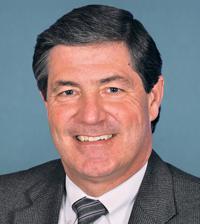
Historical · U.S. House · Pennsylvania · District 6
Jim Gerlach
Former U.S. Representative · Pennsylvania District 6 · 2003–2015 · Republican
Jim Gerlach represented Pennsylvania's District 6 in the United States House of Representatives (2003–2015) for the Republican party. The page below collects sourced biographical facts, term history, committee roles, and provenance for Gerlach.
Bioguide ID: G000549
Key facts
- Full name
- Jim Gerlach
- State
- Pennsylvania
- District
- District 6
- Party
- Republican
- House service
- 2003–2015
- First House term
- 2003
- Status
- Left office
- Current term ends
- —
- Born
- 1955
- Bioguide ID
- G000549
- Committee assignments
- —
- Dataset version
- 1.20260605
Biographical narrative
952 words · sourced from the Wikipedia REST extract
James William Gerlach is a former United States Representative who served Pennsylvania's 6th congressional district from 2003 until 2015. A member of the Republican Party, Gerlach completed a total of six terms in the U.S. House of Representatives before retiring from Congress. His legislative career was marked by a focus on environmental issues, veterans' affairs, and local governance.
Early life and career
Jim Gerlach was born on February 25, 1955, in Ellwood City, Pennsylvania. He was raised in a family that faced significant challenges; his father, Jack Allen Gerlach, was killed in a drunk driving accident when Jim was just five years old. This left his mother, Helen Lorraine Gerlach (née Fitzgerald), to raise three children as a single parent. Gerlach's early life experiences likely shaped his perspectives on family and community.
Gerlach pursued higher education at Dickinson College, where he earned a Bachelor of Arts degree in political science. During his time at Dickinson, he became involved in campus life as a member of the Sigma Chi fraternity and the Raven's Claw Honorary Society. Following his undergraduate studies, he attended the Dickinson School of Law, graduating with a Juris Doctor degree in 1980. While in law school, Gerlach gained practical experience by working as a legislative aide in the Pennsylvania State Senate, which provided him with insight into the legislative process.
After completing his law degree, Gerlach began his professional career at the Butler law firm Lindsey & Lutz in 1985. He later moved back to Chester County to join the law firm Lamb, Windle & McErlane, where he worked under the senior partner William Lamb, who was also the Chester County Republican Chairman. Gerlach's early career in law and local politics laid the groundwork for his future endeavors in public service.
Gerlach entered the political arena in 1986 when he ran for a seat in the Pennsylvania House of Representatives but was unsuccessful. However, he persevered and, in 1990, successfully challenged incumbent Democratic State Representative Sam Morris. Gerlach's campaign focused on suburban issues, particularly the need for open-space preservation and responsible development in response to suburban sprawl. He won the election by a narrow margin, securing his position in the Pennsylvania House of Representatives, where he served until 1994.
In 1994, Gerlach was elected to the Pennsylvania State Senate, representing the newly reformed 44th district. He won this election with a significant majority and was re-elected in 1998 without opposition. During his tenure in the state legislature, Gerlach was active in sponsoring legislation aimed at improving welfare laws and facilitating collaboration among municipalities to preserve open spaces. His efforts in this area culminated in the passage of legislation signed into law by Governor Tom Ridge in 2000.
House tenure
Gerlach transitioned to federal politics when he was elected to the United States House of Representatives in 2002, representing Pennsylvania's 6th congressional district. This district, often referred to as the "Pterodactyl District" due to its unusual shape, encompasses the outer western suburbs of Philadelphia. Although the district was drawn with the intention of favoring Republican candidates, Gerlach faced challenges in maintaining his seat, particularly as the political landscape in the Philadelphia suburbs began to shift toward the Democratic Party.
During his time in Congress, Gerlach served on various committees and was involved in a range of legislative initiatives. He was known for his advocacy on environmental issues, particularly concerning open-space preservation and conservation. His commitment to these issues was evident in his support for the Schuylkill Valley commuter rail project, where he expressed concerns about federal funding cuts that could jeopardize its completion.
In January 2014, Gerlach announced that he would not seek re-election, citing a desire to spend more time with his family. His decision marked the end of his six-term tenure in the House, concluding on January 3, 2015.
Legislative focus and committees
Throughout his congressional career, Gerlach's legislative focus included environmental conservation, veterans' affairs, and social issues. He was particularly active in promoting legislation related to environmental protection and land use. One of his notable efforts was the sponsorship of a bill aimed at making federal funds available for municipalities to purchase conservation easements. Although this bill was not acted upon by the Senate, it reflected Gerlach's ongoing commitment to environmental issues.
In addition to his environmental advocacy, Gerlach was involved in military and veterans' affairs. He sponsored legislation to establish a new veterans cemetery in the Philadelphia area, addressing the need for accessible burial sites for veterans in a region where the nearest military cemetery was located 90 miles away. His work in this area demonstrated his dedication to supporting those who served in the armed forces.
Gerlach's positions on social issues were also noteworthy. He voted against legislation that sought to amend laws related to energy and the environment, expressing concerns about the potential negative impact on working families and job creators in his district. He received a mixed rating from environmental organizations, indicating a nuanced approach to environmental legislation.
On social issues, Gerlach was one of the few Republicans to support the inclusion of sexual orientation and gender identity in federal hate crimes legislation. He also opposed the Federal Marriage Amendment, which aimed to define marriage strictly as a union between one man and one woman. These positions highlighted a willingness to engage with progressive social issues, setting him apart from some of his party colleagues.
Overall, Jim Gerlach's career in the U.S. House of Representatives was characterized by a focus on local and environmental issues, a commitment to veterans, and a willingness to engage with complex social matters. His legislative efforts reflected the interests and concerns of his constituents in Pennsylvania's 6th congressional district during a time of significant political change.
Notable legislation
Sponsored and co-sponsored legislation for Jim Gerlach is pending operator curation. The biographical narrative above carries the same provenance trail until per-bill rows are written.
Sources
- [1]https://en.wikipedia.org/wiki/Jim_GerlachWikipedia · retrieved 2026-06-05
Notable quotes
Sourced quotes for Jim Gerlach are pending operator curation. Narrative-scope provenance remains attached below.
Sources
- [1]https://en.wikipedia.org/wiki/Jim_GerlachWikipedia · retrieved 2026-06-05
Key positions
Curated policy positions for Jim Gerlach are pending operator review. The biographical narrative above carries the same provenance trail until per-topic positions are written.
Sources
- [1]https://en.wikipedia.org/wiki/Jim_GerlachWikipedia · retrieved 2026-06-05
Terms served
- 2003–2005U.S. House · Term 1 · Republican
- 2005–2007U.S. House · Term 2 · Republican
- 2007–2009U.S. House · Term 3 · Republican
- 2009–2011U.S. House · Term 4 · Republican
- 2011–2013U.S. House · Term 5 · Republican
- 2013–2015U.S. House · Term 6 · Republican
Sources & provenance
Every attributable claim above carries a per-section [N] marker that resolves to the corresponding URL below. Each entry records the upstream provider, the canonical URL, and the timestamp at which the source was retrieved by the ingest pipeline.
Key facts
- https://bioguide.congress.gov/search/bio/G000549bioguide · retrieved 2026-06-05
- http://gerlach.house.govhouse.gov · retrieved 2026-06-05
Biographical narrative
- https://en.wikipedia.org/wiki/Jim_Gerlachwikipedia · retrieved 2026-06-05
Find your representative
Every U.S. state elects representatives by district. Browse Pennsylvania’s delegation, the full former-representative roster, or explore the role and term length.
Related on The Candidate
- Preceded by Gus YatronEarlier holder of the Pennsylvania District 6 House seat · Democratic.Open
- Succeeded by Ryan CostelloLater holder of the Pennsylvania District 6 House seat · Republican.Open
- Adam SeybertFormer U.S. Representative · Pennsylvania District 1 · RepublicanOpen
- Benjamin SayFormer U.S. Representative · Pennsylvania District 1 · RepublicanOpen
- Chapman FreemanFormer U.S. Representative · Pennsylvania District 1 · RepublicanOpen
- Harry RansleyFormer U.S. Representative · Pennsylvania District 1 · RepublicanOpen