
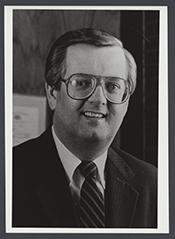
Historical · U.S. House · Pennsylvania · District 7
Curt Weldon
Former U.S. Representative · Pennsylvania District 7 · 1987–2007 · Republican
Curt Weldon represented Pennsylvania's District 7 in the United States House of Representatives (1987–2007) for the Republican party. The page below collects sourced biographical facts, term history, committee roles, and provenance for Weldon.
Bioguide ID: W000268
Key facts
- Full name
- Curt Weldon
- State
- Pennsylvania
- District
- District 7
- Party
- Republican
- House service
- 1987–2007
- First House term
- 1987
- Status
- Left office
- Current term ends
- —
- Born
- 1947
- Bioguide ID
- W000268
- Committee assignments
- —
- Dataset version
- 1.20260605
Biographical narrative
922 words · sourced from the Wikipedia REST extract
Curt Weldon is a former American politician and educator who served as a Republican member of the United States House of Representatives from Pennsylvania's 7th congressional district. His tenure in Congress spanned from 1987 until 2007, during which he was involved in various legislative initiatives and held significant committee positions. Weldon was defeated in his bid for re-election in 2006 by Democratic challenger Joe Sestak, marking the end of his decade-long congressional career.
Early life and career
Curt Weldon was born on July 22, 1947, in Marcus Hook, Pennsylvania, into a blue-collar family as the youngest of nine children. His upbringing in a working-class environment influenced his later political career. He pursued higher education at West Chester University of Pennsylvania, where he earned a Bachelor of Arts degree in Russian studies in 1969. This achievement made him the first member of his family to graduate from college. During his time at university, Weldon became a member of the Lambda Chi Alpha fraternity, which provided him with a network of peers and experiences that would later benefit his political career.
Following his graduation, Weldon faced the draft during the Vietnam War. He utilized student and teaching deferments to avoid military service during this period. Later, it was reported that he had a low draft number when the lottery was reinstated, and he expressed a desire to serve in the military, although he was ultimately not accepted due to poor eyesight.
Weldon's political career began in 1977 when he was elected as the Mayor of Marcus Hook. He served two terms in this role until 1982, running on both the Republican and Democratic tickets. His mayoral tenure was marked by efforts to protect the town from the violent activities of the Pagans Motorcycle Gang. Following his time as mayor, Weldon was elected to the Delaware County Council, where he served from 1981 to 1986, eventually becoming the council's chair. During this period, he maintained a focus on foreign affairs, notably coordinating a student exchange program with the Soviet Union in 1985, which continues to operate to this day.
House tenure
Weldon first sought election to the U.S. House of Representatives in 1984, running for the 7th district of Pennsylvania. Although he lost to incumbent Democrat Robert W. Edgar by a narrow margin, Weldon capitalized on Edgar's decision not to seek re-election in 1986. He successfully ran for the open seat that year, winning with a comfortable margin. Over the course of his ten terms in Congress, Weldon consistently increased his margin of victory in subsequent elections, defeating various Democratic challengers even as the political landscape in Delaware County shifted towards the Democratic Party.
His electoral success was notable, particularly in the 2000 election, where he garnered 65% of the vote despite the fact that Democratic presidential candidate Al Gore won the county. In 2004, Weldon won re-election with 59% of the vote, while the Democratic presidential candidate John Kerry received 53% in the same district. Weldon's ability to secure significant campaign contributions played a role in his electoral victories, with nearly $900,000 raised during the 2003-2004 election cycle.
However, his final campaign in 2006 proved to be more challenging. Weldon faced Joe Sestak, a retired Vice-Admiral with a strong fundraising capability. As the election approached, analysts began to view the race as increasingly competitive. Reports emerged regarding alleged misconduct involving Weldon's staff, which further complicated his campaign. Ultimately, Weldon lost the election, receiving 44% of the vote compared to Sestak's 56%, marking the end of his congressional career.
Legislative focus and committees
During his time in Congress, Weldon was known for his moderately conservative voting record, which aligned with the Republican majority in Delaware County. His lifetime rating from the American Conservative Union (ACU) was 69.9, reflecting a slightly more conservative stance than the overall Pennsylvania congressional delegation. In 2006, his ACU rating was 68, compared to an average of 57 for all Pennsylvania congressmen.
Weldon's legislative focus included significant contributions to domestic issues, particularly in the area of fire safety. He founded the Congressional Fire Services Caucus in 1987 and was a strong advocate for increased funding for firefighters. One of his notable legislative achievements was the authorship of a bill that established a federal grant program to support local fire departments, which later evolved into the Assistance to Firefighters Grant Program. He also championed initiatives aimed at enhancing safety measures in college dormitories, advocating for mandatory sprinkler systems, and ensuring that fire departments were trained to respond to terrorism-related incidents involving chemical and biological threats.
Despite his advocacy for fire safety, Weldon's approach to spending was sometimes criticized by fiscal conservatives, who labeled some of his initiatives as pork barrel projects. He engaged in public debates with colleagues, defending his positions and arguing against what he perceived as misinformed criticisms.
In addition to his domestic focus, Weldon held significant roles in various congressional committees. He served as the vice-chair of both the Armed Services Committee and the House Homeland Security Committee, where he contributed to discussions and legislation related to national security and defense. Furthermore, he co-chaired the Duma-Congress Study Group, which facilitated inter-parliamentary relations between the United States and Russia, reflecting his ongoing interest in foreign affairs.
Weldon's decade-long tenure in the U.S. House of Representatives was characterized by his commitment to public service, advocacy for fire safety, and involvement in national security issues. His electoral journey and legislative contributions reflect the complexities of American politics during a time of significant change in both domestic and international arenas.
Notable legislation
Sponsored and co-sponsored legislation for Curt Weldon is pending operator curation. The biographical narrative above carries the same provenance trail until per-bill rows are written.
Sources
- [1]https://en.wikipedia.org/wiki/Curt_WeldonWikipedia · retrieved 2026-06-05
Notable quotes
Sourced quotes for Curt Weldon are pending operator curation. Narrative-scope provenance remains attached below.
Sources
- [1]https://en.wikipedia.org/wiki/Curt_WeldonWikipedia · retrieved 2026-06-05
Key positions
Curated policy positions for Curt Weldon are pending operator review. The biographical narrative above carries the same provenance trail until per-topic positions are written.
Sources
- [1]https://en.wikipedia.org/wiki/Curt_WeldonWikipedia · retrieved 2026-06-05
Terms served
- 1987–1989U.S. House · Term 1 · Republican
- 1989–1991U.S. House · Term 2 · Republican
- 1991–1993U.S. House · Term 3 · Republican
- 1993–1995U.S. House · Term 4 · Republican
- 1995–1997U.S. House · Term 5 · Republican
- 1997–1999U.S. House · Term 6 · Republican
- 1999–2001U.S. House · Term 7 · Republican
- 2001–2003U.S. House · Term 8 · Republican
- 2003–2005U.S. House · Term 9 · Republican
- 2005–2007U.S. House · Term 10 · Republican
Sources & provenance
Every attributable claim above carries a per-section [N] marker that resolves to the corresponding URL below. Each entry records the upstream provider, the canonical URL, and the timestamp at which the source was retrieved by the ingest pipeline.
Key facts
- https://bioguide.congress.gov/search/bio/W000268bioguide · retrieved 2026-06-05
- http://curtweldon.house.gov/house.gov · retrieved 2026-06-05
Biographical narrative
- https://en.wikipedia.org/wiki/Curt_Weldonwikipedia · retrieved 2026-06-05
Find your representative
Every U.S. state elects representatives by district. Browse Pennsylvania’s delegation, the full former-representative roster, or explore the role and term length.
Related on The Candidate
- Preceded by Robert EdgarEarlier holder of the Pennsylvania District 7 House seat · Democratic.Open
- Succeeded by Joe SestakLater holder of the Pennsylvania District 7 House seat · Democratic.Open
- Adam SeybertFormer U.S. Representative · Pennsylvania District 1 · RepublicanOpen
- Benjamin SayFormer U.S. Representative · Pennsylvania District 1 · RepublicanOpen
- Chapman FreemanFormer U.S. Representative · Pennsylvania District 1 · RepublicanOpen
- Harry RansleyFormer U.S. Representative · Pennsylvania District 1 · RepublicanOpen