
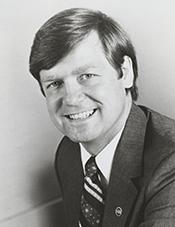
Historical · U.S. House · Pennsylvania · District 7
Robert Edgar
Former U.S. Representative · Pennsylvania District 7 · 1975–1987 · Democratic
Robert Edgar represented Pennsylvania's District 7 in the United States House of Representatives (1975–1987) for the Democratic party. The page below collects sourced biographical facts, term history, committee roles, and provenance for Edgar.
Bioguide ID: E000043
Key facts
- Full name
- Robert Edgar
- State
- Pennsylvania
- District
- District 7
- Party
- Democratic
- House service
- 1975–1987
- First House term
- 1975
- Status
- Left office
- Current term ends
- —
- Born
- 1943
- Bioguide ID
- E000043
- Committee assignments
- —
- Dataset version
- 1.20260605
Biographical narrative
880 words · sourced from the Wikipedia REST extract
Robert W. Edgar was an American politician and religious leader who served as a Democratic member of the United States House of Representatives from Pennsylvania's 7th congressional district from 1975 until 1987. Born on May 29, 1943, in Philadelphia, Pennsylvania, Edgar's career spanned various roles in public service, including his tenure in Congress, where he focused on issues such as public transportation and environmental legislation. After leaving Congress, he continued his commitment to civic engagement and advocacy through leadership positions in religious and political organizations until his death in 2013.
Early life and career
Robert William Edgar was born in Philadelphia and raised in Springfield, Pennsylvania. He pursued higher education at Lycoming College in Williamsport, Pennsylvania, where he earned a Bachelor of Arts degree. Following his undergraduate studies, Edgar attended the Theological School of Drew University in Madison, New Jersey, where he obtained a Master of Divinity degree. His early career was rooted in the ministry; he was ordained as a Methodist pastor and later served as a chaplain. In 1969, he received a certificate in pastoral psychiatry from Hahnemann University Hospital in Philadelphia, which further enhanced his qualifications in the field of ministry and counseling.
Edgar's professional journey included roles as the United Protestant Chaplain of Drexel University and as a special assistant to Congressman Bill Gray. He also served as the pastor of a Methodist church in Lansdowne, Pennsylvania. His background in both religious leadership and public service laid the foundation for his later political career. Edgar was married to Merle Louise Deaver, and together they had three sons.
House tenure
Edgar's political career in the U.S. House of Representatives began with his election in 1974, making him the first Democrat to represent Pennsylvania's 7th congressional district in 36 years. His tenure in Congress lasted from 1975 until 1987, during which he was re-elected five times despite facing significant opposition from Republican challengers. The district, traditionally a stronghold for Rockefeller Republicans, presented a challenging political landscape. Notably, Edgar's closest electoral contests occurred in 1978 and 1984, where he won by narrow margins, demonstrating his ability to connect with constituents in a competitive environment.
Throughout his congressional career, Edgar was involved in various legislative initiatives aimed at improving public welfare. He advocated for enhancements to public transportation and played a significant role in authoring the community Right to Know provisions of Superfund legislation. Additionally, he co-authored the new G.I. Bill, which was designed to support veterans in the all-volunteer military service. Edgar's commitment to addressing pressing social issues was evident in his legislative priorities.
During his time in Congress, he held several notable positions, including chair of the Congressional Clearinghouse on the Future from 1982 to 1986. He was also a member of the House Select Committee on Assassinations from 1976 to 1978, which investigated the assassinations of prominent figures such as Dr. Martin Luther King Jr. and President John F. Kennedy. These roles underscored his engagement with both contemporary and historical issues of national significance.
In 1986, Edgar ran for the United States Senate, winning the Democratic primary against Auditor General Don Bailey, a former congressman. However, he was defeated in the general election by incumbent Republican Senator Arlen Specter. This experience in the Senate race contributed to Edgar's growing frustration with the political process, particularly regarding campaign financing and the influence of money in politics. This frustration later motivated him to advocate for clean elections and campaign finance reform.
Legislative focus and committees
Throughout his six terms in the House, Edgar's legislative focus was characterized by a commitment to public service and community welfare. He prioritized issues that directly impacted his constituents, including public transportation improvements and environmental protections. His authorship of the community Right to Know provisions of Superfund legislation reflected his dedication to transparency and accountability in environmental matters, ensuring that communities were informed about hazardous substances.
Edgar's involvement in the G.I. Bill for veterans highlighted his support for military personnel and their families, recognizing the sacrifices made by those who served in the armed forces. His legislative efforts were often aimed at fostering social equity and improving the quality of life for his constituents.
In addition to his legislative work, Edgar's leadership roles within Congress allowed him to influence discussions on critical issues. As chair of the Congressional Clearinghouse on the Future, he focused on long-term planning and policy development, addressing challenges that would shape the future of the nation. His participation in the House Select Committee on Assassinations demonstrated his engagement with historical and ethical inquiries, contributing to the broader understanding of significant events in American history.
After leaving Congress, Edgar continued to be active in public service and advocacy. He served as president of the Claremont School of Theology from 1990 to 2000, where he oversaw significant improvements in enrollment and financial stability. His leadership extended to various organizations, including the National Council of the Churches of Christ in the USA and Common Cause, where he championed issues related to campaign finance reform and civic engagement.
Robert W. Edgar passed away on April 23, 2013, from a heart attack at his home in Burke, Virginia. His legacy is marked by his commitment to public service, advocacy for social justice, and dedication to the principles of democracy and civic responsibility.
Notable legislation
Sponsored and co-sponsored legislation for Robert Edgar is pending operator curation. The biographical narrative above carries the same provenance trail until per-bill rows are written.
Sources
- [1]https://en.wikipedia.org/wiki/Bob_EdgarWikipedia · retrieved 2026-06-05
Notable quotes
Sourced quotes for Robert Edgar are pending operator curation. Narrative-scope provenance remains attached below.
Sources
- [1]https://en.wikipedia.org/wiki/Bob_EdgarWikipedia · retrieved 2026-06-05
Key positions
Curated policy positions for Robert Edgar are pending operator review. The biographical narrative above carries the same provenance trail until per-topic positions are written.
Sources
- [1]https://en.wikipedia.org/wiki/Bob_EdgarWikipedia · retrieved 2026-06-05
Terms served
- 1975–1977U.S. House · Term 1 · Democratic
- 1977–1979U.S. House · Term 2 · Democratic
- 1979–1981U.S. House · Term 3 · Democratic
- 1981–1983U.S. House · Term 4 · Democratic
- 1983–1985U.S. House · Term 5 · Democratic
- 1985–1987U.S. House · Term 6 · Democratic
Sources & provenance
Every attributable claim above carries a per-section [N] marker that resolves to the corresponding URL below. Each entry records the upstream provider, the canonical URL, and the timestamp at which the source was retrieved by the ingest pipeline.
Key facts
- https://bioguide.congress.gov/search/bio/E000043bioguide · retrieved 2026-06-05
- https://www.govtrack.us/congress/members/403738govtrack · retrieved 2026-06-05
Biographical narrative
- https://en.wikipedia.org/wiki/Bob_Edgarwikipedia · retrieved 2026-06-05
Find your representative
Every U.S. state elects representatives by district. Browse Pennsylvania’s delegation, the full former-representative roster, or explore the role and term length.
Related on The Candidate
- Preceded by Lawrence WilliamsEarlier holder of the Pennsylvania District 7 House seat · Republican.Open
- Succeeded by Curt WeldonLater holder of the Pennsylvania District 7 House seat · Republican.Open
- Adam SeybertFormer U.S. Representative · Pennsylvania District 1 · RepublicanOpen
- Benjamin SayFormer U.S. Representative · Pennsylvania District 1 · RepublicanOpen
- Chapman FreemanFormer U.S. Representative · Pennsylvania District 1 · RepublicanOpen
- Harry RansleyFormer U.S. Representative · Pennsylvania District 1 · RepublicanOpen