
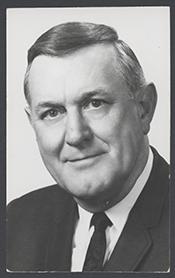
Historical · U.S. House · Pennsylvania · District 7
Lawrence Williams
Former U.S. Representative · Pennsylvania District 7 · 1967–1975 · Republican
Lawrence Williams represented Pennsylvania's District 7 in the United States House of Representatives (1967–1975) for the Republican party. The page below collects sourced biographical facts, term history, committee roles, and provenance for Williams.
Bioguide ID: W000525
Key facts
- Full name
- Lawrence Williams
- State
- Pennsylvania
- District
- District 7
- Party
- Republican
- House service
- 1967–1975
- First House term
- 1967
- Status
- Left office
- Current term ends
- —
- Born
- 1913
- Bioguide ID
- W000525
- Committee assignments
- —
- Dataset version
- 1.20260605
Biographical narrative
838 words · sourced from the Wikipedia REST extract
Lawrence G. Williams was an American businessman and military veteran who served as a Republican member of the U.S. House of Representatives for Pennsylvania's 7th congressional district from 1967 until 1975. His political career was marked by four terms in Congress, during which he engaged in various legislative activities and served on multiple committees. Williams's background in business and local government provided him with a foundation for his work in the federal legislature.
Early life and career
Lawrence Gordon Williams was born on September 15, 1913, in Pittsburgh, Pennsylvania. His family relocated to Philadelphia in June 1922, where he spent much of his formative years. Williams pursued higher education at the Drexel Institute of Technology, which equipped him with skills that would later benefit his career in business and public service.
Before entering politics, Williams had a significant career in the private sector. He was employed by the Curtis Publishing Company from 1936 until 1966, ultimately retiring as the assistant to the senior vice president in charge of manufacturing. This role allowed him to gain valuable experience in management and operations, which would later inform his approach to governance.
In addition to his business career, Williams was actively involved in local government. He served as a commissioner for Springfield Township, Pennsylvania, from 1952 to 1966, and held the position of president of the board from 1960 to 1966. His leadership in local government demonstrated his commitment to public service and community development. Furthermore, he represented Delaware County on the policy committee for the Penn-Jersey Transportation Study from 1959 to 1966, contributing to regional planning efforts. He was also involved with the Delaware Valley Regional Planning Commission and the Southeastern Pennsylvania Transportation Authority, reflecting his interest in infrastructure and transportation issues.
Williams's military service during World War II further shaped his character and leadership abilities. He served in the Army Air Corps, where he gained experience that would later influence his perspectives on national defense and veterans' affairs.
House tenure
Lawrence G. Williams entered the U.S. House of Representatives after being elected in 1966. He represented Pennsylvania's 7th congressional district as a member of the Republican Party. His first term began in January 1967, and he was subsequently re-elected for three additional terms, serving a total of four terms in Congress. Throughout his tenure, Williams participated in various legislative initiatives and contributed to discussions on key national issues.
During his time in office, Williams was involved in the political landscape of the late 1960s and early 1970s, a period marked by significant social and political change in the United States. He navigated the complexities of a rapidly evolving political environment, addressing concerns related to civil rights, the Vietnam War, and economic challenges. His legislative efforts reflected the priorities of his constituents and the broader Republican agenda of the time.
Despite his contributions, Williams faced challenges in maintaining his position in Congress. He sought renomination in 1974 but was unsuccessful in his bid to continue serving in the House. His defeat marked the end of his congressional career, concluding with his last term ending on January 3, 1975.
Legislative focus and committees
During his time in Congress, Lawrence G. Williams focused on a variety of issues that were pertinent to his constituents and the nation. His background in business and local government informed his legislative priorities, as he sought to address economic and infrastructure concerns that affected the residents of Pennsylvania's 7th district.
Williams's work on transportation issues was particularly notable, given his previous experience with the Southeastern Pennsylvania Transportation Authority and the Penn-Jersey Transportation Study. He was likely involved in discussions and legislation aimed at improving transportation infrastructure, which was a critical concern for many urban and suburban constituents during his tenure.
In addition to transportation, Williams's legislative focus may have included economic development, public safety, and veterans' affairs, reflecting his military background and commitment to serving those who had served in the armed forces. His experience in local government likely provided him with insights into the needs of municipalities and the importance of federal support for local initiatives.
Throughout his congressional career, Williams served on various committees that aligned with his interests and expertise. These committees would have provided him with platforms to advocate for policies that benefited his district and the broader community. His involvement in committee work would have allowed him to collaborate with other lawmakers and contribute to the legislative process.
Following his departure from Congress, Williams was appointed by President Gerald Ford as a special assistant to the co-chairman of the Ozarks Regional Commission. He served in this role from January 20, 1975, until his passing on July 13, 1975. His appointment reflected the continued recognition of his experience and contributions to public service.
Lawrence G. Williams is interred at Edgewood Memorial Park in Glen Mills, Pennsylvania. His life and career exemplify the journey of a public servant who transitioned from local governance and business into the federal legislative arena, leaving a legacy of civic engagement and commitment to his constituents.
Notable legislation
Sponsored and co-sponsored legislation for Lawrence Williams is pending operator curation. The biographical narrative above carries the same provenance trail until per-bill rows are written.
Sources
- [1]https://en.wikipedia.org/wiki/Lawrence_G._WilliamsWikipedia · retrieved 2026-06-05
Notable quotes
Sourced quotes for Lawrence Williams are pending operator curation. Narrative-scope provenance remains attached below.
Sources
- [1]https://en.wikipedia.org/wiki/Lawrence_G._WilliamsWikipedia · retrieved 2026-06-05
Key positions
Curated policy positions for Lawrence Williams are pending operator review. The biographical narrative above carries the same provenance trail until per-topic positions are written.
Sources
- [1]https://en.wikipedia.org/wiki/Lawrence_G._WilliamsWikipedia · retrieved 2026-06-05
Terms served
- 1967–1969U.S. House · Term 1 · Republican
- 1969–1971U.S. House · Term 2 · Republican
- 1971–1973U.S. House · Term 3 · Republican
- 1973–1975U.S. House · Term 4 · Republican
Sources & provenance
Every attributable claim above carries a per-section [N] marker that resolves to the corresponding URL below. Each entry records the upstream provider, the canonical URL, and the timestamp at which the source was retrieved by the ingest pipeline.
Key facts
- https://bioguide.congress.gov/search/bio/W000525bioguide · retrieved 2026-06-05
- https://www.govtrack.us/congress/members/411682govtrack · retrieved 2026-06-05
Biographical narrative
- https://en.wikipedia.org/wiki/Lawrence_G._Williamswikipedia · retrieved 2026-06-05
Find your representative
Every U.S. state elects representatives by district. Browse Pennsylvania’s delegation, the full former-representative roster, or explore the role and term length.
Related on The Candidate
- Preceded by William Milliken Jr.Earlier holder of the Pennsylvania District 7 House seat · Republican.Open
- Succeeded by Robert EdgarLater holder of the Pennsylvania District 7 House seat · Democratic.Open
- Adam SeybertFormer U.S. Representative · Pennsylvania District 1 · RepublicanOpen
- Benjamin SayFormer U.S. Representative · Pennsylvania District 1 · RepublicanOpen
- Chapman FreemanFormer U.S. Representative · Pennsylvania District 1 · RepublicanOpen
- Harry RansleyFormer U.S. Representative · Pennsylvania District 1 · RepublicanOpen