
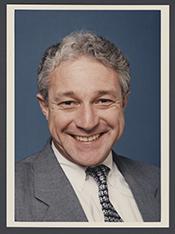
Historical · U.S. House · Pennsylvania · District 8
Jim Greenwood
Former U.S. Representative · Pennsylvania District 8 · 1993–2005 · Republican
Jim Greenwood represented Pennsylvania's District 8 in the United States House of Representatives (1993–2005) for the Republican party. The page below collects sourced biographical facts, term history, committee roles, and provenance for Greenwood.
Bioguide ID: G000439
Key facts
- Full name
- Jim Greenwood
- State
- Pennsylvania
- District
- District 8
- Party
- Republican
- House service
- 1993–2005
- First House term
- 1993
- Status
- Left office
- Current term ends
- —
- Born
- 1951
- Bioguide ID
- G000439
- Committee assignments
- —
- Dataset version
- 1.20260605
Biographical narrative
942 words · sourced from the Wikipedia REST extract
James C. Greenwood is a former American politician who served as a U.S. Representative for Pennsylvania's 8th congressional district from 1993 until 2005. A member of the Republican Party, Greenwood is recognized for his moderate political stance, particularly on social issues, and for his active role in various legislative committees during his time in office. Following his congressional tenure, he transitioned to a leadership role in the biotechnology sector, where he served as president and CEO of the Biotechnology Innovation Organization.
Early life and career
James Charles Greenwood was born on May 4, 1951, in Philadelphia, Pennsylvania. He spent his formative years in Holland, Pennsylvania. Greenwood pursued higher education at Dickinson College, where he earned a Bachelor of Arts degree in sociology in 1973. His early career included significant experience in public service and social work. He served as an aide to Pennsylvania State Representative John S. Renninger and took on the role of houseparent for children with intellectual disabilities and emotional disorders. This early involvement in social services laid the groundwork for his later political career, highlighting his commitment to community welfare.
From 1977 to 1980, Greenwood worked as a caseworker for the Bucks County Children and Youth Social Service Agency, where he focused on supporting abused and neglected children. This experience further deepened his understanding of the challenges faced by vulnerable populations, which would influence his legislative priorities in Congress. Greenwood's political career began in earnest when he was elected as a Republican member of the Pennsylvania House of Representatives, representing the 143rd district from 1981 to 1986. He then served in the Pennsylvania Senate for the 10th district from 1987 until 1992. His tenure in state politics provided him with a solid foundation in legislative processes and constituent engagement.
In 1992, Greenwood successfully ran for the U.S. House of Representatives, defeating incumbent Democratic Congressman Peter H. Kostmayer. This victory marked the beginning of his six-term congressional career, during which he represented Pennsylvania's 8th district.
House tenure
Greenwood's congressional career began in 1993, and he served until January 3, 2005. Throughout his time in the House of Representatives, he was known for his moderate political views, which often bridged the gap between conservative and liberal ideologies. His voting record reflected a centrist approach, particularly on social issues where he held libertarian views, while maintaining conservative positions on economic matters, including taxation.
During his tenure, Greenwood was involved in significant legislative activities and served on various committees. He was a member of the House Energy and Commerce Committee, where he played a crucial role in overseeing a wide range of issues, including public health, telecommunications, and energy policy. Notably, he chaired the Subcommittee on Oversight and Investigations, where he led inquiries into various matters such as corporate governance, bioterrorism, and the safety of nuclear power plants. His leadership in this subcommittee allowed him to address critical issues affecting national security and public safety.
Greenwood's legislative focus extended to environmental concerns as well. He co-founded and co-chaired the House Oceans Caucus, advocating for the preservation and protection of ocean resources. He authored bipartisan legislation aimed at enhancing research and conservation efforts related to marine environments. His commitment to environmental issues also included fostering international cooperation to tackle global challenges.
In addition to his environmental advocacy, Greenwood was an active member of the Education and Workforce Committee. He worked to ensure adequate federal funding for special education programs and was involved in initiatives aimed at preventing school violence. His legislative efforts in education reflected his dedication to improving the welfare of children and addressing the needs of diverse student populations.
In 2004, Greenwood announced that he would not seek re-election, a decision that surprised many observers, as he had already secured the Republican nomination for his district. His announcement came amidst speculation about new opportunities he was considering. Following his departure from Congress, Bucks County Commissioner Mike Fitzpatrick was selected as the Republican nominee and subsequently won the general election.
Legislative focus and committees
Throughout his six terms in the U.S. House of Representatives, Greenwood's legislative focus encompassed a variety of critical issues, reflecting his moderate political stance and commitment to public service. His work on the House Energy and Commerce Committee allowed him to engage with complex topics related to health care, energy policy, and telecommunications. As chairman of the Subcommittee on Oversight and Investigations, he was instrumental in conducting investigations and holding hearings on matters of national importance, including corporate accountability and public safety.
Greenwood's environmental advocacy was a hallmark of his congressional career. As a co-founder and co-chair of the House Oceans Caucus, he championed comprehensive legislation aimed at preserving marine ecosystems and promoting sustainable practices. His efforts in this area underscored his belief in the importance of protecting natural resources for future generations.
In the realm of education, Greenwood's contributions were significant. He worked diligently to secure federal funding for special education programs, ensuring that children with disabilities received the support they needed. His involvement in initiatives to prevent school violence demonstrated his commitment to creating safe learning environments for all students.
After concluding his congressional service, Greenwood transitioned to the private sector, taking on the role of president and CEO of the Biotechnology Innovation Organization (BIO). In this capacity, he represented a diverse array of biotechnology companies and institutions, advocating for policies that foster innovation and research in the biotechnology field.
In summary, James C. Greenwood's career in public service is marked by his moderate political views, commitment to environmental and educational issues, and effective legislative leadership. His post-congressional work in the biotechnology sector further illustrates his ongoing dedication to addressing complex challenges facing society.
Notable legislation
Sponsored and co-sponsored legislation for Jim Greenwood is pending operator curation. The biographical narrative above carries the same provenance trail until per-bill rows are written.
Sources
- [1]https://en.wikipedia.org/wiki/Jim_Greenwood_(American_politician)Wikipedia · retrieved 2026-06-05
Notable quotes
Sourced quotes for Jim Greenwood are pending operator curation. Narrative-scope provenance remains attached below.
Sources
- [1]https://en.wikipedia.org/wiki/Jim_Greenwood_(American_politician)Wikipedia · retrieved 2026-06-05
Key positions
Curated policy positions for Jim Greenwood are pending operator review. The biographical narrative above carries the same provenance trail until per-topic positions are written.
Sources
- [1]https://en.wikipedia.org/wiki/Jim_Greenwood_(American_politician)Wikipedia · retrieved 2026-06-05
Terms served
- 1993–1995U.S. House · Term 1 · Republican
- 1995–1997U.S. House · Term 2 · Republican
- 1997–1999U.S. House · Term 3 · Republican
- 1999–2001U.S. House · Term 4 · Republican
- 2001–2003U.S. House · Term 5 · Republican
- 2003–2005U.S. House · Term 6 · Republican
Sources & provenance
Every attributable claim above carries a per-section [N] marker that resolves to the corresponding URL below. Each entry records the upstream provider, the canonical URL, and the timestamp at which the source was retrieved by the ingest pipeline.
Key facts
- https://bioguide.congress.gov/search/bio/G000439bioguide · retrieved 2026-06-05
- http://www.house.gov/greenwoodhouse.gov · retrieved 2026-06-05
Biographical narrative
- https://en.wikipedia.org/wiki/Jim_Greenwood_(American_politician)wikipedia · retrieved 2026-06-05
Find your representative
Every U.S. state elects representatives by district. Browse Pennsylvania’s delegation, the full former-representative roster, or explore the role and term length.
Related on The Candidate
- Preceded by Peter KostmayerEarlier holder of the Pennsylvania District 8 House seat · Democratic.Open
- Succeeded by Michael FitzpatrickLater holder of the Pennsylvania District 8 House seat · Republican.Open
- Adam SeybertFormer U.S. Representative · Pennsylvania District 1 · RepublicanOpen
- Benjamin SayFormer U.S. Representative · Pennsylvania District 1 · RepublicanOpen
- Chapman FreemanFormer U.S. Representative · Pennsylvania District 1 · RepublicanOpen
- Harry RansleyFormer U.S. Representative · Pennsylvania District 1 · RepublicanOpen