
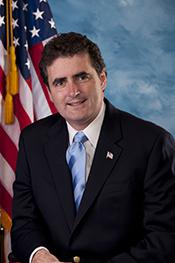
Historical · U.S. House · Pennsylvania · District 8
Michael Fitzpatrick
Former U.S. Representative · Pennsylvania District 8 · 2005–2017 · Republican
Michael Fitzpatrick represented Pennsylvania's District 8 in the United States House of Representatives (2005–2017) for the Republican party. The page below collects sourced biographical facts, term history, committee roles, and provenance for Fitzpatrick.
Bioguide ID: F000451
Key facts
- Full name
- Michael Fitzpatrick
- State
- Pennsylvania
- District
- District 8
- Party
- Republican
- House service
- 2005–2017
- First House term
- 2005
- Status
- Left office
- Current term ends
- —
- Born
- 1963
- Bioguide ID
- F000451
- Committee assignments
- —
- Dataset version
- 1.20260605
Biographical narrative
811 words · sourced from the Wikipedia REST extract
Michael G. Fitzpatrick is a former American attorney and politician who served as a Republican member of the United States House of Representatives, representing Pennsylvania's 8th congressional district. His congressional career spanned from 2005 to 2007 and then again from 2011 until 2017. Fitzpatrick was known for his moderate Republican stance and was recognized for his bipartisan approach during his time in office.
Early life and career
Michael Gerard Fitzpatrick was born on June 28, 1963, in Philadelphia, Pennsylvania. He was raised in Bucks County, where he completed his secondary education at Bishop Egan High School, now known as Conwell-Egan Catholic High School, located in Fairless Hills. Following high school, Fitzpatrick pursued higher education at St. Thomas University in Florida, where he excelled in the honors program and earned his bachelor's degree in 1985.
After completing his undergraduate studies, Fitzpatrick returned to Pennsylvania to attend the Dickinson School of Law at Penn State University. While at law school, he was actively involved in the academic community and served as the business manager for the Dickinson Journal of International Law. He graduated with his Juris Doctor (J.D.) degree in 1988 and subsequently gained admission to the bar in both Pennsylvania and New Jersey, beginning his legal career.
Fitzpatrick's political career began in 1995 when he was appointed to the Bucks County Board of Commissioners by a panel of county judges. This appointment filled the unexpired term of Mark Schweiker, who had been elected as lieutenant governor. Fitzpatrick was favored by local Republican Party leaders for the position, although the appointment faced some controversy regarding the influence of party politics. During his tenure as a commissioner, Fitzpatrick was responsible for overseeing various social agencies, coordinating local government responses to emergencies, and advocating for open space preservation. He also supported a significant information technology project aimed at enhancing the county's communication and outreach capabilities.
House tenure
Fitzpatrick's first election to the U.S. House of Representatives occurred in 2004, following the unexpected withdrawal of incumbent Republican James C. Greenwood from the race. Fitzpatrick secured the party nomination at the convention, defeating state Senator Joe Conti, who was Greenwood's preferred successor. In the general election, he faced Democratic candidate Virginia Schrader and won with a margin of 55% to 44%, while two minor candidates garnered the remaining votes. His district encompassed all of Bucks County, a portion of Montgomery County, and parts of Northeast Philadelphia.
In 2006, Fitzpatrick sought re-election but faced a challenging contest against Democrat Patrick Murphy. Despite receiving endorsements from several environmental organizations, including the Sierra Club, and being recognized as the only incumbent Republican congressman in Pennsylvania with such support, Fitzpatrick's campaign was closely contested. The race was characterized by a tight margin, and he ultimately lost to Murphy by less than one percentage point, conceding after a highly competitive election.
Following his defeat, Fitzpatrick returned to the legal profession, joining a law firm in Middletown Township. He remained active in local politics and community initiatives, including co-chairing a successful campaign for a ballot initiative that authorized Bucks County to borrow funds for open space preservation.
In 2010, Fitzpatrick announced his candidacy to reclaim his congressional seat, running against Murphy once again. He successfully won the rematch and returned to Congress, where he was re-elected in the subsequent elections of 2012 and 2014. Fitzpatrick's tenure in the House was marked by his moderate Republican views and a commitment to bipartisan cooperation. He chose not to seek re-election in 2016, citing his support for term limits, and was succeeded by his brother, Brian Fitzpatrick.
Legislative focus and committees
During his time in the U.S. House of Representatives, Fitzpatrick served on the House Committee on Financial Services and the House Committee on Small Business. His legislative efforts included a focus on issues related to financial regulation, small business support, and technology policy. One notable piece of legislation he introduced was the Deleting Online Predators Act of 2006, aimed at restricting minors' access to certain online platforms in schools and libraries. This legislation garnered significant attention and was passed by the House, reflecting Fitzpatrick's concern for child safety in the digital age.
Fitzpatrick's approach to governance was characterized by a willingness to collaborate across party lines, earning him recognition as one of the more bipartisan members of Congress. His legislative priorities often aligned with moderate Republican values, emphasizing fiscal responsibility, community safety, and support for local businesses. Throughout his congressional career, he maintained a focus on issues pertinent to his constituents in Pennsylvania's 8th district, advocating for policies that addressed their needs and concerns.
After concluding his final term in January 2017, Fitzpatrick remained active in various community and civic engagements. His career in public service, spanning both local and national levels, reflects a commitment to the constituents he represented and the principles of governance he upheld during his time in office.
Notable legislation
Sponsored and co-sponsored legislation for Michael Fitzpatrick is pending operator curation. The biographical narrative above carries the same provenance trail until per-bill rows are written.
Sources
- [1]https://en.wikipedia.org/wiki/Mike_FitzpatrickWikipedia · retrieved 2026-06-05
Notable quotes
Sourced quotes for Michael Fitzpatrick are pending operator curation. Narrative-scope provenance remains attached below.
Sources
- [1]https://en.wikipedia.org/wiki/Mike_FitzpatrickWikipedia · retrieved 2026-06-05
Key positions
Curated policy positions for Michael Fitzpatrick are pending operator review. The biographical narrative above carries the same provenance trail until per-topic positions are written.
Sources
- [1]https://en.wikipedia.org/wiki/Mike_FitzpatrickWikipedia · retrieved 2026-06-05
Terms served
- 2005–2007U.S. House · Term 1 · Republican
- 2011–2013U.S. House · Term 2 · Republican
- 2013–2015U.S. House · Term 3 · Republican
- 2015–2017U.S. House · Term 4 · Republican
Sources & provenance
Every attributable claim above carries a per-section [N] marker that resolves to the corresponding URL below. Each entry records the upstream provider, the canonical URL, and the timestamp at which the source was retrieved by the ingest pipeline.
Key facts
- https://bioguide.congress.gov/search/bio/F000451bioguide · retrieved 2026-06-05
- http://fitzpatrick.house.govhouse.gov · retrieved 2026-06-05
Biographical narrative
- https://en.wikipedia.org/wiki/Mike_Fitzpatrickwikipedia · retrieved 2026-06-05
Find your representative
Every U.S. state elects representatives by district. Browse Pennsylvania’s delegation, the full former-representative roster, or explore the role and term length.
Related on The Candidate
- Preceded by Jim GreenwoodEarlier holder of the Pennsylvania District 8 House seat · Republican.Open
- Adam SeybertFormer U.S. Representative · Pennsylvania District 1 · RepublicanOpen
- Benjamin SayFormer U.S. Representative · Pennsylvania District 1 · RepublicanOpen
- Chapman FreemanFormer U.S. Representative · Pennsylvania District 1 · RepublicanOpen
- Harry RansleyFormer U.S. Representative · Pennsylvania District 1 · RepublicanOpen
- Republican PartyFederal candidates and office holders on the Republican line.Open