
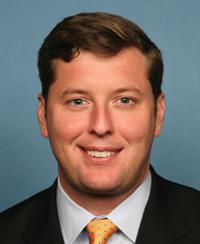
Historical · U.S. House · Pennsylvania · District 8
Patrick Murphy
Former U.S. Representative · Pennsylvania District 8 · 2007–2011 · Democratic
Patrick Murphy represented Pennsylvania's District 8 in the United States House of Representatives (2007–2011) for the Democratic party. The page below collects sourced biographical facts, term history, committee roles, and provenance for Murphy.
Bioguide ID: M001168
Key facts
- Full name
- Patrick Murphy
- State
- Pennsylvania
- District
- District 8
- Party
- Democratic
- House service
- 2007–2011
- First House term
- 2007
- Status
- Left office
- Current term ends
- —
- Born
- 1973
- Bioguide ID
- M001168
- Committee assignments
- —
- Dataset version
- 1.20260605
Biographical narrative
910 words · sourced from the Wikipedia REST extract
Patrick J. Murphy is an American politician and attorney who served as a U.S. Representative for Pennsylvania's 8th congressional district from 2007 until 2011. He is notable for being the first veteran of the Iraq War elected to the United States Congress. In addition to his congressional service, Murphy has held various roles in military and academic settings, including serving as the 32nd United States Under Secretary of the Army. He has also been involved in media as a former anchor on MSNBC and is currently a faculty member at Wharton Business School and the Distinguished Chair of Innovation at the United States Military Academy.
Early life and career
Born on October 19, 1973, in Philadelphia, Pennsylvania, Patrick Murphy was raised in the Northeast section of the city. He is the son of a city police officer and a legal secretary. During his high school years, he worked as a security guard at Veterans Stadium, where he gained firsthand experience in a lively environment during Philadelphia Eagles and Temple University football games. Murphy graduated from Archbishop Ryan High School and subsequently attended Bucks County Community College before transferring to King's College in Wilkes-Barre, Pennsylvania. At King's College, he demonstrated leadership as the captain of the ice hockey team, served as Student Government President, and was a member of the Sigma Kappa Sigma fraternity.
Murphy was also a cadet in the U.S. Army ROTC program at the University of Scranton, graduating from the Royal Warriors Battalion in 1996. After earning a Bachelor of Arts degree from King's College, he was commissioned as a second lieutenant in the Army Reserve. Instead of entering active duty immediately, he opted to remain in the inactive Army Reserve while pursuing a law degree at Widener University Commonwealth Law School in Harrisburg. During his time in law school, he worked as a legislative aide for a member of the Pennsylvania state legislature and was involved in various legal roles, including working for the Philadelphia District Attorney's office and leading the Harrisburg Civil Law Clinic, which provided legal assistance to low-income individuals.
Murphy graduated with a Juris Doctor (J.D.) degree from Widener in 1999, where he was recognized for his involvement in the Trial Advocacy Honor Society and served as president of the St. Thomas More Society. Following law school, he continued his military service as a drilling JAG officer in the Army Reserve while joining the law firm Cozen O'Connor in Philadelphia after returning from active duty.
House tenure
Patrick Murphy entered the political arena by challenging Republican incumbent Mike Fitzpatrick in the 2006 election for Pennsylvania's 8th congressional district. His campaign, which focused on issues such as the Iraq War, ethics reform, online protection, and veterans' rights, was part of a broader movement known as the "Fighting Dems," which included veterans running for office. In the Democratic primary held on May 16, 2006, Murphy secured approximately 65% of the vote against Andrew Warren, a former county commissioner.
The general election campaign was competitive, with polls indicating a close race between Murphy and Fitzpatrick. On election day, Murphy's campaign executed a significant get-out-the-vote effort, mobilizing over 2,000 volunteers who knocked on approximately 160,000 doors. This grassroots effort, combined with high voter turnout in Democratic areas, enabled Murphy to narrowly defeat Fitzpatrick, receiving 50.3% of the vote overall.
Murphy's first term in the House began in January 2007. During his time in office, he focused on various legislative initiatives and served on committees that addressed key issues relevant to his constituents and the nation. His tenure was marked by his commitment to veterans' affairs, military issues, and ethical governance.
In 2010, Murphy ran for re-election but was defeated in a challenging political environment. His term ended on January 3, 2011, concluding his time in the House of Representatives.
Legislative focus and committees
During his congressional tenure, Patrick Murphy was known for his focus on a range of legislative issues, particularly those affecting veterans and military personnel. As a veteran himself, he brought a unique perspective to discussions surrounding military affairs and veterans' rights. His legislative agenda included advocating for improved healthcare and support services for veterans, as well as promoting policies aimed at enhancing national security.
Murphy served on several committees during his time in the House, which allowed him to influence legislation related to defense, education, and other critical areas. His experience as a JAG officer and his legal background informed his contributions to discussions on military justice and legal reforms within the armed forces.
In addition to his work on veterans' issues, Murphy was involved in broader legislative efforts aimed at promoting ethical governance and accountability in government. He sought to address concerns related to transparency and integrity in political processes, reflecting a commitment to restoring public trust in elected officials.
After leaving Congress, Murphy continued to engage in public service and leadership roles. He was appointed as the 32nd Under Secretary of the Army, a position he held after being confirmed by the U.S. Senate. In this role, he was responsible for overseeing various aspects of Army operations and policy. His involvement in academia and media further reflects his ongoing commitment to public discourse and education.
Throughout his career, Patrick Murphy has demonstrated a dedication to serving his country and community, both in military and civilian capacities. His experiences as a veteran, attorney, and public servant have shaped his approach to leadership and advocacy, contributing to his legacy in American politics.
Notable legislation
Sponsored and co-sponsored legislation for Patrick Murphy is pending operator curation. The biographical narrative above carries the same provenance trail until per-bill rows are written.
Sources
- [1]https://en.wikipedia.org/wiki/Patrick_Murphy_(Pennsylvania_politician)Wikipedia · retrieved 2026-06-05
Notable quotes
Sourced quotes for Patrick Murphy are pending operator curation. Narrative-scope provenance remains attached below.
Sources
- [1]https://en.wikipedia.org/wiki/Patrick_Murphy_(Pennsylvania_politician)Wikipedia · retrieved 2026-06-05
Key positions
Curated policy positions for Patrick Murphy are pending operator review. The biographical narrative above carries the same provenance trail until per-topic positions are written.
Sources
- [1]https://en.wikipedia.org/wiki/Patrick_Murphy_(Pennsylvania_politician)Wikipedia · retrieved 2026-06-05
Terms served
- 2007–2009U.S. House · Term 1 · Democratic
- 2009–2011U.S. House · Term 2 · Democratic
Sources & provenance
Every attributable claim above carries a per-section [N] marker that resolves to the corresponding URL below. Each entry records the upstream provider, the canonical URL, and the timestamp at which the source was retrieved by the ingest pipeline.
Key facts
- https://bioguide.congress.gov/search/bio/M001168bioguide · retrieved 2026-06-05
- http://patrickmurphy.house.govhouse.gov · retrieved 2026-06-05
Biographical narrative
- https://en.wikipedia.org/wiki/Patrick_Murphy_(Pennsylvania_politician)wikipedia · retrieved 2026-06-05
Find your representative
Every U.S. state elects representatives by district. Browse Pennsylvania’s delegation, the full former-representative roster, or explore the role and term length.
Related on The Candidate
- Preceded by Jim GreenwoodEarlier holder of the Pennsylvania District 8 House seat · Republican.Open
- Succeeded by Matt CartwrightLater holder of the Pennsylvania District 8 House seat · Democratic.Open
- Adam SeybertFormer U.S. Representative · Pennsylvania District 1 · RepublicanOpen
- Benjamin SayFormer U.S. Representative · Pennsylvania District 1 · RepublicanOpen
- Chapman FreemanFormer U.S. Representative · Pennsylvania District 1 · RepublicanOpen
- Harry RansleyFormer U.S. Representative · Pennsylvania District 1 · RepublicanOpen