
Historical · U.S. House · Pennsylvania · District 9
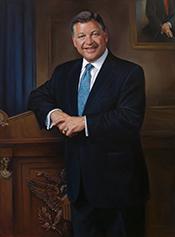
Bill Shuster
Former U.S. Representative · Pennsylvania District 9 · 2001–2019 · Republican
Bill Shuster represented Pennsylvania's District 9 in the United States House of Representatives (2001–2019) for the Republican party. The page below collects sourced biographical facts, term history, committee roles, and provenance for Shuster.
Bioguide ID: S001154
Key facts
- Full name
- Bill Shuster
- State
- Pennsylvania
- District
- District 9
- Party
- Republican
- House service
- 2001–2019
- First House term
- 2001
- Status
- Left office
- Current term ends
- —
- Born
- 1961
- Bioguide ID
- S001154
- Committee assignments
- —
- Dataset version
- 1.20260605
Biographical narrative
892 words · sourced from the Wikipedia REST extract
William Franklin Shuster is a former American politician who served as the U.S. Representative for Pennsylvania's 9th congressional district from 2001 until 2019. A member of the Republican Party, Shuster succeeded his father, Bud Shuster, who previously held the same congressional seat. Throughout his tenure, Shuster was involved in various legislative efforts and held significant committee positions, including Chairman of the House Transportation Committee. His political career spanned nearly two decades, during which he was re-elected multiple times before announcing his retirement at the end of his eighth term.
Early life and career
Bill Shuster was born on January 10, 1961, in McKeesport, Pennsylvania. He is the son of H. Patricia Rommel and Elmer Greinert "Bud" Shuster, a former U.S. Congressman. Shuster's heritage includes both German and Irish ancestry. He pursued higher education at Dickinson College, where he earned a Bachelor of Arts degree in political science and history. During his time at Dickinson, he was also a member of the Sigma Chi fraternity. Following his undergraduate studies, Shuster obtained a Master of Business Administration from American University.
Before entering the political arena, Shuster gained diverse professional experience. He worked on his family farm located in Bedford County, Pennsylvania, and held positions at Goodyear Tire and Rubber Corporation and Bandag Incorporated. Additionally, he owned and operated an automobile dealership in East Freedom, Pennsylvania. This blend of agricultural, corporate, and entrepreneurial experience contributed to his understanding of the economic and social issues facing his constituents.
House tenure
Shuster's political career began in earnest when he ran for the U.S. House of Representatives in a special election held in 2001. This election was necessitated by the resignation of his father, who had faced scrutiny from the House Ethics Committee. Bill Shuster secured the Republican nomination on February 18, 2001, winning a significant majority of the votes against his opponents. He subsequently won the special election on May 15, 2001, defeating the Democratic candidate Scott Conklin. This victory marked the beginning of Shuster's nearly two-decade-long service in Congress.
Following his initial election, Shuster faced various electoral challenges throughout his career. In the 2002 election, he won his first full term with a decisive victory against John R. Henry. As redistricting occurred after the 2000 Census, the composition of his district changed, but Shuster successfully adapted to these changes, winning re-election in subsequent years. He faced a competitive primary in 2004 but emerged victorious, securing his second full term by defeating Democrat Paul Politis in the general election.
Shuster continued to build on his electoral success in the following years, winning re-election in 2006 and 2008, often with significant margins. His ability to maintain support across the district was evident as he consistently won all counties within the district. In 2010, he again won re-election, this time against Democrat Tom Conners, further solidifying his position in Congress.
The redistricting process following the 2010 Census brought additional changes to Shuster's constituency, as his district shifted further west. Despite these changes, he won re-election in 2012, defeating Democrat Karen Ramsburg. His leadership abilities were recognized when he was appointed Chairman of the House Transportation Committee, a role he held for several Congresses.
In 2014, Shuster faced a primary challenge but secured his nomination with a majority of the votes. His re-election in 2016 marked his eighth and final term in the House. The election was characterized by a contentious primary race, but he ultimately defeated his opponent, Arthur Halvorson, in the general election.
In January 2018, Shuster announced that he would not seek re-election, signaling his intention to retire at the end of his term in January 2019. His decision came after a lengthy career in Congress, during which he had established himself as a prominent figure in transportation policy.
Legislative focus and committees
Throughout his tenure in the U.S. House of Representatives, Bill Shuster focused on various legislative issues, with a particular emphasis on transportation and infrastructure. His role as Chairman of the House Transportation Committee allowed him to influence significant legislation related to transportation policy, including funding and regulatory measures affecting highways, aviation, and public transit.
Shuster's leadership in the Transportation Committee was marked by efforts to address the nation's infrastructure needs. He worked on initiatives aimed at improving transportation systems and securing funding for critical projects. His position enabled him to collaborate with both Republican and Democratic colleagues on issues that were vital to his constituents and the broader public.
In addition to his focus on transportation, Shuster's legislative work encompassed a range of other issues relevant to his district and the nation. He engaged in discussions surrounding economic development, job creation, and fiscal responsibility, reflecting the concerns of his constituents.
As a member of Congress, Shuster participated in various committees and subcommittees, contributing to the legislative process and shaping policies that impacted his district and the country. His experience in business and local governance informed his approach to policymaking, allowing him to advocate for practical solutions to complex challenges.
Bill Shuster's congressional career concluded in January 2019, after serving a total of nine terms in the House of Representatives. His legacy includes a focus on transportation infrastructure and a commitment to representing the interests of his constituents in Pennsylvania's 9th congressional district. Following his retirement, he transitioned to a role as a lobbyist, continuing his involvement in public policy and advocacy.
Notable legislation
Sponsored and co-sponsored legislation for Bill Shuster is pending operator curation. The biographical narrative above carries the same provenance trail until per-bill rows are written.
Sources
- [1]https://en.wikipedia.org/wiki/Bill_ShusterWikipedia · retrieved 2026-06-05
Notable quotes
Sourced quotes for Bill Shuster are pending operator curation. Narrative-scope provenance remains attached below.
Sources
- [1]https://en.wikipedia.org/wiki/Bill_ShusterWikipedia · retrieved 2026-06-05
Key positions
Curated policy positions for Bill Shuster are pending operator review. The biographical narrative above carries the same provenance trail until per-topic positions are written.
Sources
- [1]https://en.wikipedia.org/wiki/Bill_ShusterWikipedia · retrieved 2026-06-05
Terms served
- 2001–2003U.S. House · Term 1 · Republican
- 2003–2005U.S. House · Term 2 · Republican
- 2005–2007U.S. House · Term 3 · Republican
- 2007–2009U.S. House · Term 4 · Republican
- 2009–2011U.S. House · Term 5 · Republican
- 2011–2013U.S. House · Term 6 · Republican
- 2013–2015U.S. House · Term 7 · Republican
- 2015–2017U.S. House · Term 8 · Republican
- 2017–2019U.S. House · Term 9 · Republican
Sources & provenance
Every attributable claim above carries a per-section [N] marker that resolves to the corresponding URL below. Each entry records the upstream provider, the canonical URL, and the timestamp at which the source was retrieved by the ingest pipeline.
Key facts
- https://bioguide.congress.gov/search/bio/S001154bioguide · retrieved 2026-06-05
- https://shuster.house.govhouse.gov · retrieved 2026-06-05
Biographical narrative
- https://en.wikipedia.org/wiki/Bill_Shusterwikipedia · retrieved 2026-06-05
Find your representative
Every U.S. state elects representatives by district. Browse Pennsylvania’s delegation, the full former-representative roster, or explore the role and term length.
Related on The Candidate
- Preceded by Bud ShusterEarlier holder of the Pennsylvania District 9 House seat · Republican.Open
- Adam SeybertFormer U.S. Representative · Pennsylvania District 1 · RepublicanOpen
- Benjamin SayFormer U.S. Representative · Pennsylvania District 1 · RepublicanOpen
- Chapman FreemanFormer U.S. Representative · Pennsylvania District 1 · RepublicanOpen
- Harry RansleyFormer U.S. Representative · Pennsylvania District 1 · RepublicanOpen
- Republican PartyFederal candidates and office holders on the Republican line.Open