
Historical · U.S. House · Pennsylvania · District 9
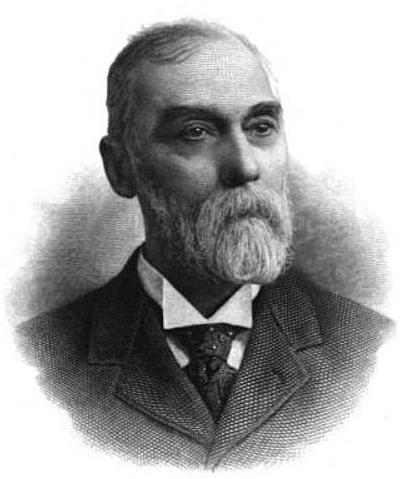
Daniel Ermentrout
Former U.S. Representative · Pennsylvania District 9 · 1881–1901 · Democratic
Daniel Ermentrout represented Pennsylvania's District 9 in the United States House of Representatives (1881–1901) for the Democratic party. The page below collects sourced biographical facts, term history, committee roles, and provenance for Ermentrout.
Bioguide ID: E000205
Key facts
- Full name
- Daniel Ermentrout
- State
- Pennsylvania
- District
- District 9
- Party
- Democratic
- House service
- 1881–1901
- First House term
- 1881
- Status
- Left office
- Current term ends
- —
- Born
- 1837
- Bioguide ID
- E000205
- Committee assignments
- —
- Dataset version
- 1.20260606
Biographical narrative
905 words · sourced from the Wikipedia REST extract
Daniel Ermentrout was an American politician who served as a Democratic member of the U.S. House of Representatives from Pennsylvania. His political career spanned several decades, during which he represented both the 8th and 9th congressional districts of Pennsylvania. Ermentrout's tenure in the House of Representatives lasted from 1881 until 1889 and then again from 1897 until his death in 1899. In addition to his congressional service, he held various positions in local government and the Pennsylvania State Senate, showcasing a commitment to public service throughout his life.
Early life and career
Daniel Ermentrout was born on January 24, 1837, in Reading, Pennsylvania, to William and Julia (Silvis) Ermentrout. His early education included attendance at Franklin and Marshall College in Lancaster, Pennsylvania, and the Elmwood Institute in Norristown, Pennsylvania. These institutions provided him with a foundation in education that would later support his legal career. After completing his studies, Ermentrout pursued a career in law, gaining admission to the bar in 1859. He began practicing law in his hometown of Reading, where he would later establish a significant political presence.
Ermentrout's early political career began in 1862 when he was elected as the district attorney for Berks County, a position he held for three years. This role allowed him to gain valuable experience in the legal and political arenas, further solidifying his reputation within the community. Following his term as district attorney, he served as the solicitor for the city of Reading from 1867 to 1870. His involvement in local governance continued as he became a member of the board of school control in Reading, serving from 1868 to 1876. During this time, he contributed to the development of educational policies and initiatives in the city.
Ermentrout's political engagement extended beyond local offices. He was a delegate to the Democratic National Conventions in 1868 and 1880, where he participated in shaping the party's platform and direction. His leadership capabilities were recognized when he served as chairman of the standing committee of Berks County in 1869, 1872, and 1873. Additionally, he was appointed in October 1877 by Governor John F. Hartranft to the Pennsylvania Statuary Commission, a role that involved overseeing the selection and placement of statues honoring notable figures in Pennsylvania's history.
In 1873, Ermentrout was elected to the Pennsylvania State Senate, representing the 1st district for a brief period before moving to the 11th district, where he served from 1875 to 1888. His time in the state senate allowed him to influence legislation and advocate for the interests of his constituents at the state level. Throughout his political career, Ermentrout demonstrated a commitment to public service and a dedication to the Democratic Party.
House tenure
Daniel Ermentrout's congressional career began when he was elected as a Democrat to the Forty-seventh Congress, which convened in 1881. He successfully secured re-election to the three subsequent Congresses, representing Pennsylvania's 8th congressional district until 1889. His tenure in the House was marked by his involvement in various legislative matters, although specific details regarding the bills he supported or opposed are not documented in the available records.
In 1888, Ermentrout sought renomination but was unsuccessful. Despite this setback, he remained active in the political landscape of Pennsylvania. He continued to engage with the Democratic Party as a delegate to the Democratic State conventions from 1895 to 1899, indicating his ongoing commitment to the party and its objectives.
In 1896, Ermentrout returned to Congress after being elected to the Fifty-fifth Congress, representing Pennsylvania's 9th congressional district. He served in this capacity during the Fifty-sixth Congress until his death in 1899. His time in the House was characterized by his dedication to his constituents and his efforts to address the issues facing Pennsylvania at the time. Although specific legislative achievements during his later terms are not detailed, his long-standing presence in Congress reflects a sustained commitment to public service.
Legislative focus and committees
While specific details regarding Daniel Ermentrout's legislative focus and committee assignments during his time in Congress are not extensively documented, his long tenure in both the House of Representatives and the Pennsylvania State Senate suggests a breadth of experience in legislative matters. Throughout his political career, he was involved in various issues pertinent to his constituents and the broader Democratic agenda of the time.
As a member of Congress, Ermentrout would have participated in discussions and decisions on a range of topics, including economic policies, social issues, and infrastructure development, all of which were critical to the constituents he represented. His legal background likely informed his approach to legislative matters, allowing him to navigate complex legal and policy issues effectively.
Ermentrout's involvement in the Democratic Party and his participation in state conventions indicate that he was engaged with the party's platform and priorities. This involvement would have influenced his legislative focus, aligning with the Democratic Party's goals during the late 19th century, which included issues such as labor rights, economic reform, and social justice.
Ermentrout's congressional career came to an end with his death on September 17, 1899, in Reading, Pennsylvania. His passing was attributed to complications from a choking incident. He was laid to rest in Charles Evans Cemetery, leaving behind a legacy of public service that spanned local, state, and national levels. Throughout his life, Ermentrout demonstrated a commitment to his community and the principles of the Democratic Party, contributing to the political landscape of Pennsylvania during a transformative period in American history.
Notable legislation
Sponsored and co-sponsored legislation for Daniel Ermentrout is pending operator curation. The biographical narrative above carries the same provenance trail until per-bill rows are written.
Sources
- [1]https://en.wikipedia.org/wiki/Daniel_ErmentroutWikipedia · retrieved 2026-06-06
Notable quotes
Sourced quotes for Daniel Ermentrout are pending operator curation. Narrative-scope provenance remains attached below.
Sources
- [1]https://en.wikipedia.org/wiki/Daniel_ErmentroutWikipedia · retrieved 2026-06-06
Key positions
Curated policy positions for Daniel Ermentrout are pending operator review. The biographical narrative above carries the same provenance trail until per-topic positions are written.
Sources
- [1]https://en.wikipedia.org/wiki/Daniel_ErmentroutWikipedia · retrieved 2026-06-06
Terms served
- 1881–1883U.S. House · Term 1 · Democratic
- 1883–1885U.S. House · Term 2 · Democratic
- 1885–1887U.S. House · Term 3 · Democratic
- 1887–1889U.S. House · Term 4 · Democratic
- 1897–1899U.S. House · Term 5 · Democratic
- 1899–1901U.S. House · Term 6 · Democratic
Sources & provenance
Every attributable claim above carries a per-section [N] marker that resolves to the corresponding URL below. Each entry records the upstream provider, the canonical URL, and the timestamp at which the source was retrieved by the ingest pipeline.
Key facts
- https://bioguide.congress.gov/search/bio/E000205bioguide · retrieved 2026-06-06
- https://www.govtrack.us/congress/members/403892govtrack · retrieved 2026-06-06
Biographical narrative
- https://en.wikipedia.org/wiki/Daniel_Ermentroutwikipedia · retrieved 2026-06-06
Find your representative
Every U.S. state elects representatives by district. Browse Pennsylvania’s delegation, the full former-representative roster, or explore the role and term length.
Related on The Candidate
- Preceded by Oliver DickeyEarlier holder of the Pennsylvania District 9 House seat · Republican.Open
- Succeeded by Henry CasselLater holder of the Pennsylvania District 9 House seat · Republican.Open
- Adam SeybertFormer U.S. Representative · Pennsylvania District 1 · RepublicanOpen
- Benjamin SayFormer U.S. Representative · Pennsylvania District 1 · RepublicanOpen
- Chapman FreemanFormer U.S. Representative · Pennsylvania District 1 · RepublicanOpen
- Harry RansleyFormer U.S. Representative · Pennsylvania District 1 · RepublicanOpen