
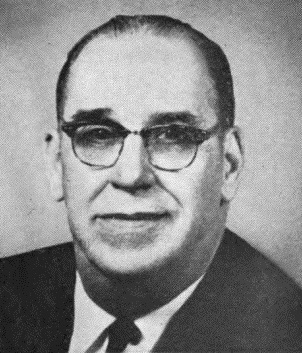
Historical · U.S. House · Pennsylvania · District 9
George Watkins
Former U.S. Representative · Pennsylvania District 9 · 1965–1971 · Republican
George Watkins represented Pennsylvania's District 9 in the United States House of Representatives (1965–1971) for the Republican party. The page below collects sourced biographical facts, term history, committee roles, and provenance for Watkins.
Bioguide ID: W000192
Key facts
- Full name
- George Watkins
- State
- Pennsylvania
- District
- District 9
- Party
- Republican
- House service
- 1965–1971
- First House term
- 1965
- Status
- Left office
- Current term ends
- —
- Born
- 1902
- Bioguide ID
- W000192
- Committee assignments
- —
- Dataset version
- 1.20260605
Biographical narrative
810 words · sourced from the Wikipedia REST extract
George Watkins was an American politician who served as a Republican member of the United States House of Representatives for Pennsylvania's 7th and 9th congressional districts. His political career spanned several decades, during which he held various positions at both the state and federal levels. Watkins was known for his involvement in local politics and his advocacy for his constituents until his passing in 1970.
Early life and career
George Watkins was born on May 21, 1902, in Hampton, Virginia. He grew up in a working-class environment and learned the trade of shipfitting in Newport News, Virginia. In 1920, he relocated to Chester, Pennsylvania, where he demonstrated entrepreneurial spirit by founding the Chester Stevedoring Company. This venture, however, was sold in 1931. During the 1920s, Watkins was involved in shipping activities that included the transportation of bootleg alcohol, which connected him to the local Republican political landscape through figures such as John J. McClure, a prominent political boss in Delaware County.
In 1932, Watkins co-founded the Blue Line Transfer Company, a transportation business that grew to operate hundreds of trucks across the eastern United States. His leadership role as president and board chairman of the company marked a significant phase in his career, showcasing his business acumen and ability to navigate the logistics industry.
Watkins's entry into politics began in earnest in the mid-1940s. He was elected Sheriff of Delaware County in 1945, serving a single term until 1948. Following this, he was elected to the Pennsylvania State Senate, representing the 9th district from 1949 until 1960. During his time in the state legislature, he focused on various issues pertinent to his constituents and gained a reputation as a dedicated public servant. After his tenure in the Senate, he served as a county commissioner for Delaware County from 1960 to 1964, further solidifying his political presence in the region.
House tenure
In 1964, George Watkins was elected to the 89th United States Congress, representing Pennsylvania's 7th congressional district. His congressional career began in 1965, and he served in this capacity until 1967. Following his initial term, Watkins was re-elected to the 90th and 91st United States Congresses, representing Pennsylvania's 9th congressional district after a redistricting process that shifted his home area into this new congressional framework.
Watkins's tenure in the House was marked by significant political changes, particularly due to the Supreme Court's ruling in Wesberry v. Sanders, which mandated that congressional districts be redrawn to ensure equal representation based on population. This ruling had a profound impact on Pennsylvania's congressional districts, including Watkins's own. He expressed concerns regarding the redistricting process, particularly about the potential loss of representation for Delaware County residents. His testimony before the state Senate reapportionment committee highlighted his belief that the proposed changes could disenfranchise local voters and dilute their representation in Congress.
Despite these challenges, Watkins was able to secure re-election in November 1966, defeating his Democratic opponent by a substantial margin. His ability to maintain support from his constituents reflected his established presence in local politics and his commitment to addressing their needs.
Watkins's time in the House of Representatives came to an end on January 3, 1971, following his death during a speaking engagement in West Chester, Pennsylvania. His passing marked the conclusion of a notable political career that spanned multiple decades and various levels of government.
Legislative focus and committees
During his time in Congress, George Watkins served on the Committee on Interstate and Foreign Commerce during both the 89th and 90th Congresses. His involvement in this committee allowed him to engage with a range of issues related to commerce, transportation, and communication, which were critical to the economic interests of his constituents and the broader national landscape.
Watkins's legislative focus was shaped by his background in business and transportation, as well as his experiences in local government. He was particularly attentive to the needs of his district, advocating for policies that would benefit the residents of Pennsylvania. His work on the committee provided him with a platform to influence legislation that impacted both local and national interests.
Throughout his congressional career, Watkins was known for his dedication to his constituents and his efforts to address their concerns. His commitment to public service was evident in his active participation in legislative discussions and his willingness to voice the interests of his district, particularly in the context of the redistricting debates that characterized his later years in office.
Watkins's legacy is marked by his contributions to Pennsylvania politics and his role in shaping the legislative landscape during a transformative period in American history. His career reflects the complexities of navigating local and national issues, as well as the importance of representation in a changing political environment. After his death, he was interred at Birmingham-Lafayette Cemetery in Birmingham Township, Pennsylvania, leaving behind a legacy of public service and community engagement.
Notable legislation
Sponsored and co-sponsored legislation for George Watkins is pending operator curation. The biographical narrative above carries the same provenance trail until per-bill rows are written.
Sources
- [1]https://en.wikipedia.org/wiki/George_Watkins_(politician)Wikipedia · retrieved 2026-06-05
Notable quotes
Sourced quotes for George Watkins are pending operator curation. Narrative-scope provenance remains attached below.
Sources
- [1]https://en.wikipedia.org/wiki/George_Watkins_(politician)Wikipedia · retrieved 2026-06-05
Key positions
Curated policy positions for George Watkins are pending operator review. The biographical narrative above carries the same provenance trail until per-topic positions are written.
Sources
- [1]https://en.wikipedia.org/wiki/George_Watkins_(politician)Wikipedia · retrieved 2026-06-05
Terms served
- 1965–1967U.S. House · Term 1 · Republican
- 1967–1969U.S. House · Term 2 · Republican
- 1969–1971U.S. House · Term 3 · Republican
Sources & provenance
Every attributable claim above carries a per-section [N] marker that resolves to the corresponding URL below. Each entry records the upstream provider, the canonical URL, and the timestamp at which the source was retrieved by the ingest pipeline.
Key facts
- https://bioguide.congress.gov/search/bio/W000192bioguide · retrieved 2026-06-05
- https://www.govtrack.us/congress/members/411364govtrack · retrieved 2026-06-05
Biographical narrative
- https://en.wikipedia.org/wiki/George_Watkins_(politician)wikipedia · retrieved 2026-06-05
Find your representative
Every U.S. state elects representatives by district. Browse Pennsylvania’s delegation, the full former-representative roster, or explore the role and term length.
Related on The Candidate
- Preceded by John KinzerEarlier holder of the Pennsylvania District 9 House seat · Republican.Open
- Succeeded by Bud ShusterLater holder of the Pennsylvania District 9 House seat · Republican.Open
- Adam SeybertFormer U.S. Representative · Pennsylvania District 1 · RepublicanOpen
- Benjamin SayFormer U.S. Representative · Pennsylvania District 1 · RepublicanOpen
- Chapman FreemanFormer U.S. Representative · Pennsylvania District 1 · RepublicanOpen
- Harry RansleyFormer U.S. Representative · Pennsylvania District 1 · RepublicanOpen