
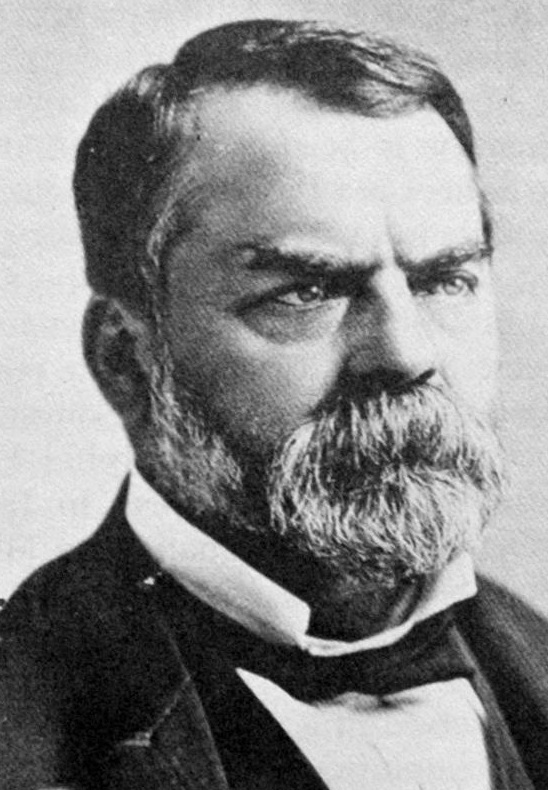
Historical · U.S. House · Pennsylvania · District 9
John Hiestand
Former U.S. Representative · Pennsylvania District 9 · 1885–1889 · Republican
John Hiestand represented Pennsylvania's District 9 in the United States House of Representatives (1885–1889) for the Republican party. The page below collects sourced biographical facts, term history, committee roles, and provenance for Hiestand.
Bioguide ID: H000569
Key facts
- Full name
- John Hiestand
- State
- Pennsylvania
- District
- District 9
- Party
- Republican
- House service
- 1885–1889
- First House term
- 1885
- Status
- Left office
- Current term ends
- —
- Born
- 1824
- Bioguide ID
- H000569
- Committee assignments
- —
- Dataset version
- 1.20260606
Biographical narrative
945 words · sourced from the Wikipedia REST extract
John Hiestand was an American politician from Pennsylvania who served as a Republican member of the U.S. House of Representatives. His political career spanned several decades, during which he was involved in various capacities at both the state and federal levels. Hiestand's contributions to Pennsylvania politics are marked by his service in the state legislature, his role as a naval officer, and his two terms in the U.S. Congress. He was born in 1824 and passed away in 1890, leaving behind a legacy of public service.
Early life and career
John Hiestand was born on October 2, 1824, in East Donegal Township, Pennsylvania. His early education took place in local common schools, where he received a foundational education that would serve him well in his future endeavors. Hiestand furthered his studies at an academy in Marietta, Pennsylvania, and later attended Pennsylvania College in Gettysburg, Pennsylvania. This educational background provided him with the knowledge and skills necessary for his later career in law and politics.
After completing his education, Hiestand pursued a career in law. He studied diligently and was admitted to the bar in 1849, marking the beginning of his legal practice in Lancaster, Pennsylvania. His legal career was notable, but it was not the only avenue through which he would engage with public service. In 1852, Hiestand entered the political arena by being elected as a member of the Pennsylvania State House of Representatives. He served multiple terms in this capacity, holding office in 1852, 1853, and 1856. His time in the state legislature allowed him to gain valuable experience in governance and policy-making.
In 1858, Hiestand made a significant career shift by purchasing an interest in the Lancaster Examiner, a local newspaper. This move marked a departure from his legal practice, as he transitioned into journalism and media. His involvement with the Lancaster Examiner provided him with a platform to influence public opinion and engage with the community on various issues. Hiestand's commitment to public service continued when he was elected to the Pennsylvania State Senate, representing the 16th district in 1861. His tenure in the state senate further solidified his reputation as a dedicated public servant.
Despite his political successes, Hiestand faced challenges in his career. In 1868, he sought election to the U.S. Congress to fill the unexpired term of the prominent politician Thaddeus Stevens. However, this attempt was unsuccessful, illustrating the competitive nature of political races during that period. Nevertheless, Hiestand's career continued to evolve, and in 1871, he was appointed by President Ulysses Grant as the naval officer at the port of Philadelphia. This position was significant, as it allowed him to oversee naval operations and contribute to the management of maritime activities in the region. Hiestand was reappointed to this role in 1875 and served until 1879, further expanding his experience in public administration.
House tenure
Hiestand's congressional career began when he was elected as a Republican to the U.S. House of Representatives. He served in the Forty-ninth and Fiftieth Congresses, with his first term commencing in 1885. During his time in the House, Hiestand represented Pennsylvania's 9th congressional district, contributing to national discussions and decisions that impacted both his constituents and the broader American public.
His tenure in the House was characterized by the political dynamics of the late 19th century, a period marked by significant social and economic changes in the United States. Hiestand's role as a congressman involved engaging with various legislative issues and collaborating with fellow lawmakers to address the needs of his district and the nation. While specific details regarding his legislative initiatives and voting record are not provided, it is evident that his experience in state politics and administration informed his work in Congress.
Despite his efforts and contributions, Hiestand faced challenges in maintaining his congressional seat. He sought reelection in 1888 but was unsuccessful in his bid to continue serving in the House. This defeat marked the end of his congressional career, concluding a significant chapter in his public service.
Legislative focus and committees
While specific details regarding Hiestand's legislative focus and committee assignments during his time in Congress are not documented, it is important to contextualize his role within the broader framework of the Republican Party and the political landscape of the time. The late 19th century was a period of considerable transformation in the United States, with issues such as industrialization, labor rights, and economic policy taking center stage in congressional debates.
As a member of the Republican Party, Hiestand was likely involved in discussions surrounding these pressing issues, as the party was known for its support of business interests and economic growth during this era. The Republican Party's platform often included a focus on infrastructure development, tariffs, and policies aimed at fostering economic expansion. Hiestand's background in law and his experience in state government would have equipped him with the knowledge to engage in these discussions effectively.
Moreover, Hiestand's prior experience as a naval officer may have influenced his perspectives on military and maritime issues, which were also relevant to national policy during his time in Congress. The late 19th century saw the United States expanding its naval capabilities, and Hiestand's insights from his previous role could have contributed to legislative considerations in this area.
After concluding his congressional service, Hiestand returned to Pennsylvania, where he continued to be involved in public life until his death on December 13, 1890. He was laid to rest in Marietta Cemetery, located in Marietta, Pennsylvania. Hiestand's life and career reflect a commitment to public service and an engagement with the political landscape of his time, leaving a legacy that is remembered in the context of Pennsylvania's political history.
Notable legislation
Sponsored and co-sponsored legislation for John Hiestand is pending operator curation. The biographical narrative above carries the same provenance trail until per-bill rows are written.
Sources
- [1]https://en.wikipedia.org/wiki/John_A._HiestandWikipedia · retrieved 2026-06-06
Notable quotes
Sourced quotes for John Hiestand are pending operator curation. Narrative-scope provenance remains attached below.
Sources
- [1]https://en.wikipedia.org/wiki/John_A._HiestandWikipedia · retrieved 2026-06-06
Key positions
Curated policy positions for John Hiestand are pending operator review. The biographical narrative above carries the same provenance trail until per-topic positions are written.
Sources
- [1]https://en.wikipedia.org/wiki/John_A._HiestandWikipedia · retrieved 2026-06-06
Terms served
- 1885–1887U.S. House · Term 1 · Republican
- 1887–1889U.S. House · Term 2 · Republican
Sources & provenance
Every attributable claim above carries a per-section [N] marker that resolves to the corresponding URL below. Each entry records the upstream provider, the canonical URL, and the timestamp at which the source was retrieved by the ingest pipeline.
Key facts
- https://bioguide.congress.gov/search/bio/H000569bioguide · retrieved 2026-06-06
- https://www.govtrack.us/congress/members/405431govtrack · retrieved 2026-06-06
Biographical narrative
- https://en.wikipedia.org/wiki/John_A._Hiestandwikipedia · retrieved 2026-06-06
Find your representative
Every U.S. state elects representatives by district. Browse Pennsylvania’s delegation, the full former-representative roster, or explore the role and term length.
Related on The Candidate
- Preceded by Abraham SmithEarlier holder of the Pennsylvania District 9 House seat · Republican.Open
- Succeeded by David BrunnerLater holder of the Pennsylvania District 9 House seat · Democratic.Open
- Adam SeybertFormer U.S. Representative · Pennsylvania District 1 · RepublicanOpen
- Benjamin SayFormer U.S. Representative · Pennsylvania District 1 · RepublicanOpen
- Chapman FreemanFormer U.S. Representative · Pennsylvania District 1 · RepublicanOpen
- Harry RansleyFormer U.S. Representative · Pennsylvania District 1 · RepublicanOpen