
Historical · U.S. House · Pennsylvania · District 9
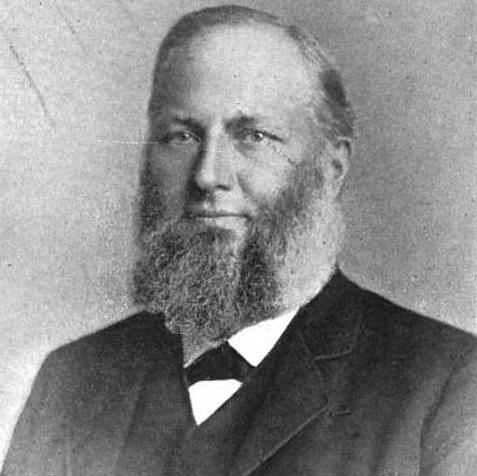
David Brunner
Former U.S. Representative · Pennsylvania District 9 · 1889–1893 · Democratic
David Brunner represented Pennsylvania's District 9 in the United States House of Representatives (1889–1893) for the Democratic party. The page below collects sourced biographical facts, term history, committee roles, and provenance for Brunner.
Bioguide ID: B000980
Key facts
- Full name
- David Brunner
- State
- Pennsylvania
- District
- District 9
- Party
- Democratic
- House service
- 1889–1893
- First House term
- 1889
- Status
- Left office
- Current term ends
- —
- Born
- 1835
- Bioguide ID
- B000980
- Committee assignments
- —
- Dataset version
- 1.20260606
Biographical narrative
959 words · sourced from the Wikipedia REST extract
David Brunner was a Democratic politician who served as a U.S. Representative for Pennsylvania's 9th congressional district during the late 19th century. His political career spanned two terms in the U.S. House of Representatives, where he contributed to the legislative process during a transformative period in American history. Born in 1835, Brunner's life journey took him from humble beginnings in Pennsylvania to a role in national governance, reflecting the diverse pathways individuals have taken to public service in the United States.
Early life and career
David Brunner was born on March 7, 1835, in Amity, Pennsylvania. Growing up in a rural setting, he received his education in the common schools of the area, which provided him with a foundational knowledge that would serve him throughout his life. Early in his career, Brunner learned the carpenter's trade, an occupation that not only equipped him with practical skills but also instilled in him a strong work ethic.
From 1853 to 1856, Brunner transitioned from carpentry to education, taking on the role of a schoolteacher. This experience allowed him to further his own studies, particularly in the classics, which would later enrich his understanding of literature and culture. His commitment to education culminated in his graduation from Dickinson College in Carlisle, Pennsylvania, in 1860. This achievement marked a significant milestone in his academic journey, providing him with a broader perspective and a deeper appreciation for the arts and humanities.
Following his graduation, Brunner served as the principal of the Reading Classical Academy in Reading, Pennsylvania, from 1860 to 1869. In this capacity, he was responsible for overseeing the educational curriculum and the administration of the institution, shaping the minds of many young students during a critical period in American education. His dedication to education did not end there; in 1880, he founded the Reading Business College, further contributing to the educational landscape of the region and providing vocational training to students.
Brunner's early career in education and business laid the groundwork for his later political aspirations. His experiences in teaching and administration likely informed his views on education policy and public service, which would become relevant during his time in Congress.
House tenure
David Brunner's political career in the U.S. House of Representatives began when he was elected as a Democrat to the Fifty-first Congress, serving from 1889 to 1891. He was subsequently re-elected to the Fifty-second Congress, where he continued to serve until March 3, 1893. His tenure in the House occurred during a period marked by significant social and economic changes in the United States, including the aftermath of the Civil War, the rise of industrialization, and the expansion of the American frontier.
During his time in Congress, Brunner participated in various legislative discussions and decisions that shaped the nation. While specific details about his legislative actions are not provided, it can be inferred that he engaged with the pressing issues of his time, including labor rights, economic policies, and education reform, reflecting his background in education and business.
Brunner chose not to seek renomination in 1892, concluding his congressional career after two terms. This decision may have been influenced by a variety of factors, including personal considerations or a desire to return to his educational pursuits. Following his departure from Congress, he continued to teach at the Reading Business College, demonstrating his ongoing commitment to education and community service.
Legislative focus and committees
While specific details regarding the committees on which David Brunner served during his congressional tenure are not available, his background in education and business likely influenced his legislative focus. As a former educator and founder of a business college, it is reasonable to assume that he may have had an interest in issues related to education policy, vocational training, and economic development.
Brunner's time in Congress coincided with a period of significant transformation in American society. The late 19th century was characterized by rapid industrialization, urbanization, and the emergence of new social movements. These changes brought about a range of challenges, including labor disputes, economic inequality, and the need for educational reform. Brunner's experiences as an educator and businessman positioned him to understand the complexities of these issues, and he may have advocated for policies that aimed to address them.
In addition to his focus on education, Brunner's legislative work may have also intersected with broader Democratic Party priorities of the time, which included advocating for the rights of workers, promoting economic opportunities, and addressing social injustices. His contributions to the House during this dynamic period would have been shaped by the political landscape and the needs of his constituents in Pennsylvania.
After leaving Congress, Brunner continued to engage with his community through his work at the Reading Business College, where he likely influenced the next generation of business leaders and professionals. His commitment to education and public service remained evident until his passing on November 29, 1903, in Reading, Pennsylvania. He was interred in Amityville Cemetery, leaving behind a legacy of dedication to education and civic engagement.
In addition to his political and educational endeavors, Brunner was also known for his literary contributions. He authored several poems in Pennsylvania German, showcasing his cultural heritage and adding to the rich tapestry of American literature. His work in this area reflects a deep appreciation for language and expression, further illustrating the multifaceted nature of his life and career.
In summary, David Brunner's life was marked by a commitment to education, public service, and community engagement. His tenure as a U.S. Representative from Pennsylvania was part of a broader narrative of American history during a time of significant change and development. Through his various roles, he contributed to the educational landscape and the legislative process, leaving a lasting impact on his community and the nation.
Notable legislation
Sponsored and co-sponsored legislation for David Brunner is pending operator curation. The biographical narrative above carries the same provenance trail until per-bill rows are written.
Sources
- [1]https://en.wikipedia.org/wiki/David_B._BrunnerWikipedia · retrieved 2026-06-06
Notable quotes
Sourced quotes for David Brunner are pending operator curation. Narrative-scope provenance remains attached below.
Sources
- [1]https://en.wikipedia.org/wiki/David_B._BrunnerWikipedia · retrieved 2026-06-06
Key positions
Curated policy positions for David Brunner are pending operator review. The biographical narrative above carries the same provenance trail until per-topic positions are written.
Sources
- [1]https://en.wikipedia.org/wiki/David_B._BrunnerWikipedia · retrieved 2026-06-06
Terms served
- 1889–1891U.S. House · Term 1 · Democratic
- 1891–1893U.S. House · Term 2 · Democratic
Sources & provenance
Every attributable claim above carries a per-section [N] marker that resolves to the corresponding URL below. Each entry records the upstream provider, the canonical URL, and the timestamp at which the source was retrieved by the ingest pipeline.
Key facts
- https://bioguide.congress.gov/search/bio/B000980bioguide · retrieved 2026-06-06
- https://www.govtrack.us/congress/members/401932govtrack · retrieved 2026-06-06
Biographical narrative
- https://en.wikipedia.org/wiki/David_B._Brunnerwikipedia · retrieved 2026-06-06
Find your representative
Every U.S. state elects representatives by district. Browse Pennsylvania’s delegation, the full former-representative roster, or explore the role and term length.
Related on The Candidate
- Preceded by John HiestandEarlier holder of the Pennsylvania District 9 House seat · Republican.Open
- Succeeded by Constantine ErdmanLater holder of the Pennsylvania District 9 House seat · Democratic.Open
- Adam SeybertFormer U.S. Representative · Pennsylvania District 1 · RepublicanOpen
- Benjamin SayFormer U.S. Representative · Pennsylvania District 1 · RepublicanOpen
- Chapman FreemanFormer U.S. Representative · Pennsylvania District 1 · RepublicanOpen
- Harry RansleyFormer U.S. Representative · Pennsylvania District 1 · RepublicanOpen