
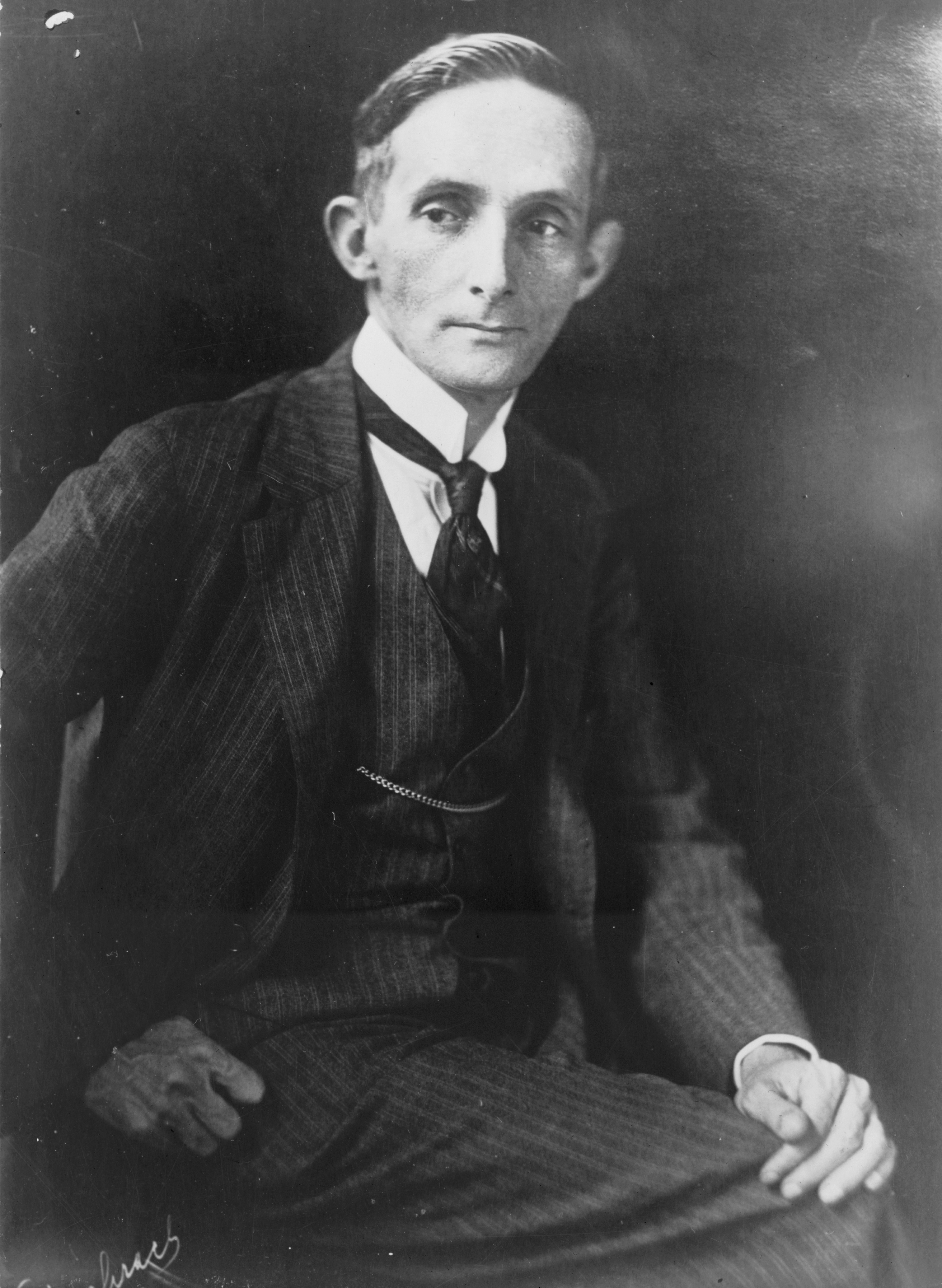
Historical · U.S. House · Puerto Rico · At-Large
Félix Dávila
Former U.S. Representative · Puerto Rico At-Large · 1917–1933 · Unionist
Félix Dávila represented Puerto Rico's At-Large in the United States House of Representatives (1917–1933) for the Unionist party. The page below collects sourced biographical facts, term history, committee roles, and provenance for Dávila.
Bioguide ID: D000090
Key facts
- Full name
- Félix Dávila
- State
- Puerto Rico
- District
- At-Large
- Party
- Unionist
- House service
- 1917–1933
- First House term
- 1917
- Status
- Left office
- Current term ends
- —
- Born
- 1878
- Bioguide ID
- D000090
- Committee assignments
- —
- Dataset version
- 1.20260606
Biographical narrative
995 words · sourced from the Wikipedia REST extract
Félix Dávila was a prominent political figure and jurist from Puerto Rico, serving as a U.S. Representative for the at-large district of Puerto Rico. He was affiliated with the Unionist Party and held office in the U.S. House of Representatives from 1917 until his resignation in 1932. Dávila's career spanned various roles, including serving as the fourth Resident Commissioner of Puerto Rico and later as an associate justice of the Supreme Court of Puerto Rico. His contributions to Puerto Rican politics and law were significant during a transformative period in the territory's history.
Early life and career
Félix Dávila was born on November 20, 1878, in Vega Baja, Puerto Rico. He faced early adversity when both of his parents, Lope Córdova y Thibault and María Concepción Dávila y Dávila, passed away during his childhood. As a result, he was raised by his cousin, Dr. Gonzalo María Córdova y Dávila, in the town of Jayuya. Dávila's early education was largely self-directed, utilizing the extensive library of his relatives to further his studies. He attended public schools in Manati during his adolescence while also working at a drugstore owned by another cousin.
The political landscape of Puerto Rico changed significantly after the United States acquired the territory in 1898. Motivated by the new opportunities, Dávila sought to pursue a legal education. He initially enrolled at Howard University Law School in Washington, D.C., where he was the only white student among his peers. After completing his first year, he transferred to National University Law School, now known as George Washington University Law School, where he earned a Master of Laws degree. Despite facing challenges due to Puerto Rico's status as a non-citizen territory, Dávila successfully advocated for his admission to practice law in Washington, D.C., and subsequently in Puerto Rico in 1903.
In 1906, Dávila married Mercedes Díaz Collazo, with whom he had several children. His family included Jorge Luis, who would later follow in his footsteps as both an Associate Justice of the Puerto Rico Supreme Court and a U.S. Representative. Dávila's early career in public service began with a series of judicial appointments. He was appointed as a judge of the municipal court of Caguas in 1904 and later served in various judicial capacities, including as district attorney for Aguadilla and as a judge in several district courts across Puerto Rico. His commitment to legal education was evident when he co-founded Puerto Rico's first law school under U.S. rule in 1912, which eventually evolved into the University of Puerto Rico School of Law.
House tenure
Dávila's political career in the U.S. Congress began when he was elected as the Union Party candidate for Resident Commissioner from Puerto Rico on July 16, 1917. He succeeded Luis Muñoz Rivera, who had passed away the previous year and had recommended Dávila as his successor. The role of Resident Commissioner involved representing Puerto Rico in the U.S. House of Representatives as a non-voting delegate, a position that carried significant responsibilities in advocating for the interests of the territory.
Dávila was re-elected to four-year terms in 1920, 1924, and 1928, demonstrating a sustained level of support from his constituents. During his tenure, he worked on various issues affecting Puerto Rico, including economic development, civil rights, and the political status of the territory. His office was notable for hiring Luis Muñoz Marín, the son of his predecessor, as a clerk, reflecting a continuity of political legacy within Puerto Rican leadership.
Throughout his time in Congress, Dávila faced personal challenges, including the loss of his first wife and the subsequent impact of the influenza pandemic on his family. His wife and three children contracted the illness in 1918, resulting in the death of his wife, which profoundly affected him. In 1919, he remarried Patria Martínez, although their relationship would later become strained.
Dávila's congressional career came to an end on April 11, 1932, when he resigned from his position as Resident Commissioner. His resignation was prompted by an appointment from President Herbert Hoover to serve as an associate justice of the Supreme Court of Puerto Rico. This transition marked a shift in Dávila's career from legislative duties to a judicial role, where he continued to influence the legal landscape of Puerto Rico.
Legislative focus and committees
During his time in the U.S. House of Representatives, Dávila's legislative focus encompassed a range of issues pertinent to Puerto Rico's development and integration into the broader political framework of the United States. As a non-voting delegate, he was tasked with advocating for the needs and rights of Puerto Ricans, navigating the complexities of U.S. territorial governance. His efforts were directed towards securing resources and support for economic initiatives, as well as addressing social issues that impacted the Puerto Rican populace.
Dávila's involvement in committees and legislative discussions was crucial in shaping policies that would affect the territory. His background as a jurist and legal scholar provided him with a unique perspective on the implications of federal legislation for Puerto Rico. He worked to ensure that the voices of Puerto Ricans were heard in Congress, despite the limitations of his non-voting status.
After leaving Congress, Dávila continued to serve the people of Puerto Rico through his judicial role. His appointment as an associate justice of the Supreme Court of Puerto Rico allowed him to apply his legal expertise in a different capacity, contributing to the development of the judicial system in the territory. He held this position until his retirement in 1938, shortly before his death.
Félix Dávila passed away on December 3, 1938, in San Juan, Puerto Rico, at the age of 60. His legacy as a political leader and jurist remains significant in the history of Puerto Rico, reflecting the challenges and achievements of a territory navigating its identity within the United States. His contributions to both the legislative and judicial branches of government underscore the importance of his role in shaping the political landscape of Puerto Rico during a pivotal era.
Notable legislation
Sponsored and co-sponsored legislation for Félix Dávila is pending operator curation. The biographical narrative above carries the same provenance trail until per-bill rows are written.
Sources
- [1]https://en.wikipedia.org/wiki/F%C3%A9lix_C%C3%B3rdova_D%C3%A1vilaWikipedia · retrieved 2026-06-06
Notable quotes
Sourced quotes for Félix Dávila are pending operator curation. Narrative-scope provenance remains attached below.
Sources
- [1]https://en.wikipedia.org/wiki/F%C3%A9lix_C%C3%B3rdova_D%C3%A1vilaWikipedia · retrieved 2026-06-06
Key positions
Curated policy positions for Félix Dávila are pending operator review. The biographical narrative above carries the same provenance trail until per-topic positions are written.
Sources
- [1]https://en.wikipedia.org/wiki/F%C3%A9lix_C%C3%B3rdova_D%C3%A1vilaWikipedia · retrieved 2026-06-06
Terms served
- 1917–1919U.S. House · Term 1 · Unionist
- 1919–1921U.S. House · Term 2 · Unionist
- 1921–1923U.S. House · Term 3 · Unionist
- 1923–1925U.S. House · Term 4 · Unionist
- 1925–1927U.S. House · Term 5 · Unionist
- 1927–1929U.S. House · Term 6 · Unionist
- 1929–1931U.S. House · Term 7 · Unionist
- 1931–1933U.S. House · Term 8 · Unionist
Sources & provenance
Every attributable claim above carries a per-section [N] marker that resolves to the corresponding URL below. Each entry records the upstream provider, the canonical URL, and the timestamp at which the source was retrieved by the ingest pipeline.
Key facts
- https://bioguide.congress.gov/search/bio/D000090bioguide · retrieved 2026-06-06
- https://www.govtrack.us/congress/members/403227govtrack · retrieved 2026-06-06
Biographical narrative
- https://en.wikipedia.org/wiki/F%C3%A9lix_C%C3%B3rdova_D%C3%A1vilawikipedia · retrieved 2026-06-06
Find your representative
Every U.S. state elects representatives by district. Browse Puerto Rico’s delegation, the full former-representative roster, or explore the role and term length.
Related on The Candidate
- Preceded by Luis RiveraEarlier holder of the Puerto Rico At-Large House seat · Unionist.Open
- Succeeded by Santiago IglesiasLater holder of the Puerto Rico At-Large House seat · Coalitionist.Open
- Aníbal Acevedo-ViláFormer U.S. Representative · Puerto Rico At-Large · Popular DemocratOpen
- Antonio ColoradoFormer U.S. Representative · Puerto Rico At-Large · DemocraticOpen
- Antonio Fernós-IsernFormer U.S. Representative · Puerto Rico At-Large · Popular DemocratOpen
- Baltasar Corrada-del RíoFormer U.S. Representative · Puerto Rico At-Large · New ProgressiveOpen