
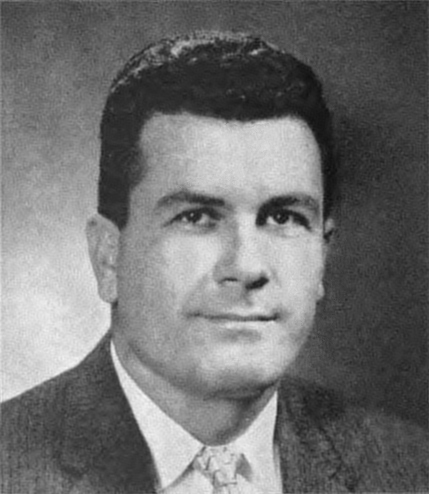
Historical · U.S. House · South Carolina · District 2
Albert Watson
Former U.S. Representative · South Carolina District 2 · 1963–1971 · Republican
Albert Watson represented South Carolina's District 2 in the United States House of Representatives (1963–1971) for the Republican party. The page below collects sourced biographical facts, term history, committee roles, and provenance for Watson.
Bioguide ID: W000197
Key facts
- Full name
- Albert Watson
- State
- South Carolina
- District
- District 2
- Party
- Republican
- House service
- 1963–1971
- First House term
- 1963
- Status
- Left office
- Current term ends
- —
- Born
- 1922
- Bioguide ID
- W000197
- Committee assignments
- —
- Dataset version
- 1.20260605
Biographical narrative
884 words · sourced from the Wikipedia REST extract
Albert Watson was an American politician who served as a U.S. Representative for South Carolina's 2nd congressional district. A member of the Republican Party, he held office from 1963 until 1971, marking a significant period in the political landscape of South Carolina during a time of considerable social change. Watson's career was characterized by his transition from the Democratic Party to the Republican Party, as well as his staunch support for segregationist policies, particularly during the civil rights movement. His political journey culminated in a notable but unsuccessful campaign for governor of South Carolina in 1970.
Early life and career
Albert William Watson was born on August 30, 1922, in Sumter, South Carolina, to Claude Watson Sr. and his wife. His family later moved to Lexington County, near the state capital of Columbia, where he was raised and attended public schools. Watson pursued higher education at North Greenville Junior College in Greenville, South Carolina. His academic journey continued at the University of South Carolina School of Law, from which he graduated in 1950. Following his graduation, he established a legal practice in Columbia.
Watson's political career began in the mid-1950s when he was elected to the South Carolina House of Representatives from Richland County. He served in the state legislature from 1955 to 1959 and returned for a final term from 1961 to 1963. In 1958, he sought the Democratic nomination for lieutenant governor but was defeated in the primary by Burnet Maybank, Jr. After his final term in the state House, Watson set his sights on a congressional seat.
During World War II, Watson served as a weather specialist in the United States Army Air Forces, an experience that contributed to his leadership skills and public service ethos. He married Lillian Audrey Williams in 1948, and the couple had three children. Watson was also a Southern Baptist deacon, and he had a twin brother, Allan R. Watson, who became a Baptist minister and served in various churches.
House tenure
Watson's congressional career began when he won a special election in 1962 to fill the vacancy left by the death of fellow Democrat John J. Riley. Watson secured the Democratic nomination and faced Floyd Spence, a state representative who had recently switched to the Republican Party. The election was closely contested, with Watson winning by a narrow margin. His victory was bolstered by support from influential figures, including U.S. Senator Strom Thurmond.
Watson's alignment with the segregationist policies of the time mirrored that of Thurmond, and both supported Barry Goldwater's presidential campaign in 1964. Watson led the South Carolina "Democrats for Goldwater" organization, and following his support for Goldwater, he was stripped of his seniority by the House Democratic Caucus. In a significant political shift, Watson resigned from Congress in 1965, expressing his discontent with the Democratic Party's direction, particularly regarding civil rights.
Subsequently, Watson ran for his old congressional seat as a Republican in a special election held in June 1965. He won decisively, becoming the first Republican to represent South Carolina in the House since 1896. This victory marked a pivotal moment in South Carolina's political history, although the Republican Party's base in the South was still evolving, and many African Americans remained disenfranchised.
Watson was re-elected comfortably in 1966 and 1968. His tenure was marked by a strong opposition to civil rights legislation, which was a defining characteristic of his political stance. Notably, he was the only Republican in the House to vote against the Jury Selection Act of 1968, a law aimed at eliminating racial discrimination in jury selection processes.
Legislative focus and committees
Throughout his time in Congress, Watson's legislative focus was heavily influenced by his views on civil rights and segregation. His opposition to civil rights measures was more pronounced than that of many of his Southern Republican colleagues. Watson's alignment with segregationist policies became a hallmark of his political identity, and he often found himself at odds with the broader national Republican Party as it began to distance itself from such views.
In 1970, Watson chose not to seek re-election to the House, instead launching a campaign for governor of South Carolina. His candidacy was notable for its open support of segregation, which historians have described as one of the last high-profile segregationist campaigns in the South. Despite securing the Republican nomination with the backing of influential figures like Strom Thurmond, Watson faced significant challenges in the general election against Democratic nominee John C. West. Ultimately, Watson lost the election, receiving a substantial share of the vote but failing to secure the governorship.
After his congressional career, Watson's political aspirations continued, but he faced obstacles due to his controversial past. In 1971, he was considered for a judicial appointment to the United States Court of Military Appeals, but opposition from Democratic senators hindered this opportunity. Watson's political legacy is intertwined with the shifting dynamics of race and party affiliation in the South during a transformative period in American history.
Watson's career reflects the complexities of Southern politics during the civil rights era, as well as the broader national trends that shaped the Republican Party's evolution. He passed away on September 25, 1994, leaving behind a legacy marked by his controversial positions and the significant changes occurring in American society during his time in office.
Notable legislation
Sponsored and co-sponsored legislation for Albert Watson is pending operator curation. The biographical narrative above carries the same provenance trail until per-bill rows are written.
Sources
- [1]https://en.wikipedia.org/wiki/Albert_Watson_(South_Carolina_politician)Wikipedia · retrieved 2026-06-05
Notable quotes
Sourced quotes for Albert Watson are pending operator curation. Narrative-scope provenance remains attached below.
Sources
- [1]https://en.wikipedia.org/wiki/Albert_Watson_(South_Carolina_politician)Wikipedia · retrieved 2026-06-05
Key positions
Curated policy positions for Albert Watson are pending operator review. The biographical narrative above carries the same provenance trail until per-topic positions are written.
Sources
- [1]https://en.wikipedia.org/wiki/Albert_Watson_(South_Carolina_politician)Wikipedia · retrieved 2026-06-05
Terms served
- 1963–1965U.S. House · Term 1 · Democratic
- 1965–1967U.S. House · Term 2 · Democratic
- 1967–1969U.S. House · Term 3 · Republican
- 1969–1971U.S. House · Term 4 · Republican
Sources & provenance
Every attributable claim above carries a per-section [N] marker that resolves to the corresponding URL below. Each entry records the upstream provider, the canonical URL, and the timestamp at which the source was retrieved by the ingest pipeline.
Key facts
- https://bioguide.congress.gov/search/bio/W000197bioguide · retrieved 2026-06-05
- https://www.govtrack.us/congress/members/411368govtrack · retrieved 2026-06-05
Biographical narrative
- https://en.wikipedia.org/wiki/Albert_Watson_(South_Carolina_politician)wikipedia · retrieved 2026-06-05
Find your representative
Every U.S. state elects representatives by district. Browse South Carolina’s delegation, the full former-representative roster, or explore the role and term length.
Related on The Candidate
- Preceded by Corinne RileyEarlier holder of the South Carolina District 2 House seat · Democratic.Open
- Succeeded by Floyd SpenceLater holder of the South Carolina District 2 House seat · Republican.Open
- Arthur Ravenel Jr.Former U.S. Representative · South Carolina District 1 · RepublicanOpen
- Benjamin WhittemoreFormer U.S. Representative · South Carolina District 1 · RepublicanOpen
- Clara McMillanFormer U.S. Representative · South Carolina District 1 · DemocraticOpen
- Daniel WallaceFormer U.S. Representative · South Carolina District 1 · DemocraticOpen