
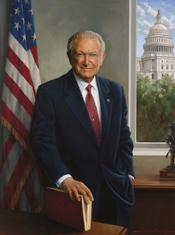
Historical · U.S. House · South Carolina · District 2
Floyd Spence
Former U.S. Representative · South Carolina District 2 · 1971–2001 · Republican
Floyd Spence represented South Carolina's District 2 in the United States House of Representatives (1971–2001) for the Republican party. The page below collects sourced biographical facts, term history, committee roles, and provenance for Spence.
Bioguide ID: S000718
Key facts
- Full name
- Floyd Spence
- State
- South Carolina
- District
- District 2
- Party
- Republican
- House service
- 1971–2001
- First House term
- 1971
- Status
- Left office
- Current term ends
- —
- Born
- 1928
- Bioguide ID
- S000718
- Committee assignments
- —
- Dataset version
- 1.20260605
Biographical narrative
1,045 words · sourced from the Wikipedia REST extract
Floyd Spence was an American attorney and politician who served as a U.S. Representative for South Carolina's 2nd congressional district from 1971 until his death in 2001. A member of the Republican Party, Spence was notable for his long tenure in Congress, during which he became a prominent figure in military and defense matters, ultimately serving as chairman of the House Armed Services Committee. His political career began in the South Carolina House of Representatives, where he initially served as a Democrat before switching parties and becoming a key player in the Republican resurgence in the state.
Early life and career
Floyd Davidson Spence was born on April 9, 1928, in Columbia, South Carolina. He spent much of his early life in Lexington County, which would later become a significant part of his political base. After completing high school, Spence enlisted in the United States Navy Reserve, where he served for several years before retiring as a captain in 1988. His educational journey began at the University of South Carolina in Columbia, where he earned a Bachelor of Arts degree in English in 1952. He continued his studies at the University of South Carolina School of Law, obtaining his Juris Doctor degree in 1956.
Following his graduation from law school, Spence entered politics as a member of the Democratic Party. He was elected to the South Carolina House of Representatives in 1956, representing Lexington County. Spence successfully secured reelection in 1958 and 1960. However, by 1962, he became increasingly disillusioned with the national Democratic Party's direction, particularly its liberal policies. On April 14 of that year, he announced his decision to switch to the Republican Party, marking a significant shift in his political alignment. This transition was emblematic of a broader political realignment occurring in South Carolina and the South during the mid-20th century.
Following his party switch, Spence sought the Republican nomination for South Carolina's 2nd congressional district. In the 1962 election, he faced off against Albert W. Watson, a fellow state representative and the Democratic nominee. Watson won the election with a narrow margin, aided by the support of influential figures such as Senator Strom Thurmond. Despite this setback, Spence continued his political career and was elected to the South Carolina Senate in 1966, where he served as the minority leader of a small Republican caucus. He was reelected to the Senate in 1968, further solidifying his political presence in the state.
In 1970, Spence made another bid for the 2nd congressional district seat, which had become open after Watson's decision to run for governor. Spence won the election, becoming the first freshman Republican congressman from South Carolina since 1896 and the second Republican elected from the state since Reconstruction. His victory was indicative of the shifting political landscape in South Carolina, where conservative white voters began to align more closely with the Republican Party.
House tenure
Floyd Spence's tenure in the U.S. House of Representatives began in 1971 and lasted until his death in 2001, encompassing a total of 16 terms in office. He was initially elected during a period of significant political change in the South, and his election was part of a broader trend of Republican gains in the region. Spence's district, which included Columbia and surrounding areas, was characterized by a conservative electorate that had begun to shift away from traditional Democratic loyalties.
Throughout his congressional career, Spence was known for his strong support of military and defense issues, reflecting the interests of his constituents and the strategic importance of military installations in South Carolina, such as Fort Jackson. He quickly established himself as a key member of the House Armed Services Committee, where he served from the beginning of his congressional career. His expertise and leadership in defense matters led to his appointment as ranking Republican on the committee in 1993, and he subsequently became chairman in 1995 after the Republican Party gained a majority in the House.
Spence's congressional career was marked by a series of successful reelections, often without significant opposition. His political standing was bolstered by the Republican Party's growing influence in South Carolina, particularly during the 1980s and 1990s. He faced challenges in some elections, notably in 1986 and 1988, but overall maintained a strong base of support among his constituents.
The redistricting process following the 1990 census had a notable impact on Spence's congressional district. The changes resulted in a significant loss of African-American voters, as many were shifted to the newly created 6th District, which became a majority-black district. This demographic shift altered the political landscape of Spence's district, which became increasingly racially polarized. Despite these changes, Spence continued to enjoy electoral success, often running unopposed during the latter part of the 1990s.
Legislative focus and committees
During his time in Congress, Floyd Spence focused primarily on issues related to national defense and military readiness. His role as a member of the House Armed Services Committee allowed him to influence key legislation and policies affecting the U.S. military. As chairman of the committee, he played a critical role in shaping defense budgets and military policy during a time of significant global change, including the post-Cold War era.
Spence's legislative priorities often reflected the interests of his constituents in South Carolina, particularly those employed in defense-related industries. He advocated for military funding and resources that would benefit installations in his district and the broader region. His leadership on the Armed Services Committee positioned him as a prominent voice in discussions about military readiness, defense spending, and the overall direction of U.S. military policy.
Throughout his congressional career, Spence was known for his ability to navigate complex political landscapes and build coalitions to advance his legislative goals. His tenure coincided with significant events in U.S. history, including the Gulf War and the ongoing challenges of military engagement in various regions around the world. Spence's contributions to defense policy were recognized by his peers and constituents, solidifying his legacy as a key figure in South Carolina's political history.
Floyd Spence passed away on August 16, 2001, leaving behind a long and impactful career in public service. His contributions to the U.S. House of Representatives and his role in shaping military policy continue to be remembered as part of South Carolina's political legacy.
Notable legislation
Sponsored and co-sponsored legislation for Floyd Spence is pending operator curation. The biographical narrative above carries the same provenance trail until per-bill rows are written.
Sources
- [1]https://en.wikipedia.org/wiki/Floyd_SpenceWikipedia · retrieved 2026-06-05
Notable quotes
Sourced quotes for Floyd Spence are pending operator curation. Narrative-scope provenance remains attached below.
Sources
- [1]https://en.wikipedia.org/wiki/Floyd_SpenceWikipedia · retrieved 2026-06-05
Key positions
Curated policy positions for Floyd Spence are pending operator review. The biographical narrative above carries the same provenance trail until per-topic positions are written.
Sources
- [1]https://en.wikipedia.org/wiki/Floyd_SpenceWikipedia · retrieved 2026-06-05
Terms served
- 1971–1973U.S. House · Term 1 · Republican
- 1973–1975U.S. House · Term 2 · Republican
- 1975–1977U.S. House · Term 3 · Republican
- 1977–1979U.S. House · Term 4 · Republican
- 1979–1981U.S. House · Term 5 · Republican
- 1981–1983U.S. House · Term 6 · Republican
- 1983–1985U.S. House · Term 7 · Republican
- 1985–1987U.S. House · Term 8 · Republican
- 1987–1989U.S. House · Term 9 · Republican
- 1989–1991U.S. House · Term 10 · Republican
- 1991–1993U.S. House · Term 11 · Republican
- 1993–1995U.S. House · Term 12 · Republican
- 1995–1997U.S. House · Term 13 · Republican
- 1997–1999U.S. House · Term 14 · Republican
- 1999–2001U.S. House · Term 15 · Republican
- 2001–2001U.S. House · Term 16 · Republican
Sources & provenance
Every attributable claim above carries a per-section [N] marker that resolves to the corresponding URL below. Each entry records the upstream provider, the canonical URL, and the timestamp at which the source was retrieved by the ingest pipeline.
Key facts
- https://bioguide.congress.gov/search/bio/S000718bioguide · retrieved 2026-06-05
- https://www.govtrack.us/congress/members/400610govtrack · retrieved 2026-06-05
Biographical narrative
- https://en.wikipedia.org/wiki/Floyd_Spencewikipedia · retrieved 2026-06-05
Find your representative
Every U.S. state elects representatives by district. Browse South Carolina’s delegation, the full former-representative roster, or explore the role and term length.
Related on The Candidate
- Preceded by Albert WatsonEarlier holder of the South Carolina District 2 House seat · Republican.Open
- Arthur Ravenel Jr.Former U.S. Representative · South Carolina District 1 · RepublicanOpen
- Benjamin WhittemoreFormer U.S. Representative · South Carolina District 1 · RepublicanOpen
- Clara McMillanFormer U.S. Representative · South Carolina District 1 · DemocraticOpen
- Daniel WallaceFormer U.S. Representative · South Carolina District 1 · DemocraticOpen
- Republican PartyFederal candidates and office holders on the Republican line.Open