
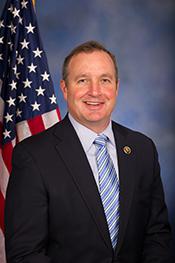
Historical · U.S. House · South Carolina · District 3
Jeff Duncan
Former U.S. Representative · South Carolina District 3 · 2011–2025 · Republican
Jeff Duncan represented South Carolina's District 3 in the United States House of Representatives (2011–2025) for the Republican party. The page below collects sourced biographical facts, term history, committee roles, and provenance for Duncan.
Bioguide ID: D000615
Key facts
- Full name
- Jeff Duncan
- State
- South Carolina
- District
- District 3
- Party
- Republican
- House service
- 2011–2025
- First House term
- 2011
- Status
- Left office
- Current term ends
- —
- Born
- 1966
- Bioguide ID
- D000615
- Committee assignments
- —
- Dataset version
- 1.20260603
Biographical narrative
819 words · sourced from the Wikipedia REST extract
Jeff Duncan is an American politician and businessman who served as the United States Representative for South Carolina's 3rd congressional district from 2011 until 2025. A member of the Republican Party, Duncan's congressional district encompassed nine counties, including significant manufacturing centers within the state. Prior to his tenure in the U.S. House of Representatives, he was a member of the South Carolina House of Representatives from 2002 to 2010. Duncan announced in January 2024 that he would not seek re-election.
Early life and career
Jeff Duncan was born on January 7, 1966, in Greenville, South Carolina. He spent his formative years in a family involved in the textile industry, which necessitated frequent relocations across the southern United States. Duncan attended three years of high school at Mooresville Senior High School in Mooresville, North Carolina, before transferring to Ware Shoals High School, where he completed his education. It was during his senior year that he met his future wife, Melody Hodges.
Duncan pursued higher education at Clemson University, where he earned a Bachelor of Arts degree in political science in 1988. While at Clemson, he was also a member of the university's football team, which contributed to his early engagement in team dynamics and leadership.
Following his graduation, Duncan entered the banking sector, where he worked for seven years in community banking. He held the position of branch manager and assistant vice president, gaining valuable experience in financial management and customer relations. After his banking career, he transitioned into entrepreneurship by founding J. Duncan & Associates, a family-owned real estate marketing firm based in South Carolina. This business specialized in statewide real estate auctions, and Duncan operated it until he was elected to Congress in 2010.
House tenure
Duncan's political career began in the South Carolina House of Representatives, where he was elected to represent District 15 in 2002. In the Republican primary, he secured his initial victory by defeating local businessman David Tribble Jr. with a margin of 56% to 44%. He subsequently won the general election with 61% of the vote. Duncan was re-elected multiple times, serving unopposed in several elections and achieving a high percentage of votes in contested races, reflecting his strong support within his district.
In 2010, Duncan decided to retire from the South Carolina House to pursue a seat in the U.S. House of Representatives. He ran for South Carolina's 3rd Congressional District after the incumbent, J. Gresham Barrett, opted to run for governor. Duncan emerged as a favored candidate within the Tea Party movement, receiving endorsements from influential organizations such as the Club for Growth and the National Right to Life Committee. In a competitive Republican primary, he advanced to a runoff election where he narrowly defeated his opponent, Richard Cash, with a margin of 51% to 49%. He subsequently won the general election with 62% of the vote, demonstrating significant electoral strength across the district.
Duncan was re-elected in subsequent election cycles, consistently receiving a substantial majority of the votes. His electoral performance included notable victories in 2012, 2014, 2016, 2018, 2020, and 2022, with his 2022 election being particularly remarkable as he faced no opponent on the ballot and received 97.6% of the vote. Throughout his tenure, Duncan maintained a conservative voting record, achieving the most conservative ideology score in the House of Representatives as of January 2018.
Legislative focus and committees
During his time in the U.S. House of Representatives, Duncan was involved in various legislative initiatives and served on multiple committees. He was a member of the Committee on Natural Resources, the Committee on Homeland Security, and the Committee on Foreign Affairs. His leadership roles included chairing the Subcommittee on the Western Hemisphere within the Committee on Foreign Affairs and the Subcommittee on Oversight and Management Efficiency within the Committee on Homeland Security.
Duncan's legislative focus often aligned with his conservative principles. He was recognized as a "Tea Party freshman" during the 112th Congress and was active in introducing legislation aimed at reducing federal expenditures. Notably, in February 2011, he introduced a resolution advocating for the establishment of a committee dedicated to the elimination of nonessential federal programs.
In 2012, Duncan introduced the Countering Iran in the Western Hemisphere Act, which aimed to formulate a comprehensive strategy for addressing Iran's influence in the Western Hemisphere. His legislative efforts reflected his commitment to national security and foreign policy issues.
Throughout his congressional career, Duncan participated in various caucuses, including the Congressional Solar Caucus, the Congressional Blockchain Caucus, the Freedom Caucus, the Rare Disease Caucus, and the Congressional Caucus on Turkey and Turkish Americans. These affiliations underscored his engagement with a range of policy areas, from energy to international relations.
Duncan's tenure in Congress concluded on January 3, 2025, after serving a total of seven terms. His decision not to seek re-election was announced in January 2024, marking the end of a significant chapter in his political career.
Notable legislation
Sponsored and co-sponsored legislation for Jeff Duncan is pending operator curation. The biographical narrative above carries the same provenance trail until per-bill rows are written.
Sources
- [1]https://en.wikipedia.org/wiki/Jeff_Duncan_(politician)Wikipedia · retrieved 2026-06-03
Notable quotes
Sourced quotes for Jeff Duncan are pending operator curation. Narrative-scope provenance remains attached below.
Sources
- [1]https://en.wikipedia.org/wiki/Jeff_Duncan_(politician)Wikipedia · retrieved 2026-06-03
Key positions
Curated policy positions for Jeff Duncan are pending operator review. The biographical narrative above carries the same provenance trail until per-topic positions are written.
Sources
- [1]https://en.wikipedia.org/wiki/Jeff_Duncan_(politician)Wikipedia · retrieved 2026-06-03
Terms served
- 2011–2013U.S. House · Term 1 · Republican
- 2013–2015U.S. House · Term 2 · Republican
- 2015–2017U.S. House · Term 3 · Republican
- 2017–2019U.S. House · Term 4 · Republican
- 2019–2021U.S. House · Term 5 · Republican
- 2021–2023U.S. House · Term 6 · Republican
- 2023–2025U.S. House · Term 7 · Republican
Sources & provenance
Every attributable claim above carries a per-section [N] marker that resolves to the corresponding URL below. Each entry records the upstream provider, the canonical URL, and the timestamp at which the source was retrieved by the ingest pipeline.
Key facts
- https://bioguide.congress.gov/search/bio/D000615bioguide · retrieved 2026-06-03
- https://jeffduncan.house.govhouse.gov · retrieved 2026-06-03
Biographical narrative
- https://en.wikipedia.org/wiki/Jeff_Duncan_(politician)wikipedia · retrieved 2026-06-03
Find your representative
Every U.S. state elects representatives by district. Browse South Carolina’s delegation, the full former-representative roster, or explore the role and term length.
Related on The Candidate
- Preceded by James BarrettEarlier holder of the South Carolina District 3 House seat · Republican.Open
- Arthur Ravenel Jr.Former U.S. Representative · South Carolina District 1 · RepublicanOpen
- Benjamin WhittemoreFormer U.S. Representative · South Carolina District 1 · RepublicanOpen
- Clara McMillanFormer U.S. Representative · South Carolina District 1 · DemocraticOpen
- Daniel WallaceFormer U.S. Representative · South Carolina District 1 · DemocraticOpen
- Republican PartyFederal candidates and office holders on the Republican line.Open