
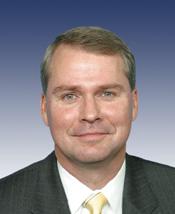
Historical · U.S. House · South Carolina · District 3
James Barrett
Former U.S. Representative · South Carolina District 3 · 2003–2011 · Republican
James Barrett represented South Carolina's District 3 in the United States House of Representatives (2003–2011) for the Republican party. The page below collects sourced biographical facts, term history, committee roles, and provenance for Barrett.
Bioguide ID: B001239
Key facts
- Full name
- James Barrett
- State
- South Carolina
- District
- District 3
- Party
- Republican
- House service
- 2003–2011
- First House term
- 2003
- Status
- Left office
- Current term ends
- —
- Born
- 1961
- Bioguide ID
- B001239
- Committee assignments
- —
- Dataset version
- 1.20260605
Biographical narrative
921 words · sourced from the Wikipedia REST extract
James Gresham Barrett is a former American politician who served as the U.S. Representative for South Carolina's 3rd congressional district from 2003 until 2011. A member of the Republican Party, Barrett's political career included a notable run for the governorship of South Carolina in 2010. His tenure in Congress was characterized by a conservative legislative agenda, and he was involved in various committees that shaped policy during his time in office.
Early life and career
Barrett was born on February 14, 1961, in Westminster, South Carolina, located in Oconee County. He pursued higher education at The Citadel, The Military College of South Carolina, where he graduated in 1983. Following his graduation, Barrett served in the United States Army from 1983 to 1987, achieving the rank of captain in the field artillery. After his military service, he returned to his hometown and managed the family-owned furniture store, contributing to the local economy and community.
Barrett's political career began at the state level when he was elected to the South Carolina House of Representatives, serving from 1996 to 2002. During his time in the state legislature, he was active on several committees, including the Education and Public Works Committee, the Labor Commerce and Industry Committee, the Rules Committee, and the School Choice Ad Hoc Committee. He also chaired the Ad Hoc Committee on Urban Growth. His involvement in state politics included participation in the George W. Bush for President South Carolina State Steering Committee during the 2000 Presidential Election, reflecting his alignment with the Republican Party's national leadership.
House tenure
Barrett's congressional career began when he won a seat in the U.S. House of Representatives in the 2002 elections, succeeding Lindsey Graham, who had retired to pursue a Senate seat. He officially took office in January 2003. Barrett ran unopposed for reelection in 2004, which underscored his popularity in his district. In subsequent elections, he faced Democratic challengers, winning reelection in 2006 against Lee Ballenger and in 2008 against Jane Ballard Dyer, securing a significant majority of the votes in both contests.
Throughout his time in the House, Barrett's voting record indicated a strong conservative stance. He was recognized by the National Journal as one of the most conservative members of Congress. His positions garnered endorsements from various organizations, including the National Rifle Association, the National Right to Life Committee, and the National Federation of Independent Business. Notably, Barrett was one of the few members to oppose the renewal of the Voting Rights Act in 2006 and voted against the Democratic version of the State Children's Health Insurance Program (SCHIP) in 2007.
Barrett's legislative initiatives included support for offshore drilling as a means to enhance U.S. energy independence. He was also a co-sponsor of the FairTax legislation, which aimed to overhaul the federal tax system. In response to a congressional pay raise that was met with public disapproval, Barrett chose to donate his increased salary to a local charity, demonstrating his engagement with community issues.
In addition to his legislative efforts, Barrett was a staunch opponent of online gambling, co-sponsoring multiple bills aimed at prohibiting internet gambling activities. He introduced the Stop Terrorist Entry Program Act (STEP) in 2003, which sought to amend immigration laws to prevent individuals from designated state sponsors of terrorism from entering the United States. His legislative actions often reflected a focus on national security and conservative social values.
Despite his active legislative role, Barrett faced criticism for his attendance record, having missed a significant number of votes during his tenure. By March 2010, he had missed more votes than any other member of the 111th Congress, raising questions about his engagement in legislative processes.
Legislative focus and committees
During his time in the U.S. House, Barrett served on several important committees that influenced a wide range of policy areas. He was a member of the Committee on Financial Services, where he participated in subcommittees focused on capital markets, insurance, and consumer credit. Additionally, he served on the Committee on Foreign Affairs, where he was involved in subcommittees addressing issues related to Europe, terrorism, nonproliferation, trade, and the Middle East and South Asia. His involvement in these committees allowed him to contribute to discussions and decisions on both domestic and international matters.
Barrett's legislative focus was characterized by a commitment to conservative principles, particularly in areas related to fiscal policy, national security, and social issues. His work on the Financial Services Committee included oversight of financial institutions and consumer credit, while his role on the Foreign Affairs Committee involved addressing complex global issues that affected U.S. interests.
In 2009, Barrett announced his candidacy for the governorship of South Carolina in the 2010 election. He faced several notable candidates in the Republican primary, including State Attorney General Henry McMaster, State Lt. Governor Andre Bauer, and State Representative Nikki Haley. Despite a competitive primary, Barrett was ultimately defeated by Haley in the runoff election.
Following his departure from Congress in January 2011, Barrett continued to engage in community and civic activities. He is married to Natalie Barrett and has three children. Throughout his career, he has been involved in various local organizations, including serving as President of the Westminster Rotary Club and Chairman of the Oconee District Boy Scouts. Barrett's contributions to his community reflect a commitment to public service beyond his legislative roles.
Barrett's career in public office illustrates the trajectory of a politician deeply rooted in his community and dedicated to the principles of the Republican Party, with a focus on conservative legislation and local engagement.
Notable legislation
Sponsored and co-sponsored legislation for James Barrett is pending operator curation. The biographical narrative above carries the same provenance trail until per-bill rows are written.
Sources
- [1]https://en.wikipedia.org/wiki/Gresham_BarrettWikipedia · retrieved 2026-06-05
Notable quotes
Sourced quotes for James Barrett are pending operator curation. Narrative-scope provenance remains attached below.
Sources
- [1]https://en.wikipedia.org/wiki/Gresham_BarrettWikipedia · retrieved 2026-06-05
Key positions
Curated policy positions for James Barrett are pending operator review. The biographical narrative above carries the same provenance trail until per-topic positions are written.
Sources
- [1]https://en.wikipedia.org/wiki/Gresham_BarrettWikipedia · retrieved 2026-06-05
Terms served
- 2003–2005U.S. House · Term 1 · Republican
- 2005–2007U.S. House · Term 2 · Republican
- 2007–2009U.S. House · Term 3 · Republican
- 2009–2011U.S. House · Term 4 · Republican
Sources & provenance
Every attributable claim above carries a per-section [N] marker that resolves to the corresponding URL below. Each entry records the upstream provider, the canonical URL, and the timestamp at which the source was retrieved by the ingest pipeline.
Key facts
- https://bioguide.congress.gov/search/bio/B001239bioguide · retrieved 2026-06-05
- http://www.house.gov/barretthouse.gov · retrieved 2026-06-05
Biographical narrative
- https://en.wikipedia.org/wiki/Gresham_Barrettwikipedia · retrieved 2026-06-05
Find your representative
Every U.S. state elects representatives by district. Browse South Carolina’s delegation, the full former-representative roster, or explore the role and term length.
Related on The Candidate
- Preceded by Butler Derrick Jr.Earlier holder of the South Carolina District 3 House seat · Democratic.Open
- Succeeded by Jeff DuncanLater holder of the South Carolina District 3 House seat · Republican.Open
- Arthur Ravenel Jr.Former U.S. Representative · South Carolina District 1 · RepublicanOpen
- Benjamin WhittemoreFormer U.S. Representative · South Carolina District 1 · RepublicanOpen
- Clara McMillanFormer U.S. Representative · South Carolina District 1 · DemocraticOpen
- Daniel WallaceFormer U.S. Representative · South Carolina District 1 · DemocraticOpen