
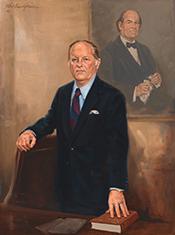
Historical · U.S. House · South Carolina · District 3
William Dorn
Former U.S. Representative · South Carolina District 3 · 1947–1975 · Democratic
William Dorn represented South Carolina's District 3 in the United States House of Representatives (1947–1975) for the Democratic party. The page below collects sourced biographical facts, term history, committee roles, and provenance for Dorn.
Bioguide ID: D000434
Key facts
- Full name
- William Dorn
- State
- South Carolina
- District
- District 3
- Party
- Democratic
- House service
- 1947–1975
- First House term
- 1947
- Status
- Left office
- Current term ends
- —
- Born
- 1916
- Bioguide ID
- D000434
- Committee assignments
- —
- Dataset version
- 1.20260605
Biographical narrative
941 words · sourced from the Wikipedia REST extract
William Jennings Bryan Dorn was a prominent American politician from South Carolina who served as a Democratic U.S. Representative for the state's third congressional district from 1947 to 1949 and again from 1951 until 1975. Known for his long tenure in Congress, Dorn was involved in various legislative matters, particularly those concerning veterans' affairs, and was a notable figure in South Carolina politics throughout the mid-20th century.
Early life and career
William Jennings Bryan Dorn was born on April 14, 1916, near Greenwood, South Carolina, to Thomas Elbert Dorn and Pearl Griffith Dorn. His father was an educator who held various roles in the school system, including teacher, principal, and superintendent. Influenced by his father's aspirations for him, Dorn was named after the famous political figure William Jennings Bryan, reflecting his family's hopes for a future in politics.
Dorn attended the public schools in Greenwood and graduated from Greenwood High School. Following his high school education, he pursued higher education at the University of South Carolina, where he became a member of the Clariosophic Society, a literary and debate society. After completing his studies, he initially worked as a farmer before entering politics.
Dorn's political career began at a young age when he was elected to the South Carolina House of Representatives in 1938 at the age of 22. He continued to build his political resume by winning a seat in the South Carolina Senate in 1940. His political ambitions were temporarily interrupted by World War II, during which he served in the United States Army Air Forces in Europe. Dorn later reflected on how the war altered his timeline for achieving his political goals, which included aspirations to run for various offices at a young age.
House tenure
Dorn's congressional career commenced when he was first elected to the U.S. House of Representatives in the 1946 election, where he defeated a four-term incumbent in the Democratic primary. His initial term lasted until 1949, after which he sought the Democratic nomination for the U.S. Senate in 1948 but was unsuccessful against the incumbent Burnet R. Maybank. Following this defeat, Dorn returned to the House in the 1950 election, reclaiming his seat by defeating the Democratic candidate who had succeeded him.
Throughout his time in Congress, Dorn became known for his focus on military and veterans' issues. He was a signatory of the Southern Manifesto in 1956, which opposed the Supreme Court's decision in Brown v. Board of Education that mandated the desegregation of public schools. Dorn's voting record included opposition to several significant civil rights measures, such as the Civil Rights Acts of 1957, 1960, 1964, and 1968, as well as the Voting Rights Act of 1965 and the 24th Amendment to the U.S. Constitution. Despite this, he also took a stand against efforts to limit school busing for racial integration.
Dorn's long tenure in the House included significant involvement with the Veterans' Affairs Committee, where he served for twelve congressional terms. He held a position of seniority on the committee, often ranking second behind its chair, Olin E. Teague. When Teague transitioned to chair the Science and Astronautics Committee, Dorn became the chair of the Veterans' Affairs Committee during his final term. Over his congressional career, he introduced numerous bills related to veterans' services, although only a small fraction were enacted compared to those advanced by Teague.
In 1966, Dorn was reported to have received recognition from the Liberty Lobby for his right-wing activities, indicating a complex political landscape during his time in office. In his final term, he continued to serve as the chairman of the House Veterans' Affairs Committee, further solidifying his legacy in veterans' affairs.
Legislative focus and committees
Dorn's legislative focus primarily revolved around issues affecting veterans and military personnel. His extensive service on the Veterans' Affairs Committee allowed him to advocate for various programs and policies aimed at improving the lives of veterans. Despite introducing a significant number of bills, the enactment rate of his proposals was relatively low, highlighting the challenges faced by individual legislators in advancing their initiatives within the broader legislative process.
Throughout his congressional career, Dorn's political positions reflected a mix of traditional Democratic values and more conservative stances on certain social issues. His opposition to civil rights legislation positioned him within a faction of the Democratic Party that resisted the sweeping changes occurring during the civil rights movement. However, his later actions, such as supporting the election of Harold Washington, an African American candidate for mayor of Chicago, indicated a willingness to adapt to the evolving political landscape.
Dorn's tenure in Congress concluded when he decided to run for Governor of South Carolina in 1974. Although he initially lost the Democratic primary, a subsequent ruling by the South Carolina Supreme Court regarding his opponent's eligibility led to his selection as the Democratic candidate. Ultimately, he was defeated in the general election by Republican James B. Edwards. Dorn made another attempt for the governorship in 1978 but was unsuccessful in securing the Democratic nomination.
After leaving Congress, Dorn continued to be active in South Carolina politics, serving as the chairman of the South Carolina Democratic Party from 1980 to 1984. His contributions to veterans' affairs were recognized posthumously when the Columbia Veterans' Affairs Hospital was named in his honor.
William Jennings Bryan Dorn passed away on August 13, 2005, in Greenwood, South Carolina. He was laid to rest at Bethel Methodist Church Cemetery in Callison, Greenwood County. His life and career reflect a significant period in South Carolina's political history, marked by both his legislative contributions and the evolving dynamics of the Democratic Party during the mid-20th century.
Notable legislation
Sponsored and co-sponsored legislation for William Dorn is pending operator curation. The biographical narrative above carries the same provenance trail until per-bill rows are written.
Sources
- [1]https://en.wikipedia.org/wiki/William_Jennings_Bryan_DornWikipedia · retrieved 2026-06-05
Notable quotes
Sourced quotes for William Dorn are pending operator curation. Narrative-scope provenance remains attached below.
Sources
- [1]https://en.wikipedia.org/wiki/William_Jennings_Bryan_DornWikipedia · retrieved 2026-06-05
Key positions
Curated policy positions for William Dorn are pending operator review. The biographical narrative above carries the same provenance trail until per-topic positions are written.
Sources
- [1]https://en.wikipedia.org/wiki/William_Jennings_Bryan_DornWikipedia · retrieved 2026-06-05
Terms served
- 1947–1949U.S. House · Term 1 · Democratic
- 1951–1953U.S. House · Term 2 · Democratic
- 1953–1955U.S. House · Term 3 · Democratic
- 1955–1957U.S. House · Term 4 · Democratic
- 1957–1959U.S. House · Term 5 · Democratic
- 1959–1961U.S. House · Term 6 · Democratic
- 1961–1963U.S. House · Term 7 · Democratic
- 1963–1965U.S. House · Term 8 · Democratic
- 1965–1967U.S. House · Term 9 · Democratic
- 1967–1969U.S. House · Term 10 · Democratic
- 1969–1971U.S. House · Term 11 · Democratic
- 1971–1973U.S. House · Term 12 · Democratic
- 1973–1975U.S. House · Term 13 · Democratic
Sources & provenance
Every attributable claim above carries a per-section [N] marker that resolves to the corresponding URL below. Each entry records the upstream provider, the canonical URL, and the timestamp at which the source was retrieved by the ingest pipeline.
Key facts
- https://bioguide.congress.gov/search/bio/D000434bioguide · retrieved 2026-06-05
- https://www.govtrack.us/congress/members/403544govtrack · retrieved 2026-06-05
Biographical narrative
- https://en.wikipedia.org/wiki/William_Jennings_Bryan_Dornwikipedia · retrieved 2026-06-05
Find your representative
Every U.S. state elects representatives by district. Browse South Carolina’s delegation, the full former-representative roster, or explore the role and term length.
Related on The Candidate
- Preceded by Butler HareEarlier holder of the South Carolina District 3 House seat · Democratic.Open
- Succeeded by Butler Derrick Jr.Later holder of the South Carolina District 3 House seat · Democratic.Open
- Arthur Ravenel Jr.Former U.S. Representative · South Carolina District 1 · RepublicanOpen
- Benjamin WhittemoreFormer U.S. Representative · South Carolina District 1 · RepublicanOpen
- Clara McMillanFormer U.S. Representative · South Carolina District 1 · DemocraticOpen
- Daniel WallaceFormer U.S. Representative · South Carolina District 1 · DemocraticOpen