
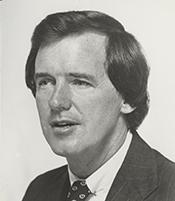
Historical · U.S. House · South Carolina · District 3
Butler Derrick Jr.
Former U.S. Representative · South Carolina District 3 · 1975–1995 · Democratic
Butler Derrick Jr. represented South Carolina's District 3 in the United States House of Representatives (1975–1995) for the Democratic party. The page below collects sourced biographical facts, term history, committee roles, and provenance for Jr..
Bioguide ID: D000267
Key facts
- Full name
- Butler Derrick Jr.
- State
- South Carolina
- District
- District 3
- Party
- Democratic
- House service
- 1975–1995
- First House term
- 1975
- Status
- Left office
- Current term ends
- —
- Born
- 1936
- Bioguide ID
- D000267
- Committee assignments
- —
- Dataset version
- 1.20260605
Biographical narrative
965 words · sourced from the Wikipedia REST extract
Butler C. Derrick was an American politician who served as a U.S. Representative for South Carolina's 3rd congressional district from 1975 until 1995. A member of the Democratic Party, Derrick's political career spanned two decades, during which he was known for his involvement in various legislative committees and his role as a Chief Deputy Whip. He represented a district that underwent significant political shifts during his tenure, ultimately leading to his decision not to seek reelection in the mid-1990s. Following his congressional career, Derrick continued to engage in public service and legal practice until his passing in 2014.
Early life and career
Butler Carson Derrick Jr. was born on September 30, 1936, in Springfield, Massachusetts. He spent his formative years in South Carolina, where he moved with his family during his youth. Derrick attended public schools in the towns of Mayesville and Florence, South Carolina, which laid the foundation for his future academic and professional pursuits. He graduated from the University of South Carolina in 1958, where he likely developed his interest in public service and governance.
After completing his undergraduate education, Derrick furthered his studies at the University of Georgia Law School, earning a Bachelor of Laws (LL.B.) degree in 1965. Upon his admission to the South Carolina bar the same year, he began practicing law in Edgefield, South Carolina. His legal career coincided with his growing interest in politics, leading him to serve in the South Carolina House of Representatives from 1969 to 1974. During this time, he represented Edgefield County, gaining valuable experience in legislative processes and constituent relations.
Derrick's political involvement extended beyond his role in the state legislature. He participated as a delegate in the South Carolina State Democratic conventions in both 1972 and 1974, showcasing his commitment to the Democratic Party and its values. His political aspirations culminated in his election to the U.S. House of Representatives in 1974, where he succeeded longtime congressman William Jennings Bryan Dorn.
House tenure
Butler Derrick's congressional career began in 1975 when he took office as the U.S. Representative for South Carolina's 3rd congressional district. Over the course of ten terms, he was reelected nine times, demonstrating a strong base of support among his constituents. Derrick's tenure in the House was characterized by a dedication to public service and an ability to navigate the evolving political landscape of his district.
Despite representing a district that was increasingly leaning Republican at the national level, Derrick maintained a relatively stable position within his party. His most significant electoral challenge came in 1988, when he faced serious opposition, but he successfully secured his seat. Throughout his time in Congress, Derrick served on important committees, including the House Rules Committee and the Budget Committee. These roles allowed him to influence legislative priorities and contribute to the development of key policies.
In his final term, Derrick held the position of Chief Deputy Whip, a role that underscored his leadership within the Democratic Party. This position involved coordinating party strategy and ensuring party members were aligned on key votes, further solidifying his influence in the House. Derrick's ability to work across party lines and engage with various stakeholders was a hallmark of his legislative approach.
As the political landscape shifted in South Carolina, Derrick's decision not to seek reelection in 1994 marked the end of an era for the district. The changing demographics and political affiliations of the electorate became evident, culminating in the election of Republican Lindsey Graham, who won the seat decisively. Derrick's last electoral victory in 1992, where he received a significant majority of the vote, contrasted sharply with the outcomes that followed his departure from Congress. Since Derrick's exit, no Democrat has managed to secure more than 40 percent of the vote in the district, highlighting the substantial shift in political dynamics.
Legislative focus and committees
During his time in the House of Representatives, Butler Derrick focused on a range of legislative issues that reflected the needs and interests of his constituents. His service on the House Rules Committee and the Budget Committee positioned him at the center of legislative decision-making, enabling him to advocate for policies that aligned with the Democratic Party's platform.
The House Rules Committee plays a crucial role in determining how legislation is debated and voted on in the House, giving Derrick significant influence over the legislative process. His involvement in this committee allowed him to shape the rules governing the consideration of bills, ensuring that the voices of his constituents were represented in the legislative discourse.
Additionally, Derrick's work on the Budget Committee involved overseeing federal budgetary matters, including appropriations and fiscal policy. This committee's responsibilities are vital for managing government spending and addressing economic challenges. Derrick's participation in these committees reflected his commitment to fiscal responsibility and effective governance.
Throughout his congressional career, Derrick was known for his ability to build coalitions and work collaboratively with colleagues from both sides of the aisle. This approach was essential in navigating the complexities of the legislative process, particularly during periods of heightened partisanship. His experience in the South Carolina House of Representatives and his legal background contributed to his effectiveness as a legislator.
After retiring from Congress in 1995, Derrick continued to engage in public service and legal practice. He became a partner at the law firm Nelson Mullins Riley & Scarborough LLP in Washington, D.C., where he applied his extensive knowledge of law and politics. In 2009, he was elected to the Common Cause National Governing Board, further demonstrating his ongoing commitment to civic engagement and democratic principles.
Butler Derrick passed away on May 5, 2014, in Easley, South Carolina, after a battle with cancer. His legacy as a public servant and advocate for his constituents continues to be remembered in the political landscape of South Carolina.
Notable legislation
Sponsored and co-sponsored legislation for Butler Derrick Jr. is pending operator curation. The biographical narrative above carries the same provenance trail until per-bill rows are written.
Sources
- [1]https://en.wikipedia.org/wiki/Butler_DerrickWikipedia · retrieved 2026-06-05
Notable quotes
Sourced quotes for Butler Derrick Jr. are pending operator curation. Narrative-scope provenance remains attached below.
Sources
- [1]https://en.wikipedia.org/wiki/Butler_DerrickWikipedia · retrieved 2026-06-05
Key positions
Curated policy positions for Butler Derrick Jr. are pending operator review. The biographical narrative above carries the same provenance trail until per-topic positions are written.
Sources
- [1]https://en.wikipedia.org/wiki/Butler_DerrickWikipedia · retrieved 2026-06-05
Terms served
- 1975–1977U.S. House · Term 1 · Democratic
- 1977–1979U.S. House · Term 2 · Democratic
- 1979–1981U.S. House · Term 3 · Democratic
- 1981–1983U.S. House · Term 4 · Democratic
- 1983–1985U.S. House · Term 5 · Democratic
- 1985–1987U.S. House · Term 6 · Democratic
- 1987–1989U.S. House · Term 7 · Democratic
- 1989–1991U.S. House · Term 8 · Democratic
- 1991–1993U.S. House · Term 9 · Democratic
- 1993–1995U.S. House · Term 10 · Democratic
Sources & provenance
Every attributable claim above carries a per-section [N] marker that resolves to the corresponding URL below. Each entry records the upstream provider, the canonical URL, and the timestamp at which the source was retrieved by the ingest pipeline.
Key facts
- https://bioguide.congress.gov/search/bio/D000267bioguide · retrieved 2026-06-05
- https://www.govtrack.us/congress/members/403403govtrack · retrieved 2026-06-05
Biographical narrative
- https://en.wikipedia.org/wiki/Butler_Derrickwikipedia · retrieved 2026-06-05
Find your representative
Every U.S. state elects representatives by district. Browse South Carolina’s delegation, the full former-representative roster, or explore the role and term length.
Related on The Candidate
- Preceded by William DornEarlier holder of the South Carolina District 3 House seat · Democratic.Open
- Succeeded by James BarrettLater holder of the South Carolina District 3 House seat · Republican.Open
- Arthur Ravenel Jr.Former U.S. Representative · South Carolina District 1 · RepublicanOpen
- Benjamin WhittemoreFormer U.S. Representative · South Carolina District 1 · RepublicanOpen
- Clara McMillanFormer U.S. Representative · South Carolina District 1 · DemocraticOpen
- Daniel WallaceFormer U.S. Representative · South Carolina District 1 · DemocraticOpen