
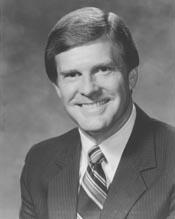
Historical · U.S. House · South Carolina · District 4
Carroll Campbell Jr.
Former U.S. Representative · South Carolina District 4 · 1979–1987 · Republican
Carroll Campbell Jr. represented South Carolina's District 4 in the United States House of Representatives (1979–1987) for the Republican party. The page below collects sourced biographical facts, term history, committee roles, and provenance for Jr..
Bioguide ID: C000079
Key facts
- Full name
- Carroll Campbell Jr.
- State
- South Carolina
- District
- District 4
- Party
- Republican
- House service
- 1979–1987
- First House term
- 1979
- Status
- Left office
- Current term ends
- —
- Born
- 1940
- Bioguide ID
- C000079
- Committee assignments
- —
- Dataset version
- 1.20260605
Biographical narrative
907 words · sourced from the Wikipedia REST extract
Carroll A. Campbell Jr. was an American politician who served as a U.S. Representative for South Carolina's 4th congressional district from 1979 to 1987. A member of the Republican Party, Campbell's political career spanned several decades, during which he also held the position of Governor of South Carolina from 1987 to 1995. His tenure in public office was marked by significant political activity, including efforts to attract major corporations to the state and involvement in key political campaigns at both the state and national levels.
Early life and career
Carroll Ashmore Campbell Jr. was born on July 24, 1940, in Greenville, South Carolina. He was the eldest of six children in his family. His father, Carroll A. Campbell Sr., worked in various capacities, including in the textile mills and furniture business, and later owned a motel in Garden City, South Carolina. Growing up in Greenville and its surrounding areas, Campbell experienced a challenging upbringing, which included a period of instability within his family. He initially attended Greenville Senior High School but dropped out during a tumultuous phase of his adolescence. Subsequently, he was enrolled in the private McCallie School in Chattanooga, Tennessee, by his uncle.
After completing his education at McCallie, Campbell attended the University of South Carolina at Columbia. However, he withdrew from the university due to financial difficulties. He later earned a Master of Arts degree from American University. While at the University of South Carolina, he became a member of the Sigma chapter of the Pi Kappa Phi fraternity, which would contribute to his networking and political connections in the future.
Campbell's early political career began in the 1970s when he took a prominent stance against the racial integration of public schools in Greenville. He organized and led protests against "forced busing" to integrated schools, which garnered significant attention. His political involvement deepened when he served in the South Carolina House of Representatives from 1970 to 1974. During this time, he worked under Governor John C. West, who had won the governorship against the Republican nominee Albert Watson.
In 1974, Campbell made an unsuccessful bid for the position of lieutenant governor, running alongside Republican gubernatorial nominee James B. Edwards. Although he lost to Democrat Brantley Harvey, he continued to seek political guidance from Lee Atwater, a key strategist in his political career. Following this, Campbell served in the South Carolina Senate from 1976 to 1978 and also worked as an executive assistant to Governor Edwards. His political aspirations culminated in 1978 when he was elected to the United States House of Representatives, representing South Carolina's 4th congressional district. This election was significant as he became the first Republican to hold the 4th district seat since the Reconstruction era.
House tenure
Campbell's tenure in the U.S. House of Representatives began in 1979 and lasted until 1987. During his time in Congress, he was involved in various legislative initiatives and represented the interests of his constituents in South Carolina's 4th district. His election to the House marked a pivotal moment in the political landscape of South Carolina, as he succeeded in a district that had been held by Democrats for many years.
Throughout his congressional career, Campbell was active in supporting the Republican Party's agenda, particularly during the presidential campaigns of Ronald Reagan in the 1980s. He served as the state campaign chairman for Reagan's presidential campaigns in both 1980 and 1984. Additionally, he played a role as the southern regional chairman for George H. W. Bush's presidential campaign in 1988. These positions not only solidified his political influence within the party but also helped him build a network of support that would benefit his future political endeavors.
Campbell's legislative work during his time in the House included participation in discussions and votes on various issues affecting South Carolina and the nation. His focus on economic development and job creation was evident as he sought to promote policies that would benefit his constituents. His efforts in Congress laid the groundwork for his later success as governor, where he would further advocate for economic growth and development in South Carolina.
Legislative focus and committees
During his time in the House of Representatives, Campbell's legislative focus encompassed a range of issues pertinent to his constituents and the broader national agenda. He was particularly interested in economic development, job creation, and policies that would enhance the business climate in South Carolina. His background in state politics and understanding of local issues informed his approach to legislation at the federal level.
While specific details regarding the committees he served on during his congressional tenure are not provided, it can be inferred that Campbell's involvement in economic and business-related initiatives would have aligned him with committees focused on commerce, trade, and economic policy. His experience in the South Carolina Senate and as an executive assistant to the governor likely equipped him with the knowledge and skills necessary to navigate the complexities of federal legislation.
Campbell's tenure in the House concluded in January 1987, after which he transitioned to the role of Governor of South Carolina. His experiences in Congress, particularly his engagement with national political campaigns and his focus on economic issues, would play a significant role in shaping his gubernatorial policies and initiatives. Overall, Campbell's time in the House of Representatives was characterized by a commitment to representing the interests of South Carolinians and contributing to the Republican Party's objectives during a transformative period in American politics.
Notable legislation
Sponsored and co-sponsored legislation for Carroll Campbell Jr. is pending operator curation. The biographical narrative above carries the same provenance trail until per-bill rows are written.
Sources
- [1]https://en.wikipedia.org/wiki/Carroll_A._Campbell_Jr.Wikipedia · retrieved 2026-06-05
Notable quotes
Sourced quotes for Carroll Campbell Jr. are pending operator curation. Narrative-scope provenance remains attached below.
Sources
- [1]https://en.wikipedia.org/wiki/Carroll_A._Campbell_Jr.Wikipedia · retrieved 2026-06-05
Key positions
Curated policy positions for Carroll Campbell Jr. are pending operator review. The biographical narrative above carries the same provenance trail until per-topic positions are written.
Sources
- [1]https://en.wikipedia.org/wiki/Carroll_A._Campbell_Jr.Wikipedia · retrieved 2026-06-05
Terms served
- 1979–1981U.S. House · Term 1 · Republican
- 1981–1983U.S. House · Term 2 · Republican
- 1983–1985U.S. House · Term 3 · Republican
- 1985–1987U.S. House · Term 4 · Republican
Sources & provenance
Every attributable claim above carries a per-section [N] marker that resolves to the corresponding URL below. Each entry records the upstream provider, the canonical URL, and the timestamp at which the source was retrieved by the ingest pipeline.
Key facts
- https://bioguide.congress.gov/search/bio/C000079bioguide · retrieved 2026-06-05
- https://www.govtrack.us/congress/members/402235govtrack · retrieved 2026-06-05
Biographical narrative
- https://en.wikipedia.org/wiki/Carroll_A._Campbell_Jr.wikipedia · retrieved 2026-06-05
Find your representative
Every U.S. state elects representatives by district. Browse South Carolina’s delegation, the full former-representative roster, or explore the role and term length.
Related on The Candidate
- Preceded by James MannEarlier holder of the South Carolina District 4 House seat · Democratic.Open
- Succeeded by Elizabeth PattersonLater holder of the South Carolina District 4 House seat · Democratic.Open
- Arthur Ravenel Jr.Former U.S. Representative · South Carolina District 1 · RepublicanOpen
- Benjamin WhittemoreFormer U.S. Representative · South Carolina District 1 · RepublicanOpen
- Clara McMillanFormer U.S. Representative · South Carolina District 1 · DemocraticOpen
- Daniel WallaceFormer U.S. Representative · South Carolina District 1 · DemocraticOpen