
Historical · U.S. House · South Carolina · District 5
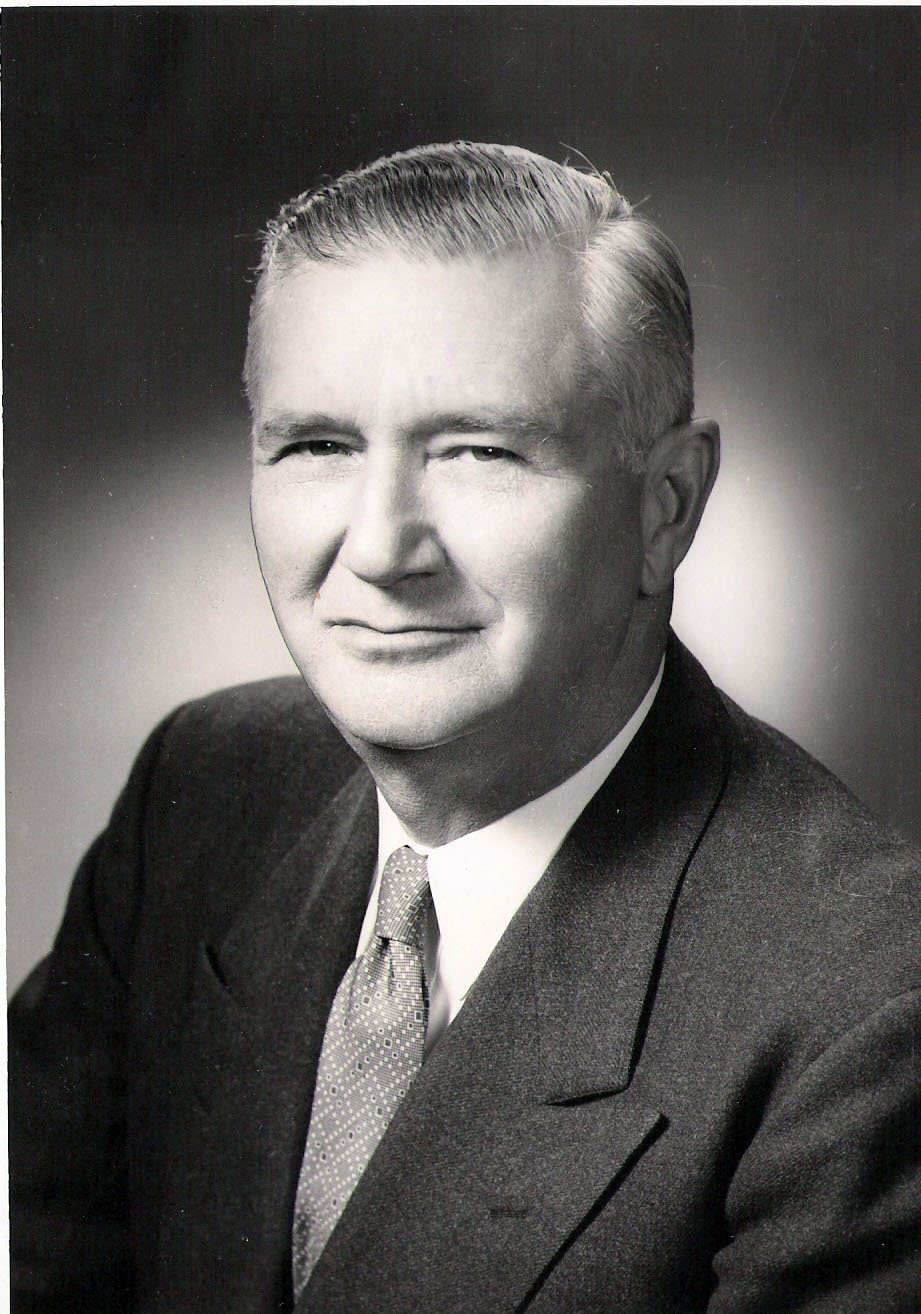
James Richards
Former U.S. Representative · South Carolina District 5 · 1933–1957 · Democratic
James Richards represented South Carolina's District 5 in the United States House of Representatives (1933–1957) for the Democratic party. The page below collects sourced biographical facts, term history, committee roles, and provenance for Richards.
Bioguide ID: R000214
Key facts
- Full name
- James Richards
- State
- South Carolina
- District
- District 5
- Party
- Democratic
- House service
- 1933–1957
- First House term
- 1933
- Status
- Left office
- Current term ends
- —
- Born
- 1894
- Bioguide ID
- R000214
- Committee assignments
- —
- Dataset version
- 1.20260605
Biographical narrative
848 words · sourced from the Wikipedia REST extract
James Richards was a prominent lawyer and politician who served as a Democratic U.S. Representative for South Carolina's 5th congressional district from 1933 until 1957. His lengthy tenure in Congress spanned twelve terms, during which he was involved in significant legislative matters, particularly in the realm of foreign affairs. After leaving Congress, he continued to serve in a diplomatic capacity under President Dwight D. Eisenhower.
Early life and career
James Prioleau Richards was born on August 31, 1894, in Liberty Hill, South Carolina. He received his early education in local county schools before attending Clemson College, where he laid the groundwork for his future career. Following his academic pursuits, Richards served in the military during World War I. He enlisted in the U.S. Army and was deployed overseas, where he held various ranks, including private, corporal, sergeant, and second lieutenant, in the Trench Mortar Battery of the 118th Infantry Regiment, part of the 30th Division, from 1917 to 1919.
After the war, Richards returned to South Carolina and pursued a legal education. He graduated from the law department of the University of South Carolina at Columbia in 1921 and was admitted to the bar the same year. He began his legal practice in Lancaster, South Carolina, where he built a reputation as a capable attorney. His legal career progressed when he was elected as the judge of the probate court of Lancaster County, a position he held from 1923 until 1933. This role provided him with valuable experience in the judicial system and helped establish his political credentials.
House tenure
Richards entered the political arena when he was elected to the U.S. House of Representatives as a Democrat for the 73rd Congress, which convened on March 4, 1933. He was subsequently reelected to eleven additional Congresses, serving continuously until January 3, 1957. During his time in the House, Richards was known for his active participation in various legislative initiatives, particularly those concerning foreign policy.
Throughout his congressional career, Richards was recognized for his internationalist perspective, particularly in relation to U.S. foreign affairs. A confidential analysis conducted in 1943 noted that he consistently supported the administration's foreign policy, especially during critical periods such as World War II. He was a proponent of the Lend-Lease Act, which facilitated military aid to allies during the war, voting in favor of both the 1941 and 1944 versions of the legislation. His voting record indicated a strong alignment with pro-British sentiments, reflecting his commitment to international cooperation and support for allied nations.
In addition to his voting record, Richards held significant positions within the House. He served on the Herter Committee during 1947-1948, which was involved in examining foreign policy issues. Furthermore, he was appointed chairman of the Committee on Foreign Affairs during the 82nd and 84th Congresses, where he played a key role in shaping U.S. foreign policy during a pivotal time in global history.
Richards's influence extended beyond legislative matters. In 1953, he was appointed as a delegate to the Japanese Peace Conference, where he contributed to discussions aimed at establishing peace following World War II. He also represented the United States at the United Nations, further emphasizing his commitment to international diplomacy. As he approached the end of his congressional career, Richards decided not to seek reelection for the 85th Congress in 1956, signaling his intention to retire from active politics.
Legislative focus and committees
Richards's legislative focus during his time in Congress was heavily oriented toward foreign affairs, reflecting the global challenges of the era. His consistent support for internationalist policies was evident in his voting patterns and committee assignments. As chairman of the Committee on Foreign Affairs, he was instrumental in guiding discussions and decisions related to U.S. engagement with other nations, particularly during the post-war period when the United States was redefining its role on the world stage.
In addition to his work on foreign policy, Richards was a signatory of the 1956 Southern Manifesto, which opposed the Supreme Court's decision in Brown v. Board of Education that mandated the desegregation of public schools. This action highlighted the complexities of his political stance, as it reflected the contentious social issues of the time, particularly in the Southern states.
After concluding his congressional service, Richards transitioned to a diplomatic role under President Eisenhower. From January 1957 to January 1958, he served as a special assistant to the president for Middle Eastern affairs, a position that granted him the rank of ambassador. This role was significant during a time when the Eisenhower Doctrine was being articulated, emphasizing U.S. support for nations in the Middle East against the spread of communism.
Following his diplomatic service, Richards returned to Lancaster, South Carolina, where he resumed his legal practice. He remained active in his community until his death on February 21, 1979. Richards was interred in Liberty Hill Presbyterian Church Cemetery in his hometown, leaving behind a legacy marked by his extensive service in both the legal and political arenas. His career reflects a commitment to public service and a significant engagement with the pressing issues of his time.
Notable legislation
Sponsored and co-sponsored legislation for James Richards is pending operator curation. The biographical narrative above carries the same provenance trail until per-bill rows are written.
Sources
- [1]https://en.wikipedia.org/wiki/James_P._RichardsWikipedia · retrieved 2026-06-05
Notable quotes
Sourced quotes for James Richards are pending operator curation. Narrative-scope provenance remains attached below.
Sources
- [1]https://en.wikipedia.org/wiki/James_P._RichardsWikipedia · retrieved 2026-06-05
Key positions
Curated policy positions for James Richards are pending operator review. The biographical narrative above carries the same provenance trail until per-topic positions are written.
Sources
- [1]https://en.wikipedia.org/wiki/James_P._RichardsWikipedia · retrieved 2026-06-05
Terms served
- 1933–1935U.S. House · Term 1 · Democratic
- 1935–1937U.S. House · Term 2 · Democratic
- 1937–1939U.S. House · Term 3 · Democratic
- 1939–1941U.S. House · Term 4 · Democratic
- 1941–1943U.S. House · Term 5 · Democratic
- 1943–1945U.S. House · Term 6 · Democratic
- 1945–1947U.S. House · Term 7 · Democratic
- 1947–1949U.S. House · Term 8 · Democratic
- 1949–1951U.S. House · Term 9 · Democratic
- 1951–1953U.S. House · Term 10 · Democratic
- 1953–1955U.S. House · Term 11 · Democratic
- 1955–1957U.S. House · Term 12 · Democratic
Sources & provenance
Every attributable claim above carries a per-section [N] marker that resolves to the corresponding URL below. Each entry records the upstream provider, the canonical URL, and the timestamp at which the source was retrieved by the ingest pipeline.
Key facts
- https://bioguide.congress.gov/search/bio/R000214bioguide · retrieved 2026-06-05
- https://www.govtrack.us/congress/members/409190govtrack · retrieved 2026-06-05
Biographical narrative
- https://en.wikipedia.org/wiki/James_P._Richardswikipedia · retrieved 2026-06-05
Find your representative
Every U.S. state elects representatives by district. Browse South Carolina’s delegation, the full former-representative roster, or explore the role and term length.
Related on The Candidate
- Preceded by William StevensonEarlier holder of the South Carolina District 5 House seat · Democratic.Open
- Succeeded by Robert HemphillLater holder of the South Carolina District 5 House seat · Democratic.Open
- Arthur Ravenel Jr.Former U.S. Representative · South Carolina District 1 · RepublicanOpen
- Benjamin WhittemoreFormer U.S. Representative · South Carolina District 1 · RepublicanOpen
- Clara McMillanFormer U.S. Representative · South Carolina District 1 · DemocraticOpen
- Daniel WallaceFormer U.S. Representative · South Carolina District 1 · DemocraticOpen